

How Should Small Pets Choose a Plush Haven Bed?
A small pet still needs enough usable room to settle and change position. Start with posture and the listed footprint, then watch the pet’s choice.

Questions Before You Choose
My dog is tiny, so the smallest bed must be right.
Check side-lying space, turning room, and the raised rim. A tight curl is not the whole sleeping footprint.
My cat is small but stretches long.
Use the longer posture when comparing the listed outer dimensions. Do not size only to the curled position.
Can I add a blanket to make a small bed fit?
A blanket does not create more usable bed space. Re-measure and keep another surface available if the footprint is tight.
Does a compact bed guarantee a small-pet preference?
No. Access, texture, room, posture, and voluntary use still decide the outcome.
The Full Answer
Short answer: small dogs and cats should choose a Plush Haven size by the space their bodies use while resting, not by breed name alone. The current listing includes XS at 15.7 x 11.8 inches, S at 21.7 x 15.7 inches, and larger options through 3XL. These are outer dimensions. A compact label does not guarantee enough inner sleeping room, and a raised rim changes the usable area.
Start with the small pet’s posture
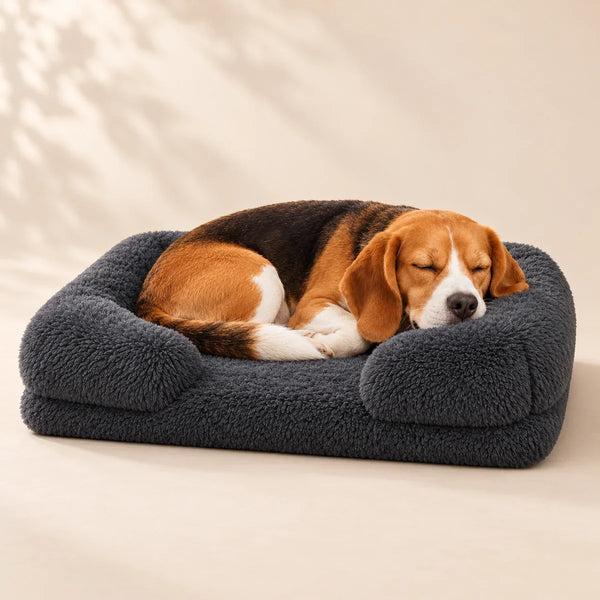
Watch the pet sleep in the place it already chooses. A small dog may curl tightly, lie on one side, or stretch farther than its standing size suggests. A cat may fold into a ball and then lengthen across the surface. Measure the ordinary position and the small amount of turning that happens before settling.
Breed labels can be a rough conversation starter, but they do not describe one body. Coat, chest shape, age, posture, and personal sleeping habits all change the space a pet uses. The bed should fit the animal in front of you and the floor area where the bed will stay.
What the compact options say
XS is currently listed at 15.7 x 11.8 inches, or 40 x 30 cm. S is listed at 21.7 x 15.7 inches, or 55 x 40 cm. M is 25.6 x 19.7 inches, or 65 x 50 cm. These dimensions describe the outside of each listed size. They are useful for planning the floor, not for promising a precise inner sleeping area.
Do not choose XS simply because the pet is small. A pet that sleeps long, turns often, or uses the edge as a headrest may need more space. Do not choose S or M only because a larger bed looks generous. The larger footprint must also fit the room and leave a clear route around it.

Check the raised edge
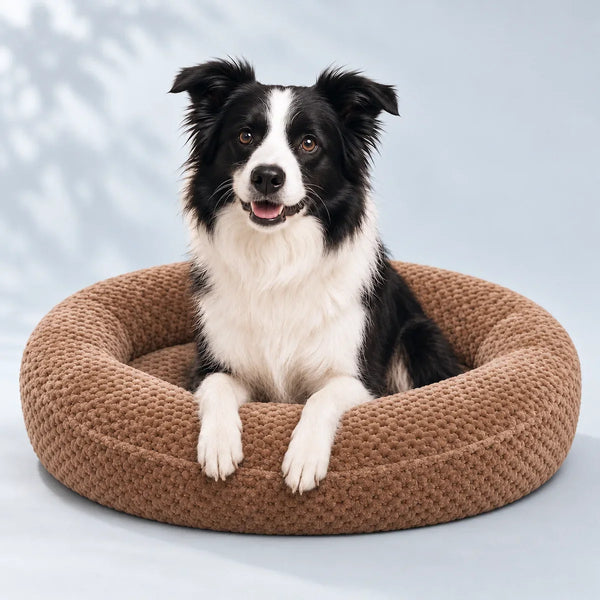
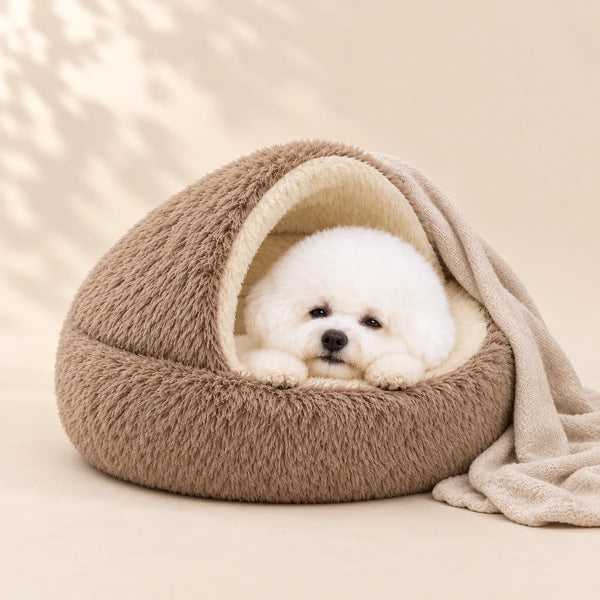
Plush Haven has a raised padded rim around a plush rectangular surface. The edge can be relevant for a pet that curls or rests a chin, but it also takes up space compared with a completely flat mat. Watch whether the small pet steps over the edge easily and whether the body can lie without pressing into it.
A small pet may use the center, one corner, or the rim. Those choices are all possible. Avoid placing the pet into the bed to make a size look right. A voluntary approach and a natural rest position tell you more than a posed photograph.
Small does not mean one shape
Two small pets can need very different beds. One may curl tightly and use a narrow area, while another may stretch from nose to tail or change direction before settling. A cat may want a view of the room, while a dog may follow a person from spot to spot. Keep those differences in the measurement conversation.
If the compact bed leaves little room around the body, do not solve the problem by pushing the pet toward the rim. Re-measure and compare the next listed footprint. The right choice is the one that gives the individual pet usable space and leaves the room manageable.
Use a quiet introduction
Set the bed down in a familiar place and allow the pet to approach. Keep a blanket or old mat nearby. The pet may sniff the new surface, step over the rim, rest for a moment, or leave. Each response helps you understand access and preference without asking the pet to perform.
Do not judge the small-pet choice after one minute. Watch at a normal rest time and keep the room calm. If the pet ignores the bed, check the floor route and the amount of space before assuming the size label is wrong.
Keep measurements for later rechecks
Save the outer dimensions you compared and note the posture you used. A pet can grow, gain coat, change sleeping habits, or move to a new room. A size decision that made sense in one space may need to be reconsidered after a furniture change.
These notes also prevent a return to breed shortcuts. When the pet’s actual posture is written down, the next decision can begin with the animal rather than a general category.
Use the note when the pet changes rooms
If the bed moves beside a desk, sofa, or sleeping area, compare the new room route with the old one. The same outer size can feel easy in one location and crowded in another. Recheck the pet’s approach before deciding that a new size is needed.
Measure the floor and the sleeper
Reserve the full outer footprint on the floor with a tape measure or temporary markers. Keep the route around it open. Then compare the pet’s side-lying and curled space with the listed dimensions. If the answer is close, re-measure calmly and consider the larger option only when the room and the pet’s posture support it.
Check the height of surrounding furniture and the way the pet enters the spot. No lowered entrance, inner measurement, or universal access rule is listed. Do not invent one from a gallery photo. If the edge or location seems difficult, choose another arrangement or ask a professional when a mobility problem is involved.
Choose color after space
The current colors are Gray, Pink, Beige, Dark, and Coffee. Color may help a small bed work with the room or make the owner happy to keep it in a visible place. It doesn't tell you whether your pet will use the bed, and it isn't described as calming or changing behavior.
Make the physical decision first. A Gray XS that leaves no room to turn is not a better choice because it matches the floor. A larger Pink or Beige bed that blocks a walkway may also be impractical. Space and access should lead, with color as the finishing choice.
Keep the small pet’s route clear
Place the bed on a level part of the room where the pet can approach and leave without navigating clutter. The current Product wording describes a non-slip base, but no universal floor-performance threshold is provided. Observe the actual surface and keep rugs from bunching around the edge.
If the pet has a new limp, pain, swelling, a wound, or a sudden change in movement, do not solve the situation by changing bed size. Ask a veterinarian. Bedding can support a rest routine, but it does not diagnose a condition or promise pain relief.
Let the pet choose the final position
Offer the bed alongside the familiar mat or blanket. Watch whether the pet approaches, sniffs, rests, leaves, and returns. A small pet may need the bed moved a few inches away from a busy walkway or closer to the people it follows. Change one detail at a time and do not force the pet to stay.
Look after the first ordinary rest period. Check whether the pet’s body stayed inside the usable surface, whether the rim was used, and whether the pet left because the space was too tight or the room was too busy. These observations are more useful than a generic statement that small pets need small beds.
Keep care realistic
The current Product description says the cover is removable and washable. That supports a manageable care plan, but it does not provide washing temperature, dryer, stain, or durability guarantees. Follow the available care instructions and let the cover and bed dry fully before returning them.
Small beds are easy to move, which can help an owner clean the area and inspect the base. Make sure the bed is returned to a place with a clear route. If a pet does not use it after cleaning, consider texture and location before assuming that the pet has rejected the bed forever.
Check the compact bed from the pet’s height
Kneel beside the bed and look at the approach the way a small dog or cat experiences it. Notice whether furniture makes the rim hard to cross, whether the floor changes level, and whether the pet has room to leave without backing into something. This view often reveals a room issue that a top-down size label misses.
Keep the route the same while you observe. Moving a bowl, mat, bed, and chair together makes it difficult to know which change helped. One clear adjustment gives you a more useful answer.
Small does not always mean smallest
Small dog wheelchair and small-pet searches share one useful lesson with plush dog bed shopping: a size label is only a starting point. A small dog may curl tightly, while a small cat may stretch long or change position during a nap. Compare the pet’s usual posture, the raised rim, and the room route with the listed outer footprint rather than choosing by breed or the tightest photograph.
For Plush Haven, the current XS outer size is 15.7 x 11.8 inches, or 40 x 30 cm. That is the outside rectangle, not a promise about the interior sleeping area. Leave room for turning, keep a familiar alternative nearby, and watch whether the pet can enter, settle, and leave without friction.
Use the small-pet decision rule
Ask whether the listed outer footprint leaves enough space for the pet’s ordinary curled and side-lying positions. Ask whether the raised rim is easy to cross and whether the floor route is clear. Ask whether you can care for the cover and keep the bed in a stable, reachable place. If any answer is unclear, measure again or keep another rest surface available.
For the full XS through 3XL list, read the size and color guide. For curled posture, use the curling-pet guide. If the chosen footprint fits the small pet and the room, review the current Plush Haven bed listing. A small pet needs a small enough bed to fit the room and a large enough surface to rest naturally.
Common Questions
Does a small pet always need XS?
No. XS is 15.7 x 11.8 inches outside, but the pet’s sleeping posture, turning space, raised rim, and room route also matter.
Are the listed dimensions inner sleeping measurements?
No. They are current outer product dimensions. The product page does not provide a universal inner sleeping area.
Can breed choose the size?
Breed is not a complete fit method. Measure the individual pet and compare the posture with the listed footprint.
Does a small pet always need the XS Plush Haven bed?
No. XS is 15.7 x 11.8 inches outside. Compare the individual pet’s curled, side-lying, and turning space with the listed footprint.
Is It Right for Your Pet?
Compare related questions for this product and use case.


Plush Haven Calming Pet Bed
- Calming Bolster Pet Bed
- Plush Padded Comfort
- Bolsters for Curling Up
- Non-Slip Base
