



Is a Raised-Rim Bed Right for a Pet That Curls Up?
The rim can be part of the sleep surface a curled pet uses, but posture, room, and the pet’s own choice still decide whether the shape fits.

Questions Before You Choose
My pet curls into a very small ball.
Watch more than one rest period. A tight curl may open into a side-lying posture or use the rim as a headrest.
My pet ignores the new bed.
Keep it optional and check the room, texture, edge, footprint, and timing before assuming a behavior problem.
Can the raised edge prove comfort?
No. A photograph or curled pose cannot prove comfort, medical benefit, or a universal preference.
Should I choose the smallest size?
Choose by the real sleeping footprint and room route, not by the tightest curl or breed label alone.
The Full Answer
Short answer: a pet that curls up may appreciate a bed with a defined raised edge, but the shape still has to leave enough usable room for the body to settle and change position. Plush Haven is listed as a rectangular plush bed with a raised padded rim, a non-slip base, and a removable washable cover. Those are useful product facts. They do not prove that every curled dog or cat will choose it, feel calmer in it, or gain medical support from it.
Watch the curl before choosing the rim
Pets curl for different reasons and in different ways. Some tuck tightly with the nose near the tail. Others curl loosely, rest the chin on a side, or fold the paws under the chest while leaving most of the bed open. Watch the posture over more than one rest period. A single pose can be affected by noise, temperature, tiredness, or the place where the pet already feels familiar.
Look at how the pet gets into the current rest spot. Does the dog step in, turn once, and settle? Does the cat press against a wall, blanket, or cushion? A raised edge may be part of that boundary, but it may also make the usable surface feel smaller. The answer comes from the pet’s movement and sleeping footprint, not from the word calming in a product name.
What the Plush Haven rim can show
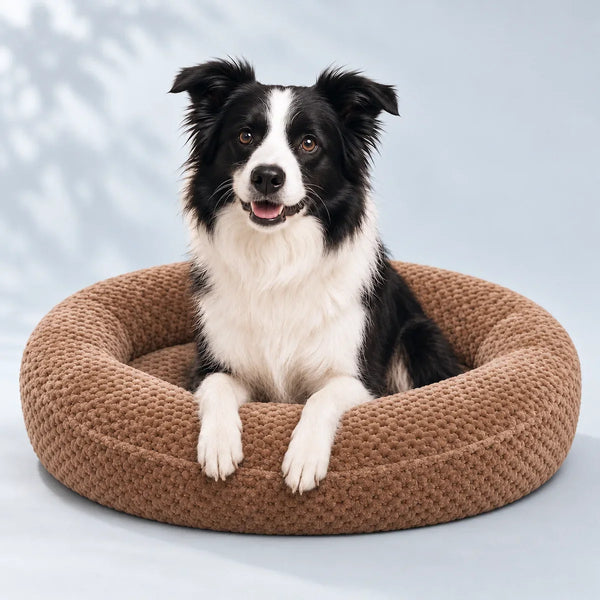
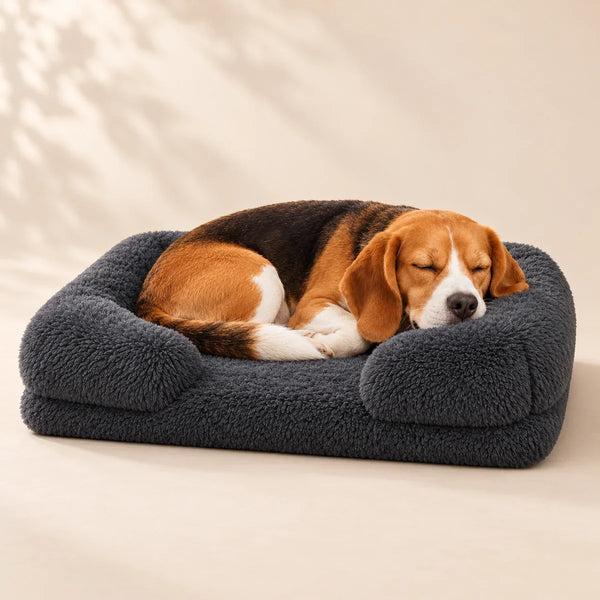
The current Product description identifies a plush surface and raised bolstered edge. You can describe that edge literally. It gives the bed a visible boundary and can provide a place where a curled pet rests its chin or shoulder. It is fair to say the form may suit that posture as a possibility. It is not fair to say the rim settles every nervous pet or protects every joint.
It is described as orthopedic-style, but no foam composition, density, clinical testing, pain result, or joint-protection level is listed. Those questions don't decide the choice for a pet that sleeps curled up. A comfortable-looking pose in a photograph is also not proof of a product result for your animal.
Check the space inside the outer footprint
Outer dimensions are only the starting point because the raised rim occupies part of the rectangle. Watch the pet lie on the side, turn, and stretch slightly from the curled pose. Measure the floor space your pet uses and compare it with the listed footprint. Leave room for ordinary movement rather than sizing only to the tightest curl.
A pet that curls today may sprawl tomorrow. A cat may rotate through several positions before sleeping. A dog may rest its head on the edge but still need a broad center. These changes do not make the raised rim wrong. They show why the size decision needs the whole routine and not one photograph or one measurement.

Notice what the pet does with the edge
When the bed is available, look for voluntary use. The pet may settle in the center, use one side, rest the chin on the rim, or ignore the edge completely. Each response is information. Avoid placing the pet into the bed to create a favorable photograph or treating a refusal as a training problem.
Check for practical friction. Does the pet step over the rim easily? Does the outer footprint leave a clear path? Can the dog turn without bumping furniture? Can the cat leave without jumping from an awkward position? These are observations about the bed and the room, not proof of a health or behavior outcome.
Choose the color for the room, not the pet’s mood
Plush Haven is currently listed in Gray, Pink, Beige, Dark, and Coffee. Color can help the bed sit naturally in a bedroom or living room, and a room that looks orderly may be easier for the owner to maintain. Do not assign a calming effect to a color or assume a pet will choose a bed because the color matches the sofa.
Keep the choice simple: select a listed color that works in the room, then judge the bed by the pet’s access and posture. If the rest location is noisy, blocked, too warm, or difficult to reach, a different color will not solve the real problem. Placement remains more important than appearance.
When a curled pet may need another surface
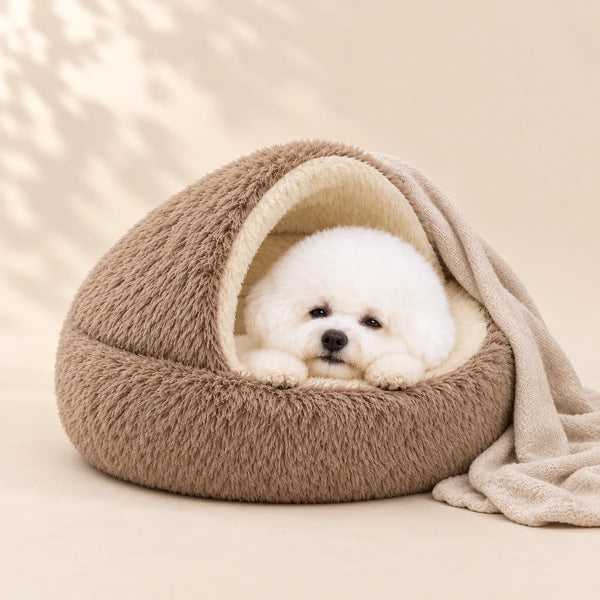
A flat mat may suit a pet that curls for a moment but then stretches beyond the rim. A blanket may suit a pet that changes locations or wants a familiar scent. A covered bed may suit a pet that seeks enclosure, while another pet may prefer to see the room. These are sleep-style alternatives, not universal categories.
If a pet suddenly curls tightly, avoids movement, sleeps differently, or hesitates to rise, speak with a veterinarian rather than reading the posture as a bed preference. The VCA osteoarthritis guidance treats bedding as one possible home consideration within individualized care. It does not validate Plush Haven or turn a curled pose into a diagnosis.
Read more than one sleep position
A tight curl is only one part of the day. Watch whether the pet opens the front legs, rolls to the side, changes the head position, or moves away from the rim when sleep deepens. A bed that looks generous around a small curl may feel less open when the body lengthens. Use the wider posture when you compare the outer footprint.
Some pets use a rim as a headrest without keeping the whole body inside the bed. Others touch the edge only when turning. Those patterns are still useful. They tell you what the raised shape contributes and whether a flat surface should remain available for a different position.
Make the introduction quiet and optional
Put the bed in a familiar room and let the pet inspect it without being lifted onto the surface. Keep voices and movement ordinary. If the pet steps in and leaves, let that be the end of the first introduction. Repeatedly placing the animal inside can make the owner feel progress while hiding the pet’s actual preference.
Try the bed when the pet is naturally ready to rest rather than during a busy household moment. Keep the old surface nearby and avoid changing food, toys, room, and bed at the same time. One small change gives the owner a clearer answer and gives the pet more control.
Check the edge against the real room
The raised rim has a physical effect on the route around the bed. A small pet may step over it easily, while an older pet may take more time or choose a different angle. Keep the floor clear, watch the approach, and move the bed when furniture makes the entry awkward. A posture match still needs an access match.
Texture and room temperature can also change the choice from one day to another. Do not turn a warm-day refusal or a noisy-evening refusal into a permanent conclusion. Keep the observation simple and give the pet a familiar alternative while you learn.
Give a curled sleeper room to change
Even a pet that favors a tight curl may shift its paws, stretch its neck, or turn the body during a nap. Leave enough visible surface around the curl to notice those changes. If the pet repeatedly reaches over the rim, compare a larger listed footprint or a flat surface instead of assuming the smallest space is best.
A raised boundary is a physical feature, not a requirement. Let the animal use it, ignore it, or choose a familiar mat. The honest answer can change as the pet’s routine changes.
Keep access and care in view
Place the bed on a level, reachable part of the room. The current Product wording describes a non-slip base, but it does not provide a universal floor-performance threshold. Check the bed on the actual surface and keep surrounding rugs or mats from bunching. A clear approach makes the pet’s choice easier to observe.
The removable washable cover can make the routine easier to manage, but the current facts do not specify wash temperature, dryer setting, or stain performance. Follow the available care information, let the cover and bed dry fully, and inspect the spot before returning it to the pet. Careability is part of suitability.
What a calming dog bed can and cannot tell you
The phrase calming dog bed often makes people ask whether a bed will change a pet’s behavior. The honest answer is narrower. Plush Haven is described as a plush, raised-rim rest surface with a non-slip base and removable washable cover. That gives you a physical option to offer. It does not prove that a curled pet will sleep longer, feel less anxious, or accept a new bed.
Use the curled posture as an observation, not a promise. Look for the pet choosing the rim, settling without pressure, and having room to turn or stretch. If the pet avoids the edge, leaves the bed, or needs a more open surface, keep the familiar mat or blanket available. Voluntary repeat use is more useful than a guided first pose.
Answer the curled-sleeper question honestly
Plush Haven is worth considering when your pet often curls, tucks in, or uses an edge, and when the selected footprint leaves room around that posture. It is less convincing when the pet sprawls, needs an open route, or avoids raised boundaries. Keep the bed optional and let several ordinary rest periods inform the choice.
For the full footprint decision, read the bed size and color guide. For placement and the cover routine, use the placement and care guide. If the shape remains a good match, review the current Plush Haven bed listing. A curled pose can guide the question. It cannot guarantee a preference, comfort, or medical result.
Common Questions
Does a curled pet automatically need a raised-rim bed?
No. Watch whether the pet uses the edge, has enough room to turn, and can step in and out without friction.
Can Plush Haven calm an anxious pet?
No product-specific behavior result is established. The bed may be offered as one rest option without promising a change in anxiety or acceptance.
How do I judge size for a curled sleeper?
Measure the outer footprint and compare it with the pet’s curled, side-lying, and turning space. The rim occupies part of the rectangle.
Can a calming dog bed guarantee a calmer pet?
No. Calming is a product descriptor here, not proof of a behavior result. Offer the bed as an optional rest spot and watch the pet’s own choice.
Is It Right for Your Pet?
Compare related questions for this product and use case.


Plush Haven Calming Pet Bed
- Calming Bolster Pet Bed
- Plush Padded Comfort
- Bolsters for Curling Up
- Non-Slip Base
