




Is Plush Haven a Good Rest Spot for a Senior Pet?
A reachable bed can support a senior-pet rest routine, but it does not diagnose or treat pain. Keep the approach clear and watch the whole day.

Questions Before You Choose
My senior dog is suddenly sleeping more.
Do not assume a new bed will solve it. Record the change and ask a veterinarian when sleep or movement changes suddenly.
The bed says orthopedic-style.
Keep that as a product descriptor. The current facts do not establish clinical orthopedic performance or pain relief.
The base says non-slip.
Observe the bed on the real floor and keep surrounding rugs from bunching. No universal threshold is provided.
My pet does not choose the bed.
Keep it optional and review access, location, texture, and usable space before changing the plan.
The Full Answer
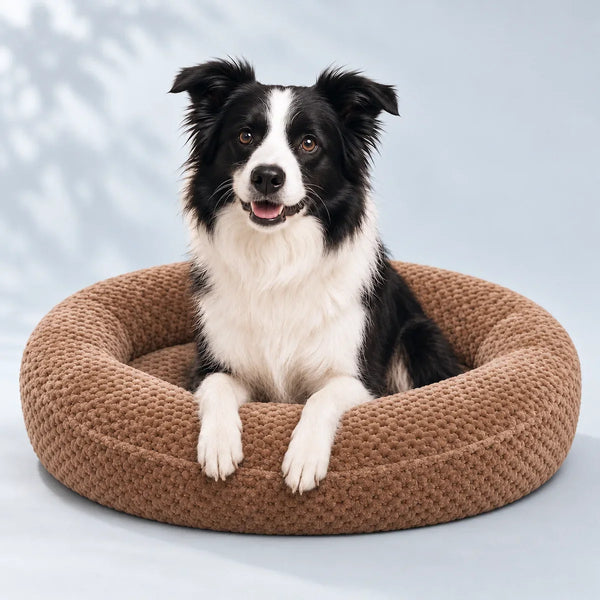
Short answer: an older dog or cat may benefit from having a reachable, floor-level rest option, but Plush Haven is not a treatment for arthritis, pain, anxiety, or any other diagnosis. The current product information describes a plush raised-rim bed, a non-slip base, a removable washable cover, and sizes XS through 3XL. Use those facts to plan a rest spot. If the senior pet has a new mobility change, pain, swelling, or a sudden change in sleep, speak with a veterinarian.
Look at the whole approach
Start with the route to the bed. Can the pet reach it without a slippery turn, a crowded doorway, or a step over furniture? Is there enough room to stand, lower the body, turn, and leave? A bed placed on the floor may be easy to reach in one room and awkward in another. Watch the route at the pet’s pace rather than assuming that a familiar room is automatically accessible.
Keep water, food, and the usual resting areas in view when you choose the spot. The bed does not need to be in the center of the room, but it should not become an obstacle or an isolated corner. A clear approach helps the owner notice what the senior pet is doing throughout the day.
Use a raised edge carefully
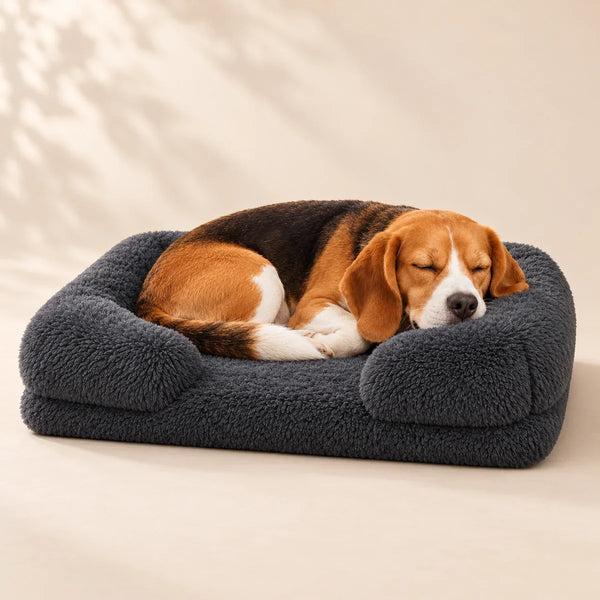
Plush Haven has a raised padded rim that may give a pet a defined boundary for resting the chin or shoulder. It can also reduce the open area available to a pet that likes to stretch. Check how your senior pet gets over the edge and whether the body can settle without pressing into it.
The current Product description uses orthopedic-style and calming language. Keep those words as product descriptors only. The current facts do not provide foam density, clinical testing, a pain outcome, or a joint-protection threshold. A senior-pet page should help an owner notice access and routine, not promise relief from a condition.
Choose space for the posture you see
Older pets may change position more slowly, sleep on one side, or rest with the head on the rim. Others may prefer a broad flat surface. Measure the space the pet uses while lying down and turning, then compare it with the listed outer footprint. Leave room for ordinary movement instead of sizing to a single tight curl.
Do not use breed or age as a substitute for measuring. Two senior dogs of the same breed can have different bodies and different ways of settling. A cat that is small may still stretch long. The bed should fit the individual posture and the space in the home.
Check the small transitions
Watch the moments around rest as well as the rest itself. Can the senior pet walk to the bed, turn without a sharp pivot, and leave without meeting a chair leg or rug edge? Does the pet pause at the rim or choose a route around it? These details can guide placement, but they cannot tell you whether a medical problem is present.
Keep the room consistent while you observe. Moving the bed, changing the floor, and adding a new blanket at once makes the result harder to read. Change one practical detail and give the pet a chance to show what is easier or harder.
Use precise language for a changing day
Write down what you see without turning it into a diagnosis. "The dog paused at the edge" is more useful than "the bed caused pain." "The cat chose the old blanket" is more accurate than "the new bed failed." Clear notes help a veterinarian or another caregiver understand the pattern.
Share sudden changes in sleep, appetite, posture, rising, or walking with a veterinarian. An older pet can have several needs at once, and a bed cannot separate a health change from a preference. Keep the rest-surface choice modest and the professional boundary clear.
Use the bed inside a broader care plan
A senior pet may need a rest spot, better footing, shorter routes, rehabilitation, medication, or a veterinary recheck. Plush Haven can be considered as one part of the home arrangement when its footprint and access fit. It should not replace advice about a diagnosed condition or a new sign.
General veterinary context from the VCA bedding guidance connects mobility and bedding choices without endorsing a particular Product. Use that kind of source to prepare questions, not to promise that a raised rim will relieve discomfort.
Watch the senior pet after rest
Observe how the pet rises from the bed, walks away, and returns later. A change after resting can be worth recording even when the bed itself looks clean and correctly placed. Keep the description factual and share a concerning pattern with the veterinarian.
Do not keep enlarging the bed to solve every difficulty. The issue may be the route, the floor, the pet’s condition, or a different care need. A larger footprint helps only when the posture and room make it usable.
Keep the owner’s routine realistic
Choose a size and location that another caregiver can understand. Make the approach clear, keep the cover-care plan simple, and leave a familiar alternative available. A senior-pet rest spot works best when the household can maintain it without rushing the animal or skipping an important check.
Give the pet time to show a pattern
One approach or one nap cannot answer every senior-pet question. Watch the bed at different points in the day and note whether the pet can reach it, settle, rise, and leave. If the pattern changes, pause the bedding decision and ask what else may be affecting the pet.
Include the owner’s practical view in the note. A spot that looks accessible may still be hard to clean or crowded when the household is active. A manageable room helps the pet and the person caring for it.
Keep the choice open.

Watch for changes that need a veterinarian
A new reluctance to rise, sudden sleep change, pain, swelling, a limp, a wound, or difficulty bearing weight deserves professional attention. Do not respond by buying a larger bed and assuming the problem is solved. Share what you observe, including when the change appears and how the pet moves toward the rest spot.
A bed can be one home adjustment in a broader plan, but it cannot determine whether the pet needs treatment, rehabilitation, medication, or another support. General guidance from the American Kennel Club discusses accessible routes, traction, and supportive rest as practical considerations. It does not validate Plush Haven or prove a medical result.
Use the base as a practical check
The current product information calls the base non-slip. That description does not provide a universal threshold for every floor or rug. Test the actual spot under ordinary household movement. Check whether a rug bunches, whether the bed shifts when the pet steps near the edge, and whether furniture narrows the path.
Do not add loose layers that hide movement or create a wrinkle without observing the effect. If the surface is difficult, improve the route around the bed or choose another location. A stable-looking room is not the same as a proven floor-performance result.
Make cover care manageable
Plush Haven is described as having a removable washable cover. That can help with a senior-pet routine, especially when the bed needs regular inspection, but current facts do not specify washing temperature, dryer use, waterproofing, or test results. Follow the available care information, let the cover and bed dry fully, and check the resting surface before returning it.
Set aside a clean alternative rest spot while the cover is being cared for. Keep the transition calm and familiar. If the pet refuses the bed after it is returned, check texture, temperature, location, and access instead of assuming that the pet has changed behavior.
Respect the pet’s answer
Some older pets choose a new bed quickly. Others keep a familiar blanket, floor, or sofa corner. Leave choice where possible and observe the full day. Does the pet approach, settle, turn, leave, and rest afterward? Those details are more useful than assuming any raised edge suits every senior pet.
Keep the rest spot easy to adjust. You can move it closer to the family, open the route, change the size, or return to a familiar mat. The best decision is the one that reduces household friction while staying inside the pet’s care plan.
When a senior pet’s routine needs more than a bed
Searchers comparing calming dog beds for an older pet may be looking for a quieter, easier-to-reach rest spot. Plush Haven can be considered for that household task when the floor area, approach, raised rim, and selected footprint suit the individual pet. The current facts do not establish pain relief, arthritis support, or a clinical orthopedic result.
Pay attention to a change in the whole routine. Trouble rising, a new hesitation at the rim, altered sleep, swelling, obvious pain, or a changing gait is a reason to pause the bedding decision and speak with a veterinarian. Keep the bed optional, make the route clear, and describe what you observe without turning a rest preference into a diagnosis.
Use the senior-pet decision path
Start with a clear route and a measured footprint. Then compare the listed options in the size and color guide. For placement, the removable cover, and drying routine, use the placement and care guide. If the spot fits the pet’s posture and the current care plan, review the current Plush Haven bed listing.
Keep medical questions with a veterinarian. Plush Haven can be considered as a rest surface, but it cannot diagnose a senior pet, promise pain relief, or guarantee a change in sleep or mobility.
Common Questions
Is Plush Haven a treatment for senior-pet pain?
No. It is a rest-surface option. New pain, swelling, wounds, sudden sleep changes, or mobility changes should be discussed with a veterinarian.
Should a senior pet bed be on the floor?
A floor-level, reachable spot may make access easier, but observe the individual pet and keep the route clear.
Does the raised rim suit every older pet?
No. Some pets may use an edge while others need a more open surface. Compare posture, access, and room space.
Is a plush bed a treatment for senior-pet pain?
No. It is a rest-surface option. New pain, swelling, wounds, sudden sleep changes, or mobility changes should be discussed with a veterinarian.
Is It Right for Your Pet?
Compare related questions for this product and use case.


Plush Haven Calming Pet Bed
- Calming Bolster Pet Bed
- Plush Padded Comfort
- Bolsters for Curling Up
- Non-Slip Base
