


Can a Hesitant Pet Learn to Use a Ramp?
Watch the pet's choice, the room, the route, and the confirmed product facts before expecting a hesitant pet to use a ramp.

Questions Before You Choose
My pet ignores the ramp
Keep a familiar resting option, check the room and top transition, change one thing at a time, and stop if the pet remains tense.
My pet climbs up but jumps off the side
End the session, check width and landing space, and do not assume the route is complete because the destination was reached.
The hesitation started suddenly
Ask a veterinarian about a new movement change before making an access aid part of the routine.
The Full Answer
A hesitant pet does not need a louder invitation. The useful question is whether the setting gives the animal a clear, voluntary route and enough room to leave. A pet may pause because the furniture is too high, the floor is slippery, the new surface feels unfamiliar, or the route simply does not suit its body or habits. The Gentle Slope Pet Ramp can be considered when a gradual, padded route matches the measured destination, but it cannot promise confidence or remove the need to watch your pet's response.
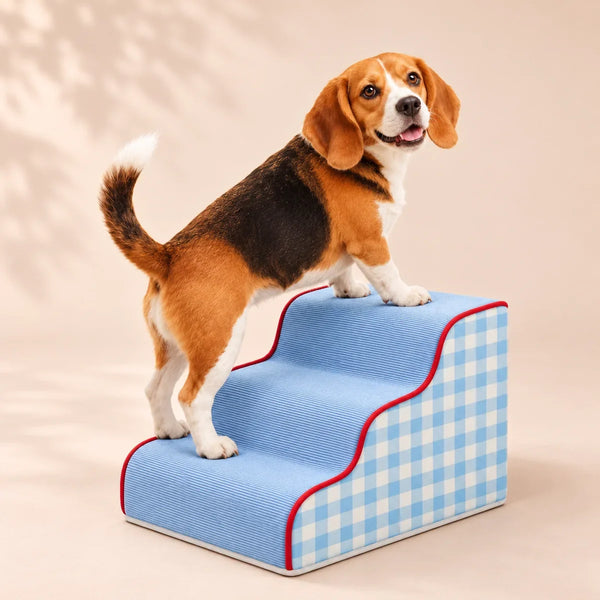
The current product is listed with 2-step, 3-step, and 4-step options, a high-density foam body, a plush cover, and a non-slip base. The current product information does not state total height, length, width, slope angle, or load limit. Those missing details should remain visible when a hesitant pet is part of the decision. A ramp that looks gentle in a photograph still needs to fit the actual room and animal.
Read hesitation as information
Start by watching the moment your pet hesitates. Does the animal stop before the furniture, avoid the ramp, stare at the first step, rush past it, or climb and then jump away? Each response points to a different question. The room may need more approach space. The floor may need cleaning. The destination may be too high. The pet may prefer a different access format.
Do not label the response as stubbornness before checking the surroundings. Remove clutter and loose rugs, keep the floor clean and dry, and give the lower end a clear position. Leave room for a pause and a turn. A pet that can walk around the ramp and return to a familiar resting spot has more choice than one placed in a narrow passage.
Look at the pet's usual movement away from the furniture. If the animal already slips, avoids thresholds, or struggles to turn, the ramp is not a simple confidence exercise. If hesitation is new and comes with stiffness, limping, pain, or an altered gait, ask a veterinarian about the change before choosing an access aid.

Make the first view ordinary
Place the ramp beside the intended bed or sofa while your pet is doing something familiar. Do not carry the animal to the top or call repeatedly until it approaches. Let the ramp become part of the room. A sniff, a look, walking around it, or choosing the floor bed are all acceptable first responses.
Keep the furniture and the ramp position steady while you observe. Changing the destination, the bedding, the lighting, and the surface together can make the situation confusing. If the ramp has a removable plush cover, keep it clean and dry, but do not add a loose blanket that can bunch under the paws or hide the walking surface.
Use a familiar voice and, if your pet likes food, offer a small reward near the lower end. Do not use a treat as a lure that takes the animal past its comfort point. A pet that turns away is giving you a boundary. Respecting it can preserve trust better than completing one forced attempt.
Separate confidence from physical fit
A pet may hesitate because the product is unfamiliar, but the cause can also be physical fit. Measure the furniture height, check the top transition, and inspect the room depth before deciding that more encouragement is needed. The 2-step, 3-step, and 4-step options are listed choices, not published height measurements. Ask for the exact dimensions and load limit for the version you need.
Check the width and the side space once those specifications are confirmed. Your pet may want to pause or turn, and a narrow landing can make a perfectly willing animal feel trapped. No universal width or side-rail design is listed, so don't rely on a typical ramp formula or another brand's chart for fit.
Notice whether the animal can choose the route back to the floor. A pet that climbs up but cannot descend calmly may appear confident for a moment while still lacking a usable route. Keep the lower area open and observe both directions without standing in a way that blocks the exit.
Offer choice while the pet decides
Keep a floor-level bed or another familiar resting place near the furniture. Choice tells you more than a forced success. If your pet uses the lower bed and ignores the ramp, the animal may be communicating that the destination is not important enough, the route feels uncertain, or the access aid is not a good fit.
Try one gentle change at a time. You might clear the approach, move the ramp a little farther from a wall, or shorten the session. Do not raise the furniture height or ask for a full climb on the same day. If the pet's response becomes more tense, return to the previous setup or stop.
Do not compare your pet with another animal's story. A customer may describe a pet that learned quickly, but that experience does not prove that your pet will respond the same way. The product can be useful for one setting and unsuitable for another. Your pet's movement, room, and daily routine are the relevant evidence.
Watch for calm signals and stop signals
Calm signals can be quiet. Your pet may approach without crouching, sniff and pause, place a paw down, or walk away and return later. A slower response is not necessarily a failed response. Give the animal time to decide and finish the interaction before fatigue or frustration appears.
Stop when you see freezing, scrambling, repeated side jumps, tucked posture, vocalizing, rapid breathing, or a strong attempt to escape. Stop if the ramp shifts, the surface becomes damp, the top no longer meets the furniture, or the room becomes busy. Do not continue because the pet is already halfway up.
If your pet shows pain, weakness, a new movement change, or distress that does not resolve when the route is removed, seek professional advice. A ramp is not a treatment for anxiety, arthritis, injury, or fear. It may be one environmental option after a qualified person has considered the pet's condition.
Keep the product facts in their proper place
The Gentle Slope Pet Ramp's listed 2-step, 3-step, and 4-step choices can help you compare possible formats after the room is measured. Banana Yellow, Sky Blue, Smoke Gray, and Khaki are the listed colors. The high-density foam body, plush cover, non-slip base, and removable washable cover are current product wording. None of these facts guarantees that a hesitant pet will accept the ramp.
Care and placement may influence the response. Keep the base flat on a clean, dry floor, follow the cover care directions, and let the cover dry fully before reuse. Check the route after cleaning or moving furniture. The non-slip base doesn't make every floor or every pet movement safe.
Give the ramp time to become predictable, but set a limit on how long you will keep testing a route that does not work. A lower piece of furniture, pet stairs, a floor bed, or carefully managed owner assistance may be more appropriate. The alternative is not a failure. It is a different answer to the same access problem.
Decide from the real response
Before choosing, write down what your pet does before, during, and after approaching the destination. Add the furniture height, available floor space, return path, exact version information, and the signs that would make you stop. If the setting still points toward a gradual route, view the current ramp options. If you need a detailed introduction sequence, read the pet ramp introduction guide.
A hesitant pet deserves time and an exit, not a promise that the right product will change the response. Choose the Gentle Slope Pet Ramp only when the destination, floor, step choice, and household supervision make sense and your pet can approach without being forced. If the animal continues to refuse, keep the easier resting option and reconsider the format.
For a pet with a health concern, let the veterinarian set the boundaries for home access. For an ordinary furniture route, let the animal's calm, repeatable movement decide. The goal is not to make a hesitant pet perform. The goal is to offer a clear choice and notice whether the choice is genuinely usable.
If the route fits the room and the pet begins to choose it freely, continue with short, supervised practice. If not, stop without guilt. A thoughtful alternative can protect trust and make daily life easier than insisting on a ramp that the real animal does not want to use.
Common Questions
Why might a pet hesitate before using a ramp?
The destination may be too high, the floor may be slippery or cluttered, the surface may feel unfamiliar, or the route may not suit the pet's movement. Watch the setting and the animal before adding more encouragement.
Should I pull my pet up the ramp?
No. Let the pet investigate and choose small voluntary steps. Pulling, pushing, or blocking the exit can make the ramp feel threatening and hides whether the route is genuinely usable.
When is hesitation a reason to call a veterinarian?
A new reluctance to jump, stiffness, limping, pain, changed gait, or ongoing distress deserves professional advice. A ramp cannot diagnose or treat the cause.
Is It Right for Your Pet?
Compare related questions for this product and use case.


Gentle Slope Pet Ramp for Beds & Sofas
- Pet Ramp for Beds, Sofas
- Gentle Slope Access
- 2-, 3- or 4-Step Heights
- High-Density Foam Core
