


Pet Ramp Size Guide: Choosing 2, 3, or 4 Steps
Choose 2 steps for lower furniture and 3 or 4 steps for taller beds and sofas. The top should meet the surface with no last jump.
Fit Checklist
All checked. You are ready to pick a size. View Product
The Full Answer
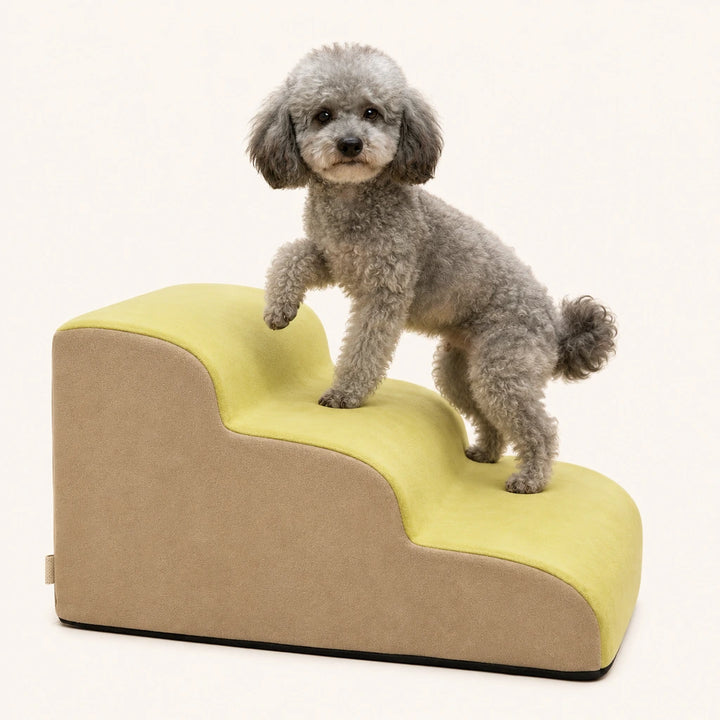
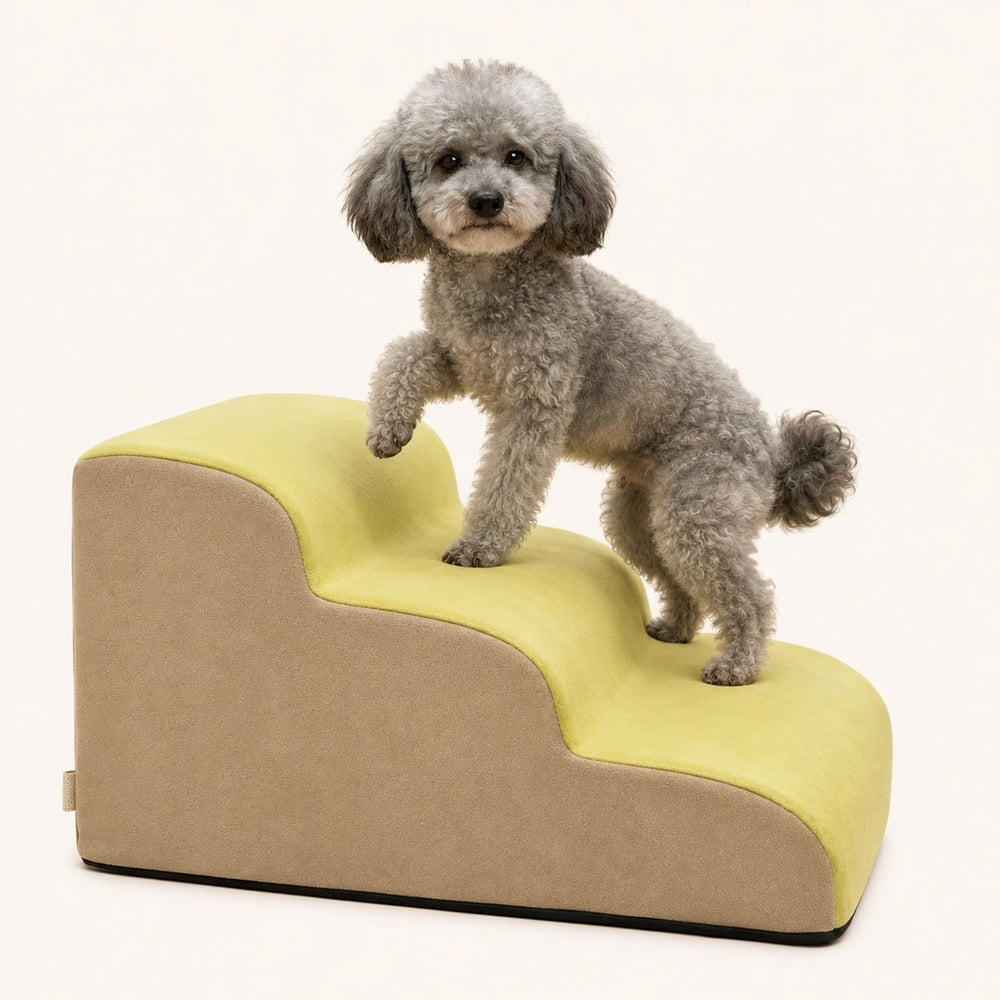
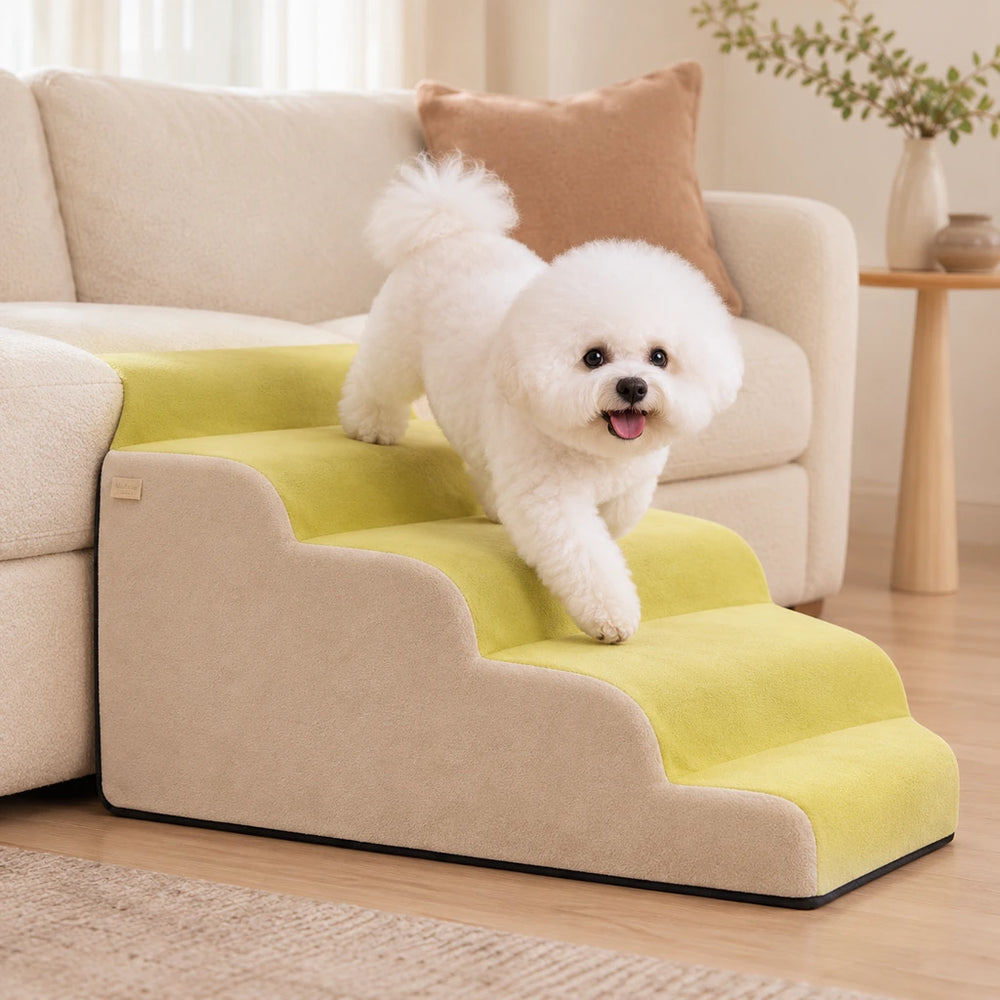
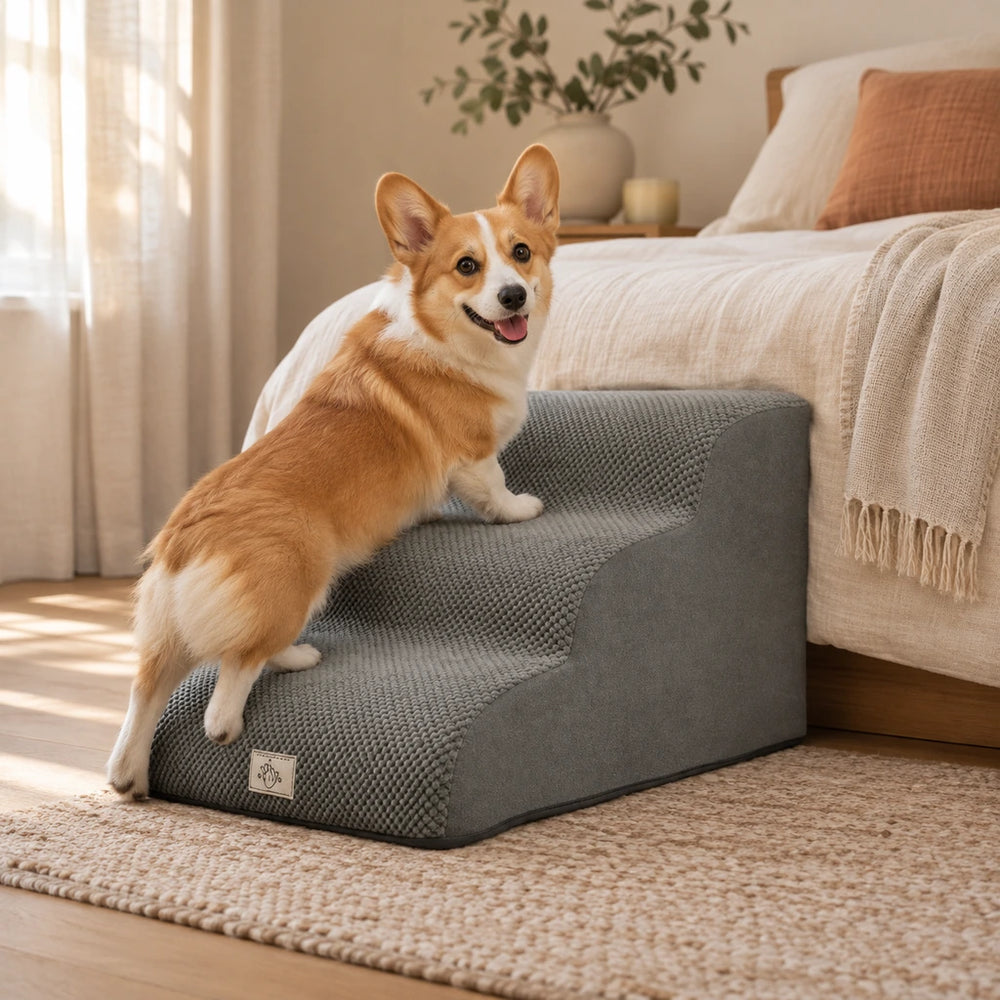
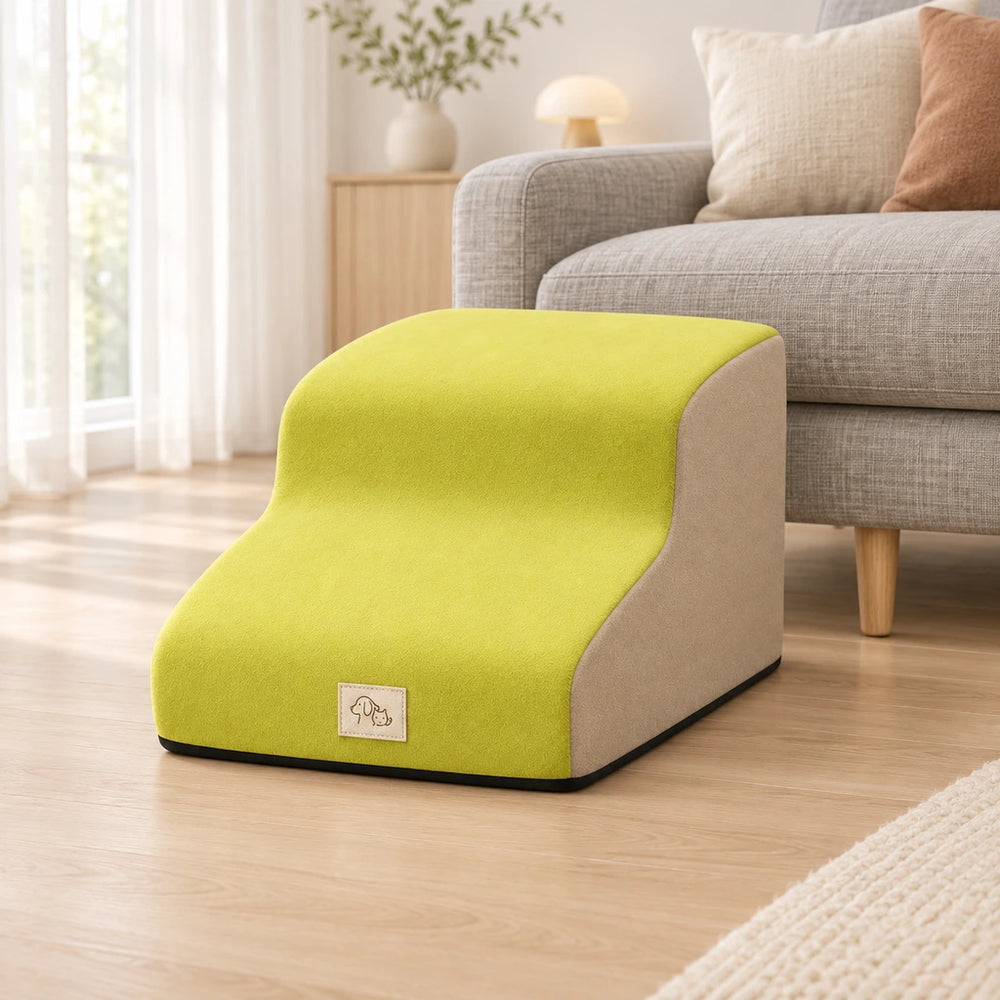
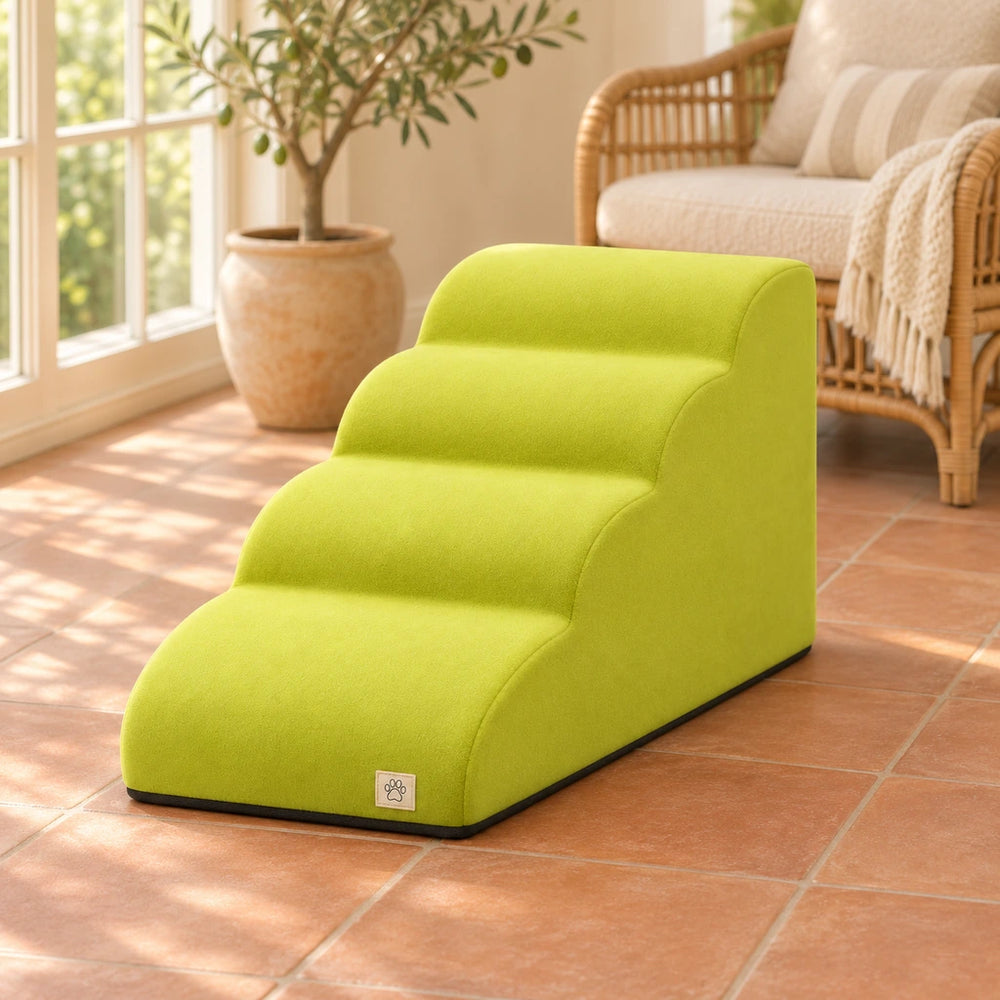
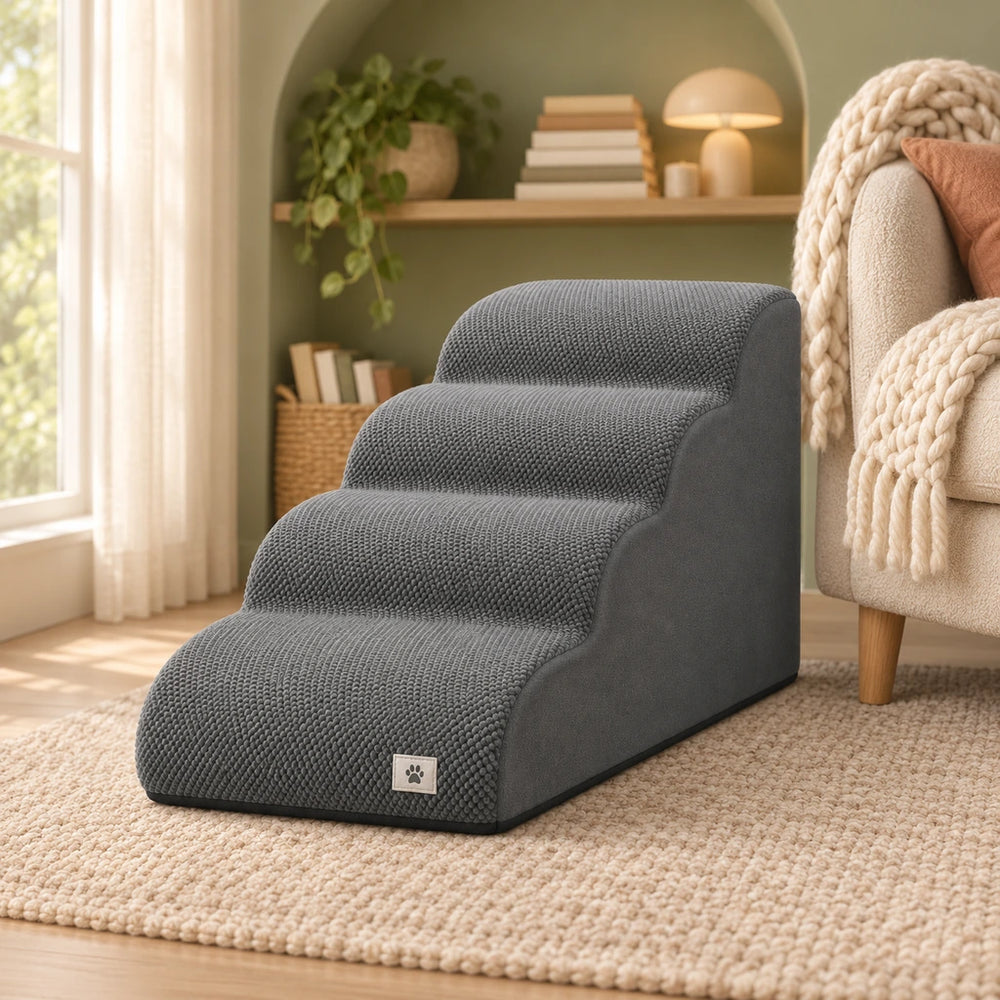
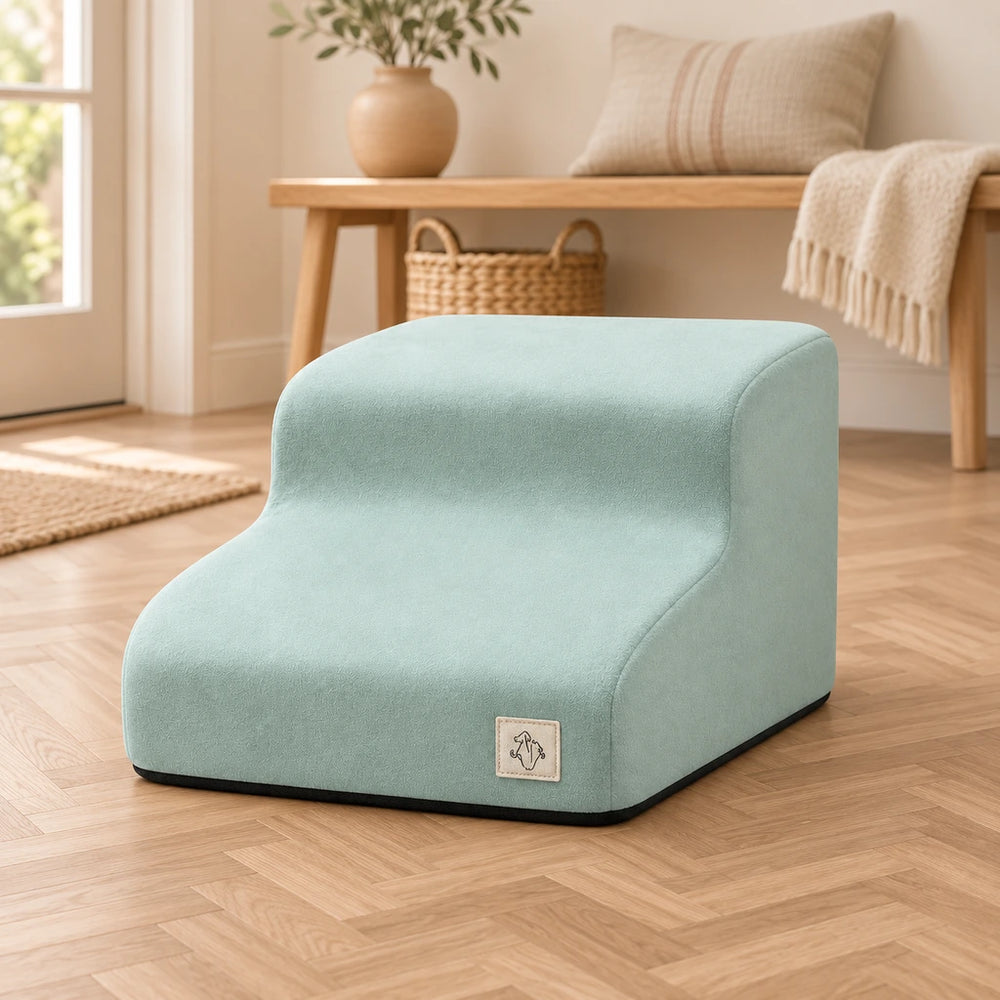
Choose the step count by measuring from the floor to the top of your mattress or sofa cushion. The Gentle Slope Pet Ramp for Beds & Sofas comes in 2, 3 and 4 steps: 2 steps suit lower furniture, and the 3-step and 4-step versions are for taller beds and sofas. The top should finish close to the surface so your pet never has to make a last jump, and one of the product photos labels the slope 35°. Ask our team for the exact height, length and weight limit of your option before you order.
| Option | Best for | Floor space | Check before ordering |
|---|---|---|---|
| 2 Steps | Lower furniture such as a low sofa, chair or bed | Smallest footprint of the three | Surface height against the top step |
| 3 Steps | Taller beds and sofas | Longer than 2 steps | Surface height and the open floor in front of it |
| 4 Steps | The tallest beds and sofas the ramp is offered for | Longest and tallest, as the product photos show | Surface height, floor length and your dog's weight |
All three options come in Banana Yellow, Sky Blue, Smoke Gray and Khaki, with the same high-density foam core, plush cover and non-slip base. Color does not change the height or the fit.
Start with the furniture height
Measure from the floor to the surface your pet will use. Measure the bed where the mattress actually begins, not only the frame. For a sofa, measure the cushion or sitting surface where your pet will step across. If the surface compresses, note that change instead of assuming the highest point is the everyday landing.
Next, picture the top of the ramp meeting the furniture. A suitable route should not end with a tall gap that asks your pet to jump after climbing, and it should not finish so high that your pet has to step down awkwardly. Take your measured height to our team and ask for the exact height of the 2-, 3- or 4-step version before you choose.
Write your measurement down and keep it with you when you ask. A step count such as 4 Steps tells you the format and not the height, and another brand's dimensions will not match this ramp.

What the step choices tell you
The three options let you match a format to the furniture, but a step count alone does not say which version reaches a particular bed. A two-step route may make sense for a low sofa, while a much taller bed may need a different version or a different access solution.
Ask for the total height, the usable walking width, the length from bottom to top and the weight limit of the exact version you are considering, and get the answer before you order.
The color options come later. Banana Yellow, Sky Blue, Smoke Gray, and Khaki can help the ramp sit naturally in the room, but color does not change height, width, slope, or capacity. Choose a color after the destination, floor plan, pet, and care routine all point in the same direction.
Plan the floor footprint and landing
A pet ramp needs more than a place at the top. Stand at the furniture and look toward the open floor. Your pet needs a straight enough approach to reach the lower end without weaving around a table, toy basket, or chair. The lower end needs to rest flat, and the upper end needs to stay aligned with the furniture during ordinary use.
Leave room beside the route as well. A pet may pause, turn, or decide to leave before reaching the top. A narrow channel can make a gradual route feel more difficult than it looked in a photograph. Keep cords, loose rugs, and clutter away from the approach and the landing. The non-slip base is described for steadier footing, but it does not make an unsuitable or wet floor safe.
Consider how the ramp will live in the room after the first week. If you must move it every time someone walks past, the household may stop setting it up correctly. If it blocks a doorway or leaves no comfortable path for people, a lower resting place, pet stairs, or owner-assisted access may fit the room better. The best dog ramp size is the one the household can place and check consistently.
Match the route to your pet's movement
Look at your pet's body and behavior, and leave any diagnosis to your vet. A small dog may need a route that feels easy to approach, while a long-bodied dog may need enough room to place each foot without twisting. An older pet may move more slowly or pause more often. A confident jumper may ignore the ramp altogether. These observations help you decide what to ask and what to watch, but they do not establish a medical requirement.
Watch a few ordinary movements on the floor. Can your pet walk forward, stop, turn, and walk back without slipping? Does your pet avoid a surface, startle at a change in texture, or rush when excited? A ramp should not be selected on the assumption that a product feature will override those signals. The route still needs a clean, dry floor, clear edges, and supervision.
If your pet has recently become reluctant to jump, stiff, lame, painful, or unsteady, ask a veterinarian about the change. If your pet is recovering from an injury or has a diagnosed mobility condition, follow the professional's instructions about home access. A size guide can help you organize a furniture measurement, but it cannot decide whether a ramp is appropriate treatment or recovery support.
For a hesitant pet, keep the first test modest. Let the animal approach, sniff, step on, and leave without being pulled. A route that fits on paper but produces scrambling, freezing, or repeated side jumps is not a fit you should force. Use that response to reconsider the setup, the step choice, or the entire access format.
Check the upper edge and the return route
Measure the final transition twice. When the ramp meets a bed, bedding can change the height from one day to the next. When it meets a sofa, a soft cushion can create a lip or gap. Put the ramp in its intended place and inspect the top from your pet's eye level. Do not assume the upper end will stay correct if the furniture or the floor moves.
Then walk the route in reverse with your attention on the floor. Your pet should have a clear way to step off, pause, and move away. Do not put the lower end beside a sharp corner or a place where a person may step backward onto the animal. Keep the route supervised until you know how your pet uses it in both directions.
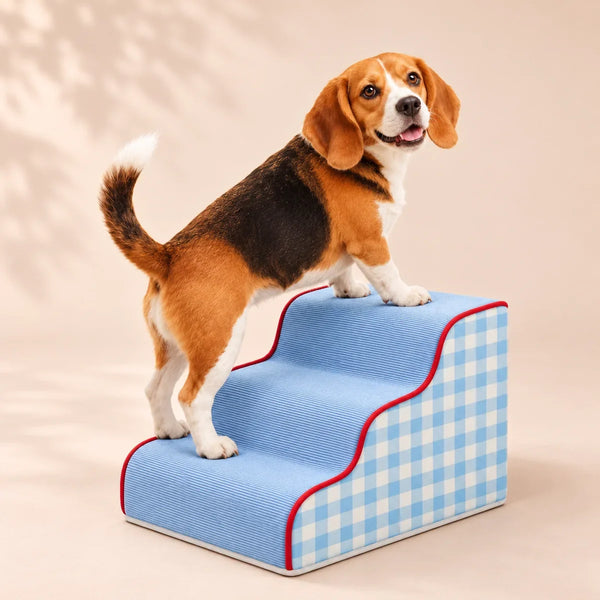
No step option is a universal fit. If the ramp must reach a much taller surface, the room is unusually narrow or the landing is tight, ask our team for exact measurements and the weight limit before ordering. Pet stairs may then suit the room better, and our pet stairs size guide lists the 30 cm (11.8 in) 2-step and 35 cm (13.8 in) 3-step heights to compare against your furniture.
Use care and storage as part of fit
Fit includes keeping the route ready. The ramp has a high-density foam core, a plush cover, a non-slip base and a removable washable cover. Wash the cover as directed, let it dry fully before putting it back, and keep the base flat on a clean, dry floor.
Check the ramp after moving it and after cleaning. The top should still meet the same destination, the lower end should still sit flat, and the walking surface should be free from dampness or loose debris. If the ramp has changed shape, feels unstable, or no longer fits the room, stop using the route while you investigate. A familiar product is not a reason to ignore a new physical change.
Storage can change the answer too. A ramp that is easy to leave beside one sofa may not be practical in a small bedroom. Ask where it will stay when people need the floor, and whether putting it away will mean that the pet loses access. If the daily storage routine is unrealistic, a compact stair format or a floor-level resting option may be more useful.
Know the no-fit signs
Skip a version when the destination height cannot be matched, the upper edge leaves a gap, or the floor does not allow a clear approach and landing. Confirm the weight limit with our team before relying on the ramp for a heavier dog.
Pause when your pet refuses the surface, repeatedly slips, jumps from the side, shows distress, or cannot walk back down. Pause when the room is busy enough that supervision is impossible. If the need involves pain, injury, sudden mobility change, or recovery, speak with a veterinarian before making the access aid part of the routine.
These limits are not reasons to reject every pet ramp. They are the checks that keep a size decision honest. A product can be well made and still be wrong for a particular bed, sofa, pet, or room. The right answer may be a different step count, another piece of furniture, pet stairs, a floor-level bed, or professional advice.
Choose the version with less guesswork
Before you decide, note the furniture height, the floor depth, the approach and landing space, how your pet moves and the step count you are leaning toward. If those answers line up and the route stays practical, the Gentle Slope Pet Ramp for Beds & Sofas is ready in 2, 3 or 4 steps.
When the destination, floor plan, pet response, and care routine all agree, a graduated access route may be worth trying. Introduce it slowly and keep another easy resting place available. If one of those pieces does not agree, measure again, compare another format, or ask for qualified help. A careful size decision protects the pet's choices and keeps the product in its real role: one possible route to furniture, not a universal answer.
If you are weighing steps against a slope, the ramp versus stairs comparison sets them side by side, and the guide to introducing a pet ramp covers the first week of use. Our Dog Stairs & Ramps collection shows every current option, the indoor dog ramp guide explains how ramps work in the home, and why beds, stairs and crates go wrong on fit lists the measuring slips to avoid.
Common Questions
How do I choose between 2, 3, and 4 steps?
Measure from the floor to the top of your mattress or sofa cushion, then choose the version whose top meets that surface closely. The 2-step suits lower furniture and the 3-step and 4-step versions suit taller beds and sofas. Ask our team for the exact height of your option before you order.
How tall, long and wide is each option?
Ask our team for the exact height, length, width and weight limit of the version you are considering. One of the product photos labels the slope 35°. Do not borrow numbers from another ramp or from pet stairs.
What if the ramp fits the room but my pet will not use it?
Stop and check alignment, floor condition, approach space and your pet's body language. A different step count, a lower resting spot, pet stairs or advice from your vet may be a better fit.
More Fit Guidance
Review related fit and buying questions for this product.



Gentle Slope Pet Ramp for Beds & Sofas
- Pet Ramp for Beds, Sofas
- Gentle Slope Access
- High-Density Foam Core
- Washable Plush Cover
