

How to Try On a Bat Cat Costume
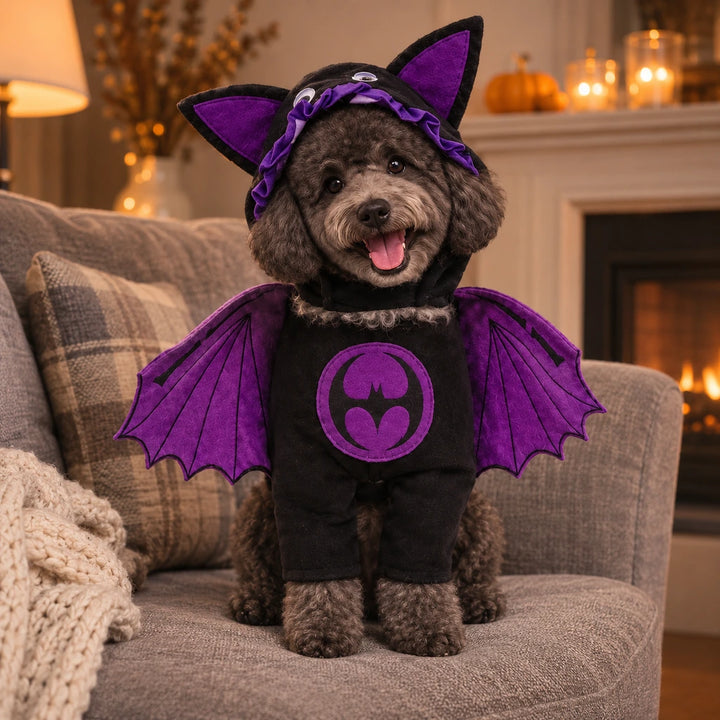
Use this bat cat costume try-on guide to check size, straps, movement, photo timing, and when to remove the costume from cats or small dogs. A practical try-on.
Step-by-step guide
-
Prepare the Room
Clear food, candles, cords, small decorations, and open-door escape routes before bringing your pet into the photo area.
-
Let Your Pet Investigate
Place the costume nearby and reward calm curiosity. Stop if the pet moves away; do not push the hood, wings, or fabric toward the face.
-
Measure Before Fastening
Use the current neck, bust, back, and weight chart and check that the chosen size will rest away from the eyes, ears, and throat.
-
Close It Gently
Fasten the adjustable closures without pulling tight, then check for rubbing, pinching, sliding, wing clearance, vision, hearing, and breathing.
-
Watch Natural Movement
Let the pet stand, walk, turn, and sit. Remove the costume if movement changes or the pet freezes, hides, paws, chews, tucks the tail, pants heavily, or appears distressed.
-
Take One Quick Photo
Keep the camera ready and the session short. Stop after a relaxed moment instead of repeating poses until the pet becomes uncomfortable.
The Full Answer
A Bat Cat costume try-on should be a calm, short test at home, not a race to get a perfect Halloween pose. Prepare the room, measure first, introduce the bat-wing outfit gradually, and watch your pet’s movement and body language. Remove it as soon as the fit or the experience stops looking comfortable.
Prepare before you touch the costume
Choose a quiet room with a clear floor and enough grip for a few steps. Put away food, candles, cords, small decorations, and anything your pet might chew. Close doors and gates so a startled cat or dog cannot rush into a hallway or outside while you are fastening the outfit.
Have the size chart, the costume, a few rewards, and your camera ready. The camera should be ready before your pet is dressed. Planning the photo first keeps the try-on short and removes the temptation to keep adjusting for another pose.
Let your pet meet the costume
Place the Bat Cat costume nearby and allow your pet to investigate at their own pace. The bat-wing silhouette, hood, ear details, and fabric may feel unfamiliar. Reward calm sniffing or looking, but do not push the costume toward the face or pull it over a pet that is backing away.
Previous comfort with a collar does not guarantee comfort with a costume. Straps, wings, closures, and a hood change the sensation and the visual outline. If your pet refuses to approach, use the outfit as a flat-lay photo prop and end the try-on there.
Measure and choose the size first
Use actual neck girth, bust length, and back length while your pet stands naturally. The current chart lists S, M, L, and XL ranges, with weight ranges as an additional reference. Compare all of the measurements before fastening. Read the Bat Cat size guide if you need the full chart in inches and centimetres.
Do not stretch a closure to make a borderline size work. Check that the costume will rest away from the eyes and ears and that the chest area will not press when your pet turns or lowers the head. Coat thickness and body shape can change the result.

Fasten one part at a time
Work slowly and keep your hands gentle. Support your pet without pinning them down, place the costume as shown by its design, and close the adjustable fasteners without pulling them tight. Check that the wing edges and hood details are not blocking sight, hearing, or breathing.
After each adjustment, pause. Offer a reward if your pet remains relaxed, then look at the neck, chest, back, and closure position. The costume should stay in place without rubbing, pinching, sliding toward the throat, or catching on nearby objects.
Watch movement before taking a photo
Let your pet stand, walk a few steps, turn, and sit on their own. Do not lift or pose them to hide a movement problem. A suitable try-on preserves normal movement and allows your pet to choose where to go. Watch the face and body as well as the costume: a still pet may be uncomfortable rather than calm.
Remove the outfit if your pet freezes, hides, flattens the body, paws at the fabric, chews it, tucks the tail, pants heavily, vocalizes unusually, or repeatedly tries to escape. If the pet cannot see, hear, breathe, walk, or turn normally, end the session immediately.
Take only the photo your pet offers
Once the fit and body language look comfortable, take one or two quick photographs in the prepared room. Keep the session supervised from start to finish. Stop after the first relaxed image instead of repeating the pose until your pet becomes frustrated.
Do not leave the costume on for sleep, meals, rough play, crate time, or unsupervised time with children or other animals. It is seasonal dress-up, not walking control, restraint, or a garment for extended unattended wear.
Know when to remove it for good
Some pets simply do not enjoy costumes. That is a complete answer, even when the size is technically correct. Remove the outfit, give your pet a quiet break, and choose a simpler seasonal picture such as a bandana beside the pet or the costume laid out on its own.
If skin irritation, breathing difficulty, persistent fear, or another health concern continues after the costume is removed, stop using it and speak with a veterinarian. A try-on guide cannot diagnose an individual animal or confirm universal suitability.
Use this short try-on checklist
- Prepare a quiet, clear room and set up the camera before dressing your pet.
- Let your pet inspect the costume without pressure.
- Measure neck, bust, and back length and choose from the current chart.
- Fasten gently, checking vision, hearing, breathing, closures, and wing clearance.
- Watch standing, walking, turning, and sitting before taking a quick photo.
- Remove the costume at the first sign of discomfort and never leave it on unattended.
Plan the Halloween moment around consent
Bat Cat works best when the pet, not the calendar, sets the pace. Read the photo and party audience guide for a calm setting, or compare a bat costume with a Halloween bandana when you want less clothing.
When your pet’s measurements and response both support a short supervised session, review the current Bat Cat costume and keep the first try-on deliberately brief.
Common Questions
How do I introduce the costume?
Let your pet sniff and observe it in a quiet room, reward calm curiosity, and stop if the pet backs away or shows distress.
How long should a try-on last?
Keep it brief enough to check a few natural movements and take a quick photo. Remove it before the pet becomes uncomfortable.
What signs mean I should remove it?
Freezing, hiding, flattening the body, pawing, chewing, tail tucking, heavy panting, unusual vocalizing, escape attempts, or abnormal movement are reasons to stop.
Can my pet sleep or eat in it?
No. Remove it before sleep, meals, rough play, crate time, outdoor roaming, or any activity you cannot supervise closely.
More guides
Continue with related guides for this product.
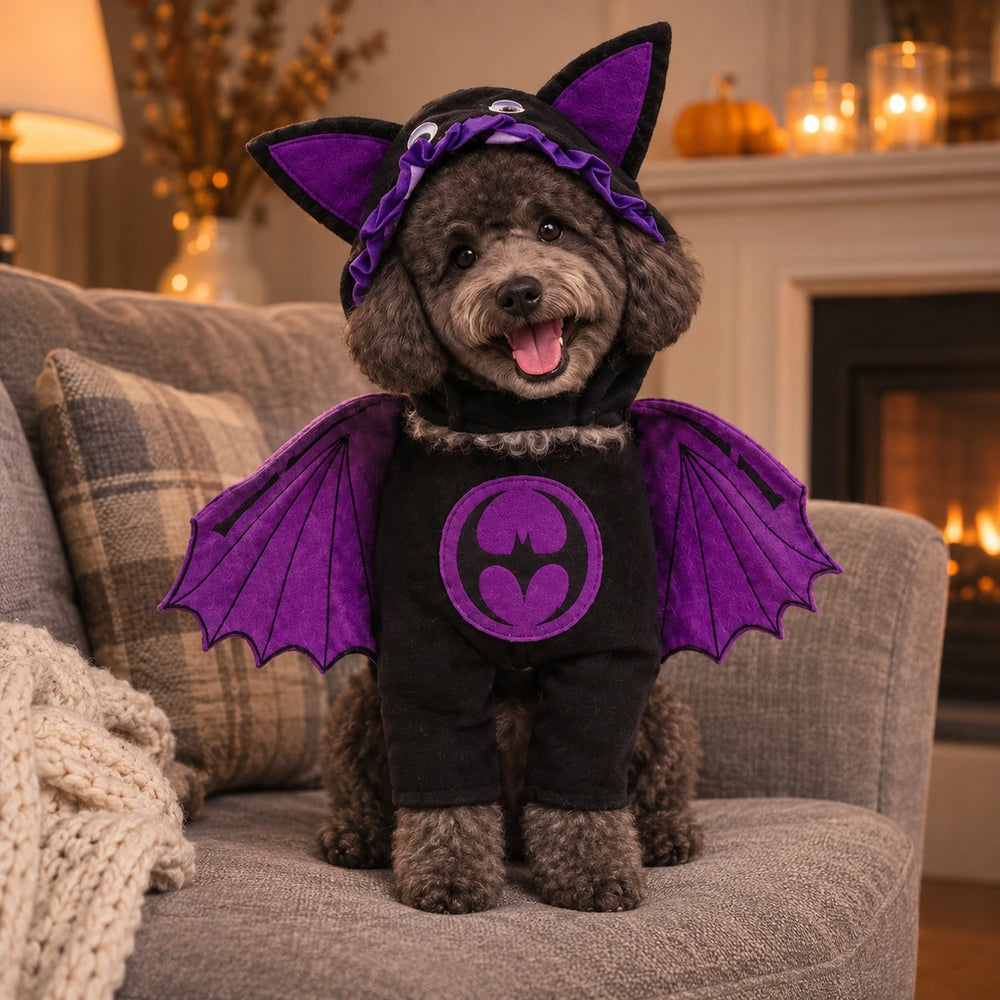

Bat Cat™ Halloween Pet Costume
- Bat Wing Halloween Pet Costume
- For Cats & Small Dogs
- Great for Festive Photos
- Short Supervised Wear
