
Bat Cat Costume Size Guide
Check bat cat costume sizing for cats and small dogs, including neck, chest, back length, weight range, movement, and short-wear fit guidance. A size guide tha.
Fit Checklist
All checked. You are ready to pick a size. View Product
The Full Answer
Choosing a Bat Cat costume size starts with your pet’s actual measurements, not a breed label or a guess from a photograph. The current chart lists Small, Medium, Large, and XL by neck girth, bust length, back length, and weight range. Use those numbers as a starting point, then confirm that the costume allows normal standing, walking, turning, vision, hearing, and breathing.
Measure while your pet stands naturally
Measure on a calm pet with four feet in a natural stance. Keep the tape level and close to the body without pulling it tight. Take the neck measurement where the costume will rest, then check the chest or bust point and the back length from the base of the neck toward the tail as described by the size chart.
Write the measurements down before choosing. Cats and small dogs can have very different proportions, and a pet’s coat can change how the closures sit. Weight can help you compare the chart, but it should not replace neck, chest, and back checks.
Use the current Bat Cat chart
These are the measurements currently shown for the Pet Festive Costumes chart:
| Size | Neck girth | Bust length | Back length | Weight range |
|---|---|---|---|---|
| S | 7.9–9.4 in (20–24 cm) | 5.9 in (15 cm) | 9.4 in (24 cm) | 3.3–6.6 lb (1.5–3 kg) |
| M | 11–12.6 in (28–32 cm) | 6.7 in (17 cm) | 11 in (28 cm) | 7.7–11 lb (3.5–5 kg) |
| L | 11.4–13 in (29–33 cm) | 7.5 in (19 cm) | 12.6 in (32 cm) | 12.1–16.5 lb (5.5–7.5 kg) |
| XL | 11.8–14.2 in (30–36 cm) | 8.3 in (21 cm) | 14.2 in (36 cm) | 17.6–22 lb (8–10 kg) |
If a measurement does not sit comfortably inside the chart, pause before ordering. Do not assume that moving up or down one label will solve every proportion difference. A close neck range, chest shape, long back, dense coat, or a closure that cannot sit flat can change the practical fit.
Account for the coat and body shape
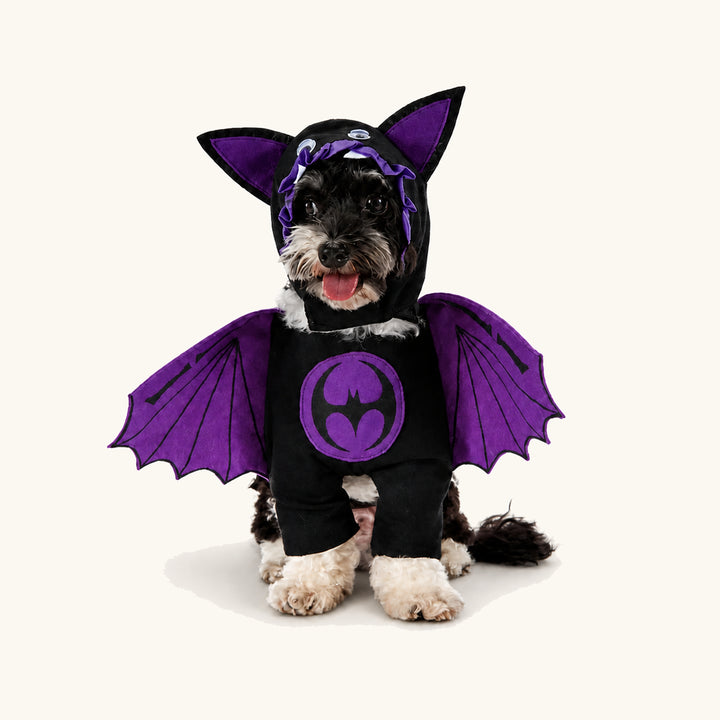
Measure over the coat only where the chart or the intended fit requires it, and avoid compressing a thick coat with the tape. After fastening, check whether the bat-wing shape rests away from the face and whether the hood or ear details interfere with sight or hearing. A costume that looks loose in your hands may feel different once fur and movement are involved.
Do not choose solely by “cat,” “small dog,” or breed. A compact cat and a deep-chested small dog may need different checks even when their weight is similar. The chart supplies reference points; your pet’s movement and response decide whether the outfit should stay on.

Check the closures without making the costume tight
Fasten the adjustable closures gently and make sure they remain in their intended position. The neck and chest should not feel pinched, and the costume should not slide toward the eyes, ears, or throat. Look for rubbing, folded fabric, pressure points, or wing placement that catches on nearby objects.
After the first fastening, ask your pet to stand, walk a few steps, turn, and sit. Recheck the closures after movement. A fit that seems acceptable while still can shift when the pet lowers the head, stretches, or shakes.
Test the size before the event
Try the costume on at home well before Halloween. Keep the first session short and quiet. Watch normal movement instead of asking for a perfect pose. Your pet should be able to see, hear, breathe, walk, turn, and settle without the costume becoming the focus of their behavior.
Remove it if your pet freezes, hides, paws at the fabric, chews it, tucks the tail, pants heavily, vocalizes unusually, or repeatedly tries to escape. A costume is optional; comfort is not. If a health or breathing concern remains after removal, stop using the outfit and contact a veterinarian.
Keep the measurement decision practical
- Measure neck, bust, and back length with your pet standing naturally.
- Compare all three measurements with the current chart, then use weight as a supporting reference.
- Consider coat thickness, chest shape, closure position, hood placement, and wing clearance.
- Test standing, walking, turning, sitting, vision, hearing, and breathing before taking photos.
- Choose a different photo accessory or a flat-lay portrait when the costume does not remain comfortable.
Choose the size and the session together
The correct label is only the beginning. A Bat Cat costume should fit the individual pet and the short, supervised moment you have planned. For the first fastening sequence, read the Bat Cat try-on guide. For a simpler look when clothing feels like too much, compare the costume with a Halloween bandana.
When the measurements and tolerance checks line up, review the current Bat Cat options and select the size that matches the chart without forcing your pet into a costume they do not want to wear.
Common Questions
Which measurements matter?
Use neck girth, bust length, and back length from the current chart, with weight as an additional reference. Do not choose by breed label alone.
What if my pet is between chart ranges?
Pause and compare all measurements, body shape, coat, closure placement, and movement. Do not force a borderline size; ask the seller when the chart does not resolve the fit.
Can a cat and small dog use the same chart?
They can be considered against the same listed chart when the measurements match, but species, body shape, coat, and tolerance still need an individual check.
What should I do after choosing a size?
Try it on at home before Halloween, watch a few natural movements, and remove it if the pet freezes, hides, paws, chews, tucks the tail, pants heavily, or seems uncomfortable.
More Fit Guidance
Review related fit and buying questions for this product.
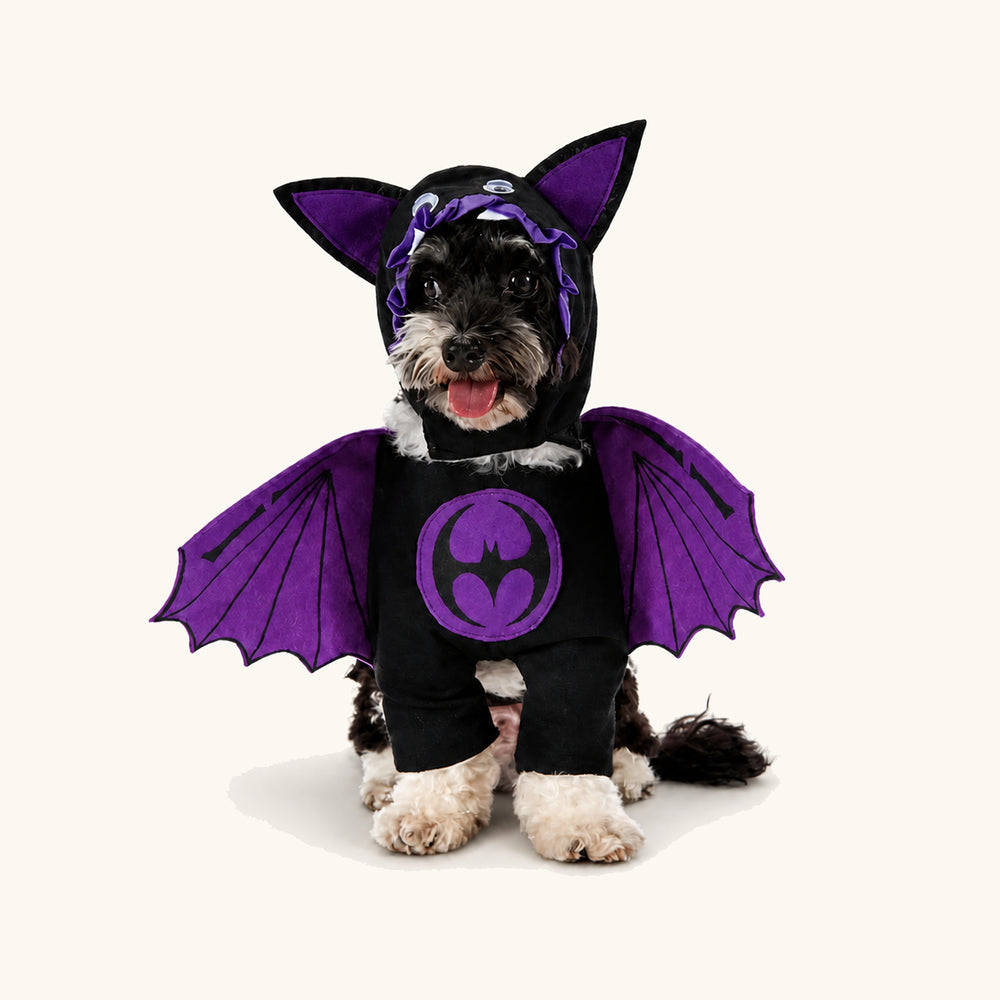


Bat Cat™ Halloween Pet Costume
- Bat Wing Halloween Pet Costume
- For Cats & Small Dogs
- Great for Festive Photos
- Short Supervised Wear
