







Does a Cat Scratch Protector Stop Sofa Scratching?
A protector covers the sofa spot your cat scratches but cannot stop the urge. Add a post beside it and change one thing at a time to see what works.
Questions Before You Choose
My cat scratches one sofa arm every day
Measure that arm, cover the marked area with the smallest size that fits, and put a post or pad close beside it.
My cat prefers a different direction
Notice whether the cat reaches up, scratches across or works along the floor, and match the nearby outlet to that movement.
My cat ignores the post I bought
Move the post next to the hotspot, check that it is tall and steady enough, and try a different texture before replacing it.
I worry a protector will not be enough on its own
It covers the hotspot and cannot guarantee that scratching stops, so combine it with a post and adjust one thing at a time.
The Full Answer
A cat scratch protector covers the part of the sofa your cat scratches, but it cannot stop the urge itself, and the product page says plainly that it cannot guarantee scratching will stop. The HarmonyGuard Cat Scratch Protector works best with a scratching post or pad right beside the same spot, so your cat has an approved place to use when the sofa edge is covered.
What the mat does
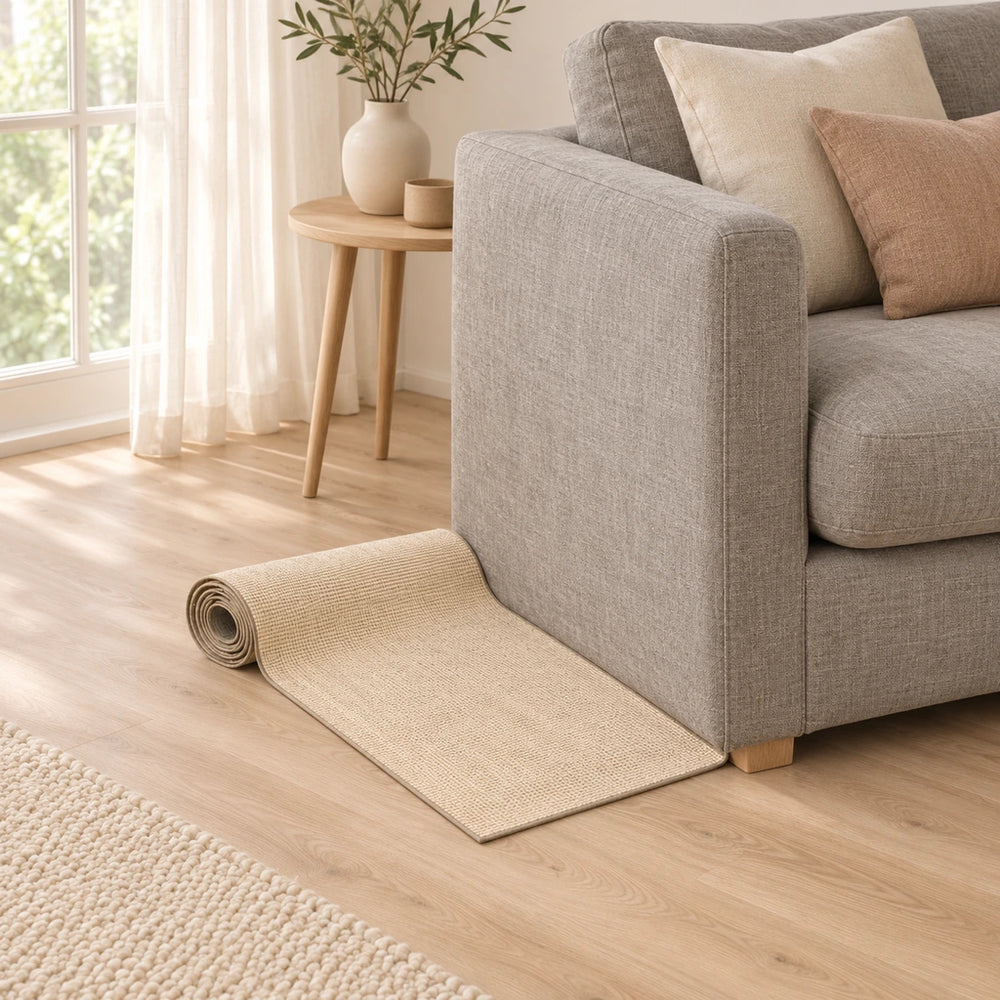
The mat covers one defined area, such as a sofa corner, an arm or a side panel, and gives claws a scratch-friendly surface exactly where the conflict happens. Cornell's Feline Health Center describes scratching as normal behaviour that cats use to mark with scent and to shed the outer layer of their claws, so the useful goal is to redirect it. Covering the hotspot buys you time while a better outlet becomes a habit.

Why cats pick the sofa
A sofa arm is tall enough for a full stretch, its fabric gives the claws something to grip, and it sits in the middle of the room where your cat spends time with you. Cats also leave scent when they scratch, so a spot that has been used once tends to be used again. Seeing which of those matters most for your cat helps you choose the size, the nearby outlet and where to put it.
Pick a size from the way your cat scratches
Look at the damage before you choose. These are starting points; measure the marked area first, as the size guide explains.
| What you see on the sofa | Sizes to consider |
|---|---|
| One corner or a short patch on an arm | 30 x 60 cm (11.8 x 23.6 in) |
| A side panel marked along its length | 30 x 100 cm or 40 x 100 cm |
| A broad panel marked from side to side | 40 x 100 cm (15.7 x 39.4 in) |
| A long edge or a whole side | 30 x 200 cm or 40 x 200 cm |
If your cat ignores the post and goes back to the sofa
A cat that skips the post is telling you the post does not match the sofa. Check four things in turn.
- Distance: Humane World for Animals advises putting the post next to the furniture the cat already scratches. A post in a quiet corner across the room is easy to ignore.
- Direction: a cat that stretches up the sofa arm needs a tall post, and Cornell suggests one at least as tall as the cat at full stretch. A cat that scratches across needs a flat pad.
- Steadiness: a post that wobbles when used will not be tried twice.
- Texture: Cornell notes that cats that scratch couches may prefer a sisal or rope-like surface.
Fit the mat over the hotspot first, move the post beside it, and change one thing at a time so you can tell what worked. If your cat starts on a different panel, resist covering the whole sofa. Pick the new repeated spot and treat it the same way.
A simple plan for the first two weeks
- Measure the marked area and fit the mat over it after a hidden-patch test.
- Put a steady post or pad right beside the mat, matched to how your cat scratches.
- Watch where the cat scratches for a few days without changing anything else.
- If the cat ignores the outlet, move it closer or change its direction or texture, one change at a time.
- Cover a second spot only when a second repeated pattern shows up.
What to expect
Cornell notes that restricting access is the only certain way to stop a cat scratching a given item, so a protector plus a good outlet is a practical middle path with no promise attached. Punishment does not help, because cats do not connect it with the scratching and may become fearful. If scratching changes suddenly or your cat seems uncomfortable, ask your vet.
The mat comes in Beige or Grey, so choose the colour that sits better with the sofa. For fitting steps, the placement guide covers testing a hidden patch and rechecking the edges.
Our guides on why cats scratch and how to redirect them humanely and on where to put a cat scratcher so it redirects furniture scratching go deeper on choosing and positioning the outlet, and the Play & Enrichment collection shows the other scratching and play options we sell.
Common Questions
Will a cat scratch protector stop my cat scratching the sofa?
It covers the area you fit it to, but it cannot guarantee that scratching will stop. Pair it with a post or pad beside the sofa so your cat has an approved place to scratch.
Where should I put the protector on a sofa?
Directly over or beside the part your cat already scratches, such as a corner, an arm or a side panel. Measure the marks first and pick the smallest size that covers them.
What if my cat ignores the scratching post?
Move the post next to the sofa hotspot, match its direction and height to how your cat scratches, make sure it is steady, and try a sisal-style surface. Change one thing at a time.
What if my cat scratches another part of the sofa?
Treat the new repeated spot the same way rather than covering the whole sofa. Measure it, cover it and keep an outlet beside it.
Is It Right for Your Pet?
Compare related questions for this product and use case.
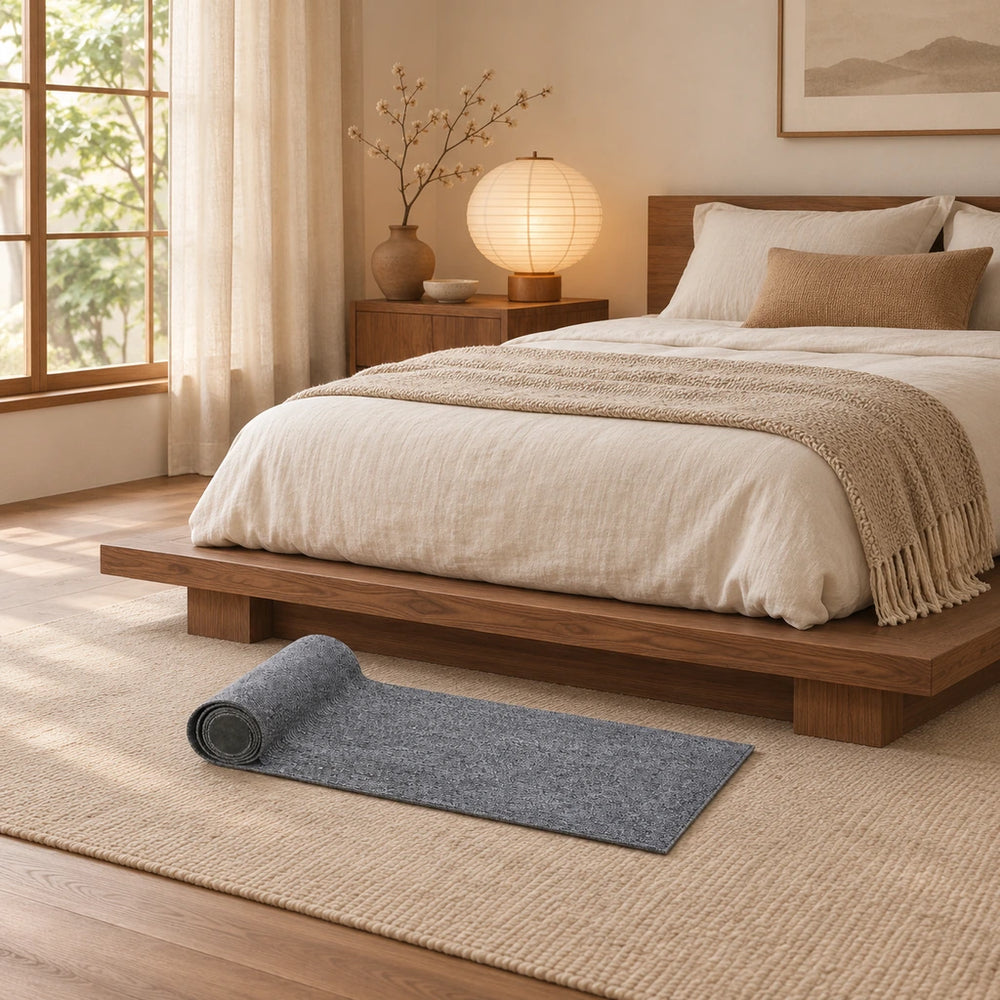


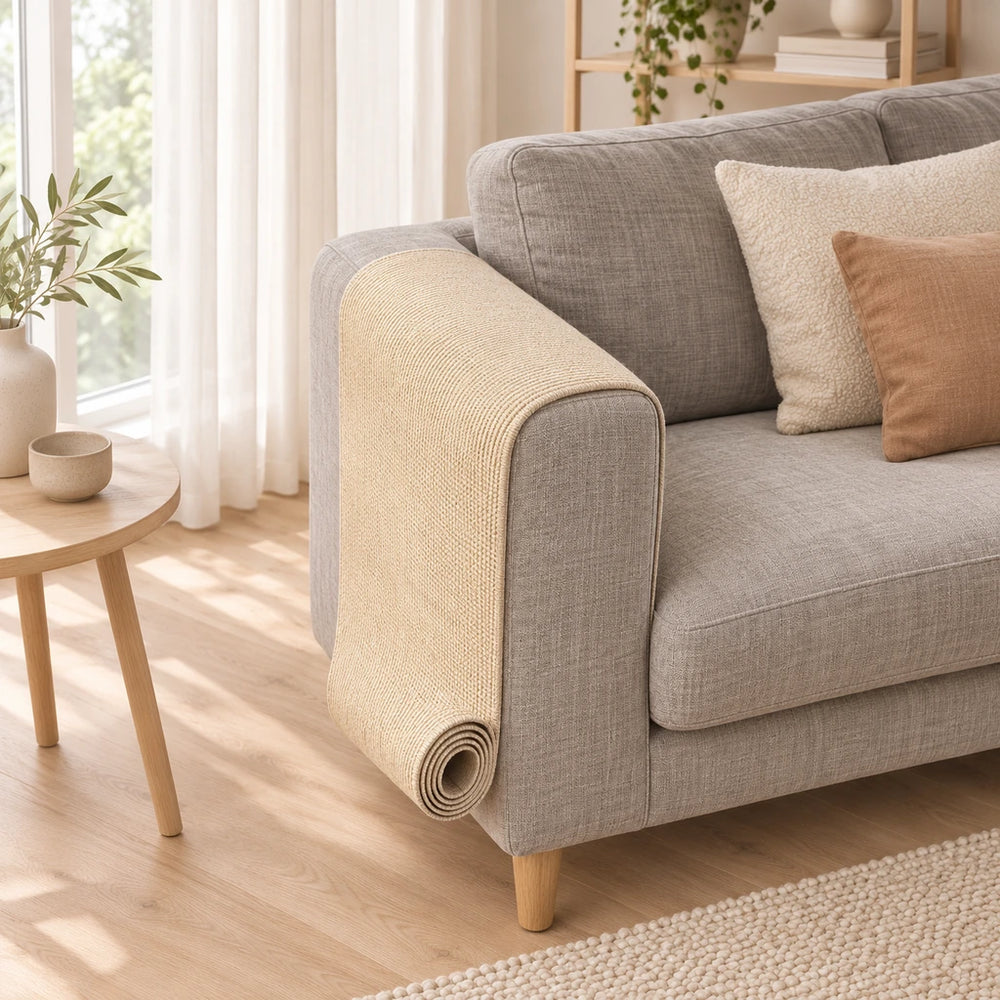
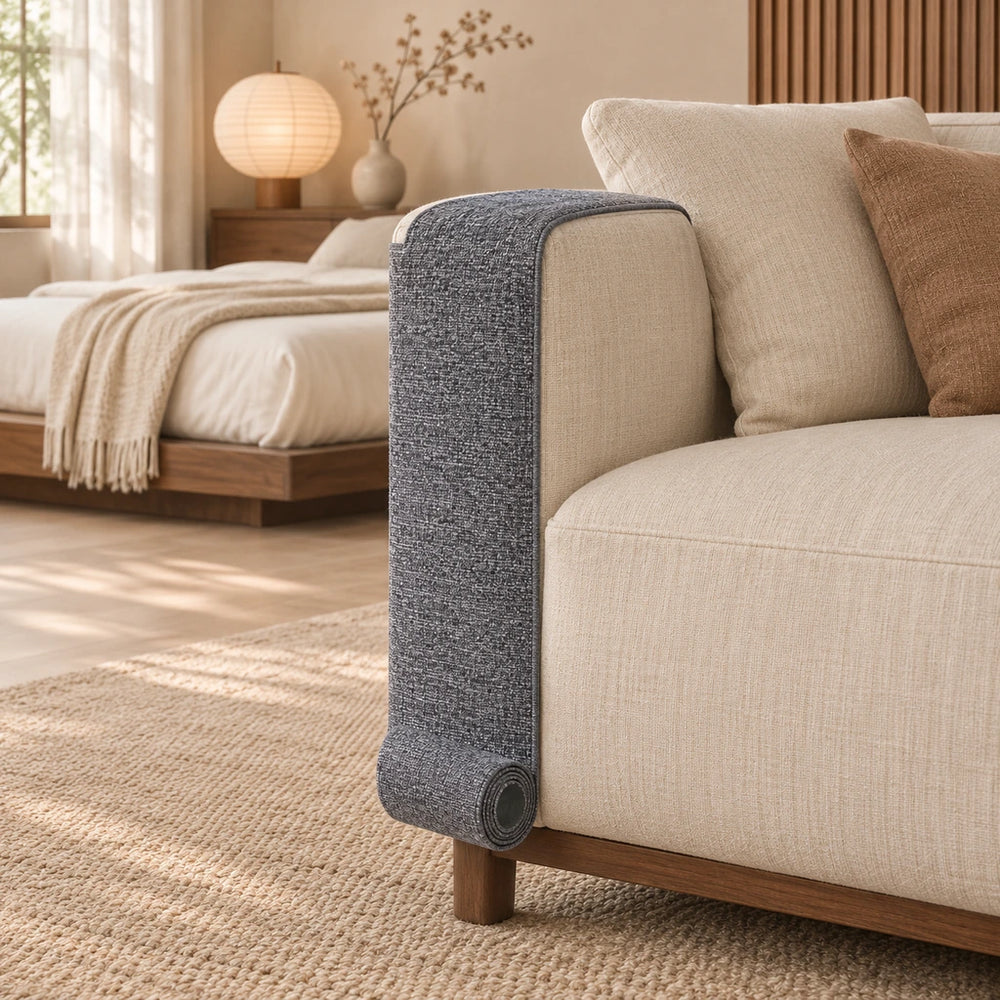
HarmonyGuard Cat Scratch Protector
- Cat Scratch Furniture Protector
- Covers Sofa Edges & Walls
- Pair With a Scratcher
