


Round Plush Pet Bed vs. Flat Dog Bed: Which Sleep Style Fits?
Compare a round plush pet bed and flat dog bed by sleep style, size, soft edges, center comfort, washable care, and dog or cat fit at home. A sleep-style.

Compare the Fit
Use the table to compare the practical differences before choosing.
 This ProductPlushNest Deluxe Plush Pet Bed |
vs | Other OptionOther Option |
|---|---|---|
| Soft plush round surface with a cushioned base and defined edge. | Surface | A flat bed leaves a more open surface with fewer boundaries. |
| A round boundary can suit curlers but must leave room to turn and stretch. | Posture | A flat surface can suit long sleepers, diagonal sleepers, or frequent repositioning. |
| The round footprint needs clear space around its perimeter. | Room Placement | A flat shape may fit beside a wall, sofa, desk, or crate more easily. |
| Remove hair, spot clean, follow supplied fabric directions, and inspect seams. | Care | Follow the flat bed’s own care information and inspect its surface. |
Common Questions
Review the key questions before choosing.
Is a round bed better than a flat bed?
Neither is universally better. A round bed may suit a pet that likes a soft boundary, while a flat bed may suit a pet that stretches or moves often.
How much room should I leave?
Leave enough for the pet to turn, stretch, enter, and leave, while keeping doors, walkways, and other pets’ access clear.
Is PlushNest orthopedic?
It offers cushioned everyday rest but isn't described as orthopedic support or pain relief.
Which bed is easier to clean?
That depends on each product’s supplied care directions. For PlushNest, remove hair, spot clean, follow the fabric guidance, and dry fully.
The Full Answer
A round plush bed creates a clear soft boundary, while a flat bed gives a more open surface. Neither is automatically better. Choose by the way your pet sleeps, how much room the body uses, where the bed must sit, and how easily you can keep the surface clean.
Watch curled and stretched positions
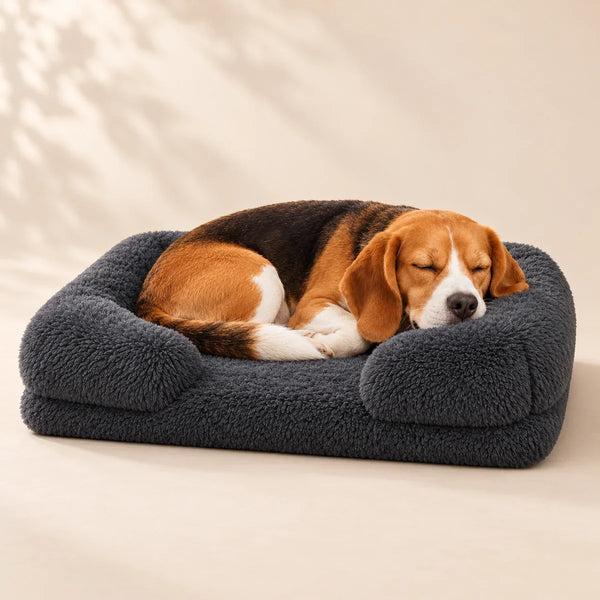
Notice what happens across a full nap rather than judging from one photograph. A dog or cat may curl tightly in the evening and stretch onto a cool floor later. A round edge can suit the first posture, while a flat bed may suit the second. The bed needs to support the normal pattern you see most often.
Measure the pet when relaxed and compare the selected bed with the body’s turning and stretching space. Do not use a breed name or a soft product label as a substitute for this check.
Compare the usable surface
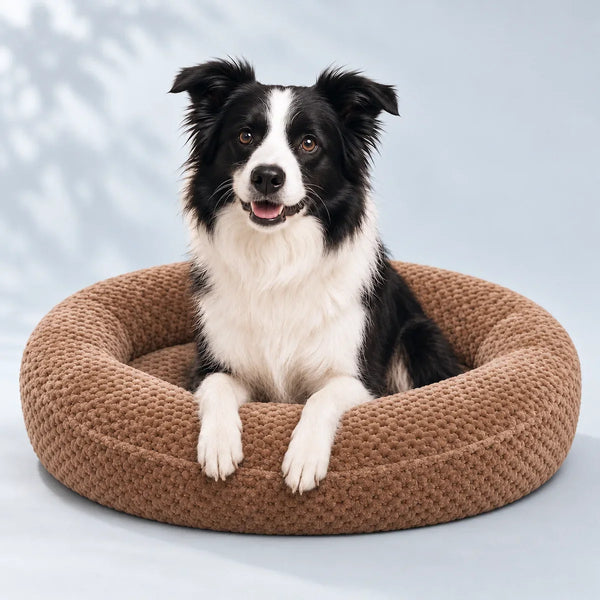
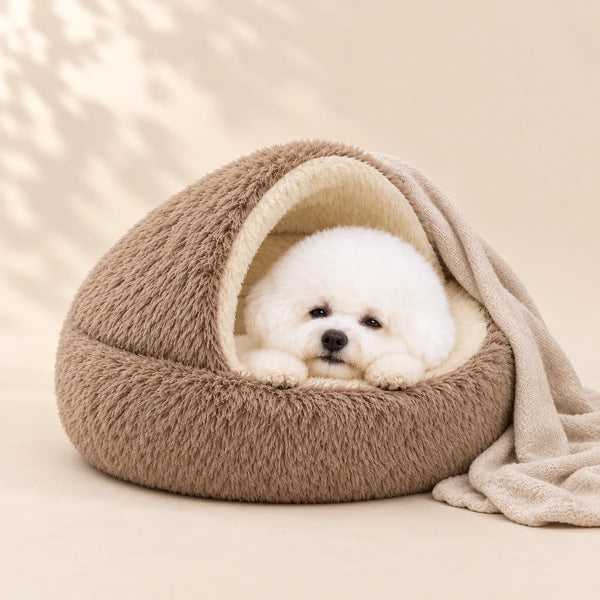
PlushNest offers a soft round surface with a cushioned base and raised edge. A flat bed usually has fewer boundaries and may make it easier for a long sleeper to extend legs in every direction. A round bed may feel more defined but can reduce the open area available for a pet that sleeps diagonally.
The current diameters are approximately 50, 60, 70, 90, and 110 cm. Use those listed footprints as context and confirm that the chosen size fits the pet’s posture and the room. The diameter guide gives the detailed checklist.

Think about movement and entry
A flat bed can be easier to step across or place beside a wall. A round bed needs a clear perimeter so the pet can approach, circle, and leave without bumping into furniture. For a cat, keep the resting surface in a place that preserves choice and a visible route away.
For a dog that circles or scratches before lying down, watch whether the round edge stays in position and whether the fabric remains intact. A bed that bunches or blocks a doorway is not a good practical fit, even if the surface is soft.
Match the room, not just the pet
Place the bed near an existing rest location, away from a noisy appliance and outside the main walking line. A round footprint may work well in an open corner, while a flat shape may be easier under a desk, beside a sofa, or in a crate-adjacent space.
Leave enough space for people and other pets to move around it. In a multi-pet home, watch whether every animal can access the bed without competition. One shared bed is not a guaranteed solution for different resting preferences.
Keep comfort wording honest
The PlushNest surface is intended for everyday plush rest. It isn't described as orthopedic support, pain relief, joint treatment, anxiety reduction, or temperature control, and it can't promise a pet will sleep longer. If the pet struggles to settle, cries while moving, or shows a new mobility change, ask a veterinarian.
Choose the shape that helps the pet rest without forcing the pet to use it. A flat bed may be the better answer when a boundary feels restrictive; a round bed may be the better answer when the pet seeks a soft edge.
Compare the care routine
Remove hair regularly, spot clean small marks, and follow the supplied fabric or cover-care directions. Inspect edges, seams, and the sleeping surface. Do not infer machine washing, odor control, non-slip performance, or chew resistance from the title or gallery language.
Choose the sleep style
Review the current PlushNest round bed when your pet likes a soft boundary and the diameter leaves room to turn and stretch. If you are still deciding between open and enclosed shapes, read the donut and bolster comparison.
The right bed is the one that matches posture and space on an ordinary day. Softness matters, but it is only one part of a useful sleep surface.
Round-versus-flat rule: choose by posture, entry, room footprint, and care—not by the promise that one shape is universally cozier.
Keep comparing
Explore related buying questions for this product.

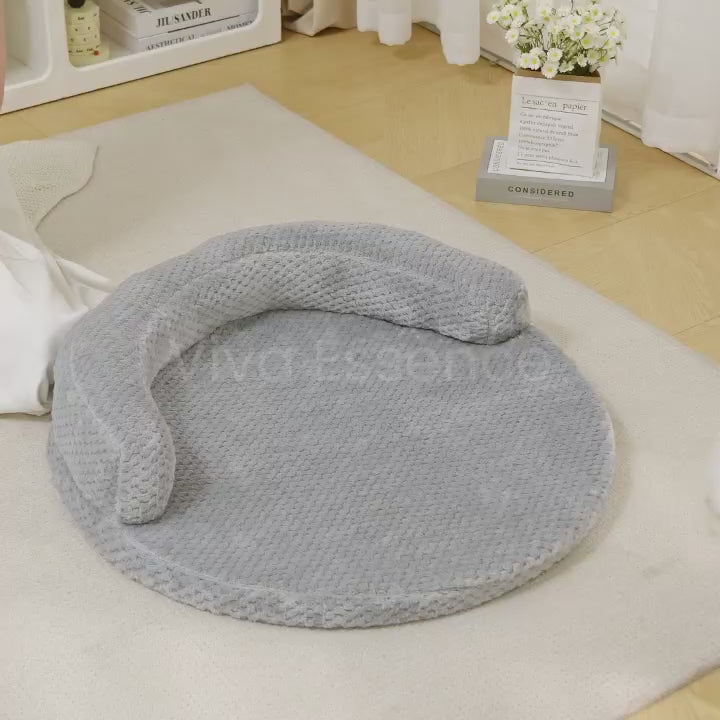


PlushNest Deluxe Plush Pet Bed
- Plush Round Pet Bed
- Soft Plush Sleep Surface
- Defined Cozy Bed Shape
- For Dogs & Cats
