


Canine mobility and rehabilitation
Your dog may still want to walk, climb onto the sofa, or greet you at the door, yet stiff joints can make each movement look careful and uncertain. You may notice a slower rise, a shortened stride, reluctance on stairs, or a leg that seems harder to bend after rest.
Passive range of motion, or PROM, for dogs is a gentle hands-on technique in which you move a joint through its comfortable available range while your dog’s muscles remain relaxed. It can help maintain joint flexibility and support a veterinary rehabilitation plan after injury, surgery, or mobility loss. It is also simple enough for many owners to learn, provided the dog has been assessed and the movements stay comfortable.
PROM is not a cure for arthritis, a replacement for pain control, or a strengthening exercise. The safest approach is to learn the correct movement from your veterinarian or a certified canine rehabilitation professional, then use calm, controlled repetitions at home.
What is passive range of motion for dogs?
Passive range of motion is externally guided movement of a dog’s joint without voluntary muscle contraction. You support the limb and gently move it through the range your veterinarian or rehabilitation professional has identified as appropriate.
The word passive describes who creates the movement. Your dog is not actively lifting, pushing, or pulling the limb. You are guiding it. This differs from active range of motion, in which the dog uses its own muscles to perform the movement.
A related term is goniometric range of motion. This means measuring how far a joint bends or extends, usually with a tool called a goniometer. Owners do not need a goniometer for a basic home routine, but rehabilitation professionals may use one to track changes over time.
PROM may resemble the natural movement that occurs when a dog walks, stretches, shifts position, or flexes a leg. The difference is that you provide the movement while the dog is resting. A relaxed dog may allow the joint to move without bearing weight or using much muscle effort.
Veterinary rehabilitation guidance describes passive exercise as joint movement through a comfortable range without muscle contractions. It also separates PROM from active therapeutic exercise, which serves different goals such as strengthening, endurance, coordination, and functional retraining. You can review this distinction in VCA’s veterinary rehabilitation modalities guidance.

What does PROM feel like for a dog?
A correctly performed PROM movement should feel slow, supported, and predictable. Your dog may notice the movement, but should not need to brace, pull away, vocalize, or struggle.
Think of the limb as a door with a hinge. You move the door smoothly within its usual path. You do not force it against the frame to make it open farther. The end of the comfortable range may feel firm, but it should not feel like a sudden stop that you push through.
Your dog’s available range may change from one day to the next. Pain, swelling, muscle tension, fatigue, recent activity, and the stage of healing can all affect how much movement is appropriate. A movement that seems easy on one day may be too much after a busy outing or during a painful flare.
What is the difference between PROM and stretching?
PROM focuses on moving the joint through its available comfortable range. Stretching usually means holding tissues at or near the end of their range to influence flexibility. The two techniques can overlap, but they are not identical.
That distinction matters because a gentle joint movement may be appropriate for one dog while an end-range stretch is too aggressive for another. A 2007 controlled clinical trial involving 10 Labrador Retrievers with osteoarthritic joints and restricted range of motion found a significant increase in measured joint range after owners performed a passive stretching program twice daily for 21 days. The study used 10 stretches with 10-second holds, but the numerical change and p-value were not reported in the checked abstract. The result came from a small, specific group and did not establish better pain, gait, strength, quality of life, or long-term arthritis control. The PubMed record for the Labrador Retriever stretching trial provides the study details.
For that reason, do not copy a stretching protocol automatically. Your veterinarian may recommend simple PROM, a gentle stretch, active exercise, massage, or a combination. Each has a different purpose.
Does PROM build muscle?
PROM does not build muscle strength or endurance by itself because your dog is not voluntarily contracting the muscles to create the movement. It may help keep a joint moving while a dog is restricted, weak, painful, or unable to exercise normally, but it cannot replace an active rehabilitation program when strengthening is medically appropriate.
This is one of the most common misunderstandings about dog rehabilitation. Owners sometimes see a leg move and assume the muscles are being trained. The movement may support flexibility, but the muscle work is minimal if you are doing the lifting.
A complete canine physical therapy plan may later include weight shifting, controlled walking, sit-to-stand work, balance exercises, hydrotherapy, or other active tasks. Those activities require a different level of effort and should be introduced according to the diagnosis and healing stage.
Why might PROM help a dog’s mobility?
PROM may help maintain or restore comfortable joint movement when illness, injury, surgery, neurologic impairment, or reduced activity limits normal motion. It is usually one part of a wider rehabilitation plan that may also include pain management, active exercise, strengthening, gait training, and changes to the home environment.
A joint that moves less often may become harder to move. Muscles and soft tissues can become tense, swelling may limit motion, and a dog may begin protecting the limb. Gentle movement gives the joint regular input without asking the dog to carry full weight or generate force. For everyday support around the home, browse our joint and mobility support range of ramps, stairs and braces.
The practical goal is usually modest: preserve comfortable movement, reduce the effects of inactivity, and support the next stage of rehabilitation. A small improvement in how easily a dog bends a joint can make repositioning, grooming, walking, or active exercises more manageable.
Potential benefits of passive range of motion
PROM may support:
- Joint flexibility: Gentle movement can help maintain the range a dog still has.
- Comfort during restricted activity: A dog recovering from surgery may be unable to exercise normally, yet may still need carefully guided movement.
- Rehabilitation participation: A dog that cannot yet perform active exercises may begin with clinician-directed passive work.
- Awareness of change: A calm routine can help you notice new swelling, heat, resistance, or discomfort.
- Owner involvement: Learning a safe technique gives you a practical role in your dog’s recovery.
- Consistent observation: Repeating the same gentle movement can make changes in comfort and mobility easier to discuss with your veterinary team.
These are potential rehabilitation benefits, not promises of a particular outcome. The American Animal Hospital Association’s pain-management guidelines describe rehabilitation as one component of comprehensive care and note that controlled prospective veterinary trials remain limited. The guidelines do not set one universal home PROM schedule. You can consult the AAHA Pain Management Guidelines for Dogs and Cats for the broader clinical context.
What does the research show for dogs with arthritis?
Research suggests that passive movement can improve measured range of motion in some dogs, but the evidence does not show that PROM alone reliably controls arthritis pain or restores normal function in every dog.
The Labrador Retriever study described above is one example. A newer 2026 prospective study enrolled 21 client-owned dogs with secondary degenerative joint disease in a structured therapeutic exercise program performed three times per week for five weeks. Researchers measured appendicular joint PROM and limb circumference before and after the program. The study reported measurable changes, yet it tested a broader exercise rehabilitation program rather than isolated owner-performed PROM. It also reported considerable differences between individual dogs.
That distinction is important. If a dog improves after a program that includes PROM, exercise, massage, medication, weight management, and activity changes, the study cannot tell us which element caused the improvement. It is reasonable to say that PROM may contribute to a rehabilitation plan. It is not accurate to say that PROM alone is proven to reverse arthritis.
A senior dog with arthritis may appear looser after a calm movement session, especially if stiffness was most noticeable after rest. That observation can be useful, but it should be treated as a response to monitor rather than proof that the joint disease has changed. Track practical signs such as willingness to stand, stride length, stair use, and comfort after the session, then share those observations with your veterinarian.
For broader support, see our guide to natural joint relief for dogs with arthritis.
When is PROM used in dog rehabilitation?
PROM is commonly considered for selected dogs with postoperative restrictions, arthritis, stiffness, orthopedic injury, neurologic impairment, or reduced voluntary movement. The dog’s diagnosis, pain level, surgical procedure, tissue-healing stage, and current functional ability should be known before you begin.
The same movement can be helpful in one clinical situation and unsafe in another. A dog with mild, diagnosed arthritis may receive a gentle home routine. A dog with a newly swollen knee, an undiagnosed limp, or a recent surgical repair may need a different plan or no owner-performed movement until the veterinarian gives instructions.

Post-surgery rehabilitation
After surgery, PROM may be used to maintain selected joint movement while activity is restricted. The timing and range depend on the procedure. A repaired ligament, fracture, tendon, or joint capsule may need protection while tissues heal.
The phrase “post-surgery physical therapy for dogs” covers many different situations. A dog recovering from a cranial cruciate ligament procedure does not follow the same plan as a dog recovering from spinal surgery. Even two dogs with the same operation may receive different instructions because their pain, swelling, strength, age, and surgical findings differ.
A systematic review of postoperative rehabilitation after canine cranial cruciate ligament surgery included 19 studies: 12 level II clinical trials, six level III studies, and one level IV study. Nine of the included studies had high risk-of-bias scores, and the review found no class I evidence. The review examined rehabilitation packages and different modalities, so it does not prove that isolated PROM improves ACL outcomes.
One study summarized in that review compared 51 dogs after extracapsular cranial cruciate ligament repair. The rehabilitation package included swimming, PROM, therapeutic walks, and massage, while the comparison group had activity restriction. The rehabilitation group had better force-plate measures at six months, but the study was nonrandomized, nonblinded, and rated level III with high risk of bias. Since PROM was combined with other interventions, the result cannot be assigned to PROM alone. The systematic review of postoperative rehabilitation after cranial cruciate ligament surgery explains these limits.
For owners managing a diagnosed cruciate injury, our vet-aware guide to canine ACL tears without surgery offers related information about activity restriction, reassessment, and home rehabilitation.
Arthritis and age-related stiffness
PROM may be included in dog arthritis care when a dog has reduced joint movement or becomes stiff after rest. The aim is to preserve comfortable motion and support other parts of the plan.
A senior dog may benefit from a short, calm routine performed after the dog has settled, especially if handling is comfortable. The routine should not leave the dog more painful later in the day. If your dog is reluctant to stand, suddenly worse, or increasingly lame, the priority is veterinary assessment rather than more stretching.
Arthritis care often works best as a combination of measures. Your veterinarian may discuss pain relief, body weight, low-impact exercise, flooring, ramps, nail care, traction, sleep surfaces, and active strengthening. PROM can fit into that plan, but it should not become the entire plan.
Neurologic conditions
Dogs with neurologic disease may have reduced voluntary control, weakness, altered sensation, or abnormal muscle tone. PROM may be included in a professional rehabilitation program, but owner instructions need to be especially clear.
A randomized blinded trial of 30 non-ambulatory dogs treated surgically for acute thoracolumbar disc herniation compared a conservative protocol containing PROM and sling walking with a more intensive staged rehabilitation program. Intensive rehabilitation was well tolerated, yet gait and coordination did not differ significantly between groups at the reported follow-up points. PROM was part of the comparison protocol, so this study does not test PROM by itself and does not answer whether PROM helps dogs with arthritis or orthopedic surgery.
A dog with dragging toes, sudden weakness, knuckling, loss of balance, or difficulty urinating needs veterinary guidance. Neurologic signs can change the way a limb should be handled.
When should you avoid PROM?
Avoid owner-performed PROM until a veterinarian has assessed your dog if the cause of the mobility problem is unknown, the limb is acutely painful or swollen, the dog cannot bear weight, or the dog has recently had surgery without specific rehabilitation instructions.
There is no single universal contraindication list that covers every joint and diagnosis. The following situations call for veterinary advice before you manipulate the limb:
- A sudden limp or sudden refusal to use a leg
- Severe or escalating pain
- Marked swelling, heat, bruising, or an open wound
- A suspected fracture, dislocation, or unstable joint
- Recent surgery when the surgeon has not provided movement instructions
- A new neurologic sign, such as dragging, knuckling, collapse, or loss of coordination
- Fever, profound lethargy, or signs of systemic illness
- A dog that cannot tolerate touch near the area
- A joint that catches, locks, or moves with a sudden clunk
- A dog that becomes more painful, lame, withdrawn, or restless after previous sessions
These signs do not identify a specific diagnosis by themselves. They explain why a home exercise routine should pause while the underlying problem is checked.
Never push through resistance. Resistance may mean pain, fear, muscle guarding, instability, or neurologic difficulty. A dog can also hide discomfort, so a quiet dog is not automatically a pain-free dog.
If you are unsure whether a problem needs prompt assessment, our guide to why dogs limp and how to recognize joint-health warning signs can help you organize what you have observed before contacting your veterinary clinic.
How should you prepare for PROM at home?
Prepare the environment, your dog, and your own hands before moving the limb. A calm setup reduces sudden movement and makes it easier to notice subtle changes in comfort.
Choose a quiet area with good lighting. Place your dog on a stable, padded surface where the dog cannot slide. A firm bed or folded blanket often works better than a soft couch because the limb is easier to support. For a large dog, floor-level work may be safer than lifting the dog onto furniture.
Have treats nearby if your dog enjoys them, but do not use food to distract a dog from pain. The goal is cooperation, not restraint. If your dog repeatedly tries to leave, end the session and ask your veterinary team to demonstrate a different position.
Before you begin:
- Wash and warm your hands.
- Let your dog settle in a comfortable position.
- Observe the dog standing and walking if that is safe.
- Check for new swelling, heat, discharge, or obvious tenderness.
- Confirm which limb and joint you were instructed to address.
- Review any surgical restrictions or range limits.
- Start with a few calm strokes around the limb rather than immediately moving the joint.
Avoid applying pressure directly over an incision, swollen area, unstable joint, or painful structure. Do not use oils or topical products unless your veterinarian has approved them, especially if your dog may lick the area.
How do you perform passive range of motion exercises for dogs?
Perform PROM slowly, support the limb above and below the joint, and move only through the comfortable range your veterinary professional has shown you.
The exact hand placement changes by joint and body size. The sequence below describes the general method for a limb joint. It is a learning framework, not a substitute for a diagnosis-specific demonstration.

Start with consent and relaxation
Invite your dog to lie on the comfortable side or sit in the position recommended by your rehabilitation professional. Keep your voice calm. Let the dog sniff your hands and reward relaxed behavior.
Place one hand above the joint and the other below it. Your hands should control the limb without squeezing. Supporting both sides reduces unwanted twisting and gives you better feedback if the dog tenses.
Move slowly through flexion
Flexion means bending a joint. Guide the lower part of the limb toward the upper part while the other hand stabilizes the section above the joint.
Move gradually. Do not bounce the limb or use a quick folding motion. Stop before the dog resists or before the joint reaches a hard, painful end point.
Hold the comfortable position only as long as your professional instructed. A pause of a few seconds may be appropriate in one plan, while another plan may use smooth repetitions without a hold.
Return to the starting position
Bring the limb back to its resting position with the same slow control. Do not allow the limb to drop. The return movement provides useful information: a dog may tolerate bending but resist straightening, or the reverse.
Watch the face, mouth, breathing, shoulders, and opposite limbs. A dog may show discomfort by turning away, licking the lips, holding the breath, tightening the muscles, shifting weight, or trying to leave.
Move through extension only as instructed
Extension means straightening a joint. Guide the limb in the opposite direction without forcing it into a locked position.
Some joints have a large visible movement, while others have a smaller safe range. The knee, hip, shoulder, elbow, hock, and wrist each require different handling. Do not copy an exercise for one joint and apply it to another.
Repeat the planned number of movements
Follow the frequency and repetition plan provided for your dog. There is no proven universal schedule that is safe for every dog.
One osteoarthritis trial used 10 passive stretches with 10-second holds twice daily for 21 days, but that was a study-specific protocol involving 10 Labrador Retrievers with restricted range. It should not be treated as a general prescription for every dog with arthritis, every postoperative patient, or every PROM routine.
For a new dog-owner routine, the safest general principle is to begin with the smallest amount your clinician recommends, observe the response during and after the session, and progress only when your veterinary team agrees.
Finish quietly
Return the limb to a natural position and let your dog rest. Offer a reward for calm cooperation. Avoid immediately testing the dog with stairs, jumping, a long walk, or rough play.
Record a few simple observations:
- Which joint you moved
- How relaxed your dog was
- Whether the range seemed easier or more limited
- Any resistance or pain behavior
- How your dog moved later that day and the next morning
A short video of your dog walking before and after a period of rehabilitation may help your veterinarian see changes that are difficult to describe.
What should your hands and the movement look like?
Your upper hand should stabilize the limb close to the joint, while your lower hand supports the section farther away. This creates a controlled movement between two supported points.
Imagine guiding a bicycle pedal with both hands. You are directing the path, not wrestling with the mechanism. Your grip should be secure enough to prevent slipping and light enough to avoid compressing the limb.
Use these movement principles:
| Principle | What to do | What to avoid |
|---|---|---|
| Support | Hold the limb above and below the joint | Holding only the paw or toes |
| Speed | Move slowly and evenly | Quick, jerky repetitions |
| Range | Stay within the comfortable range shown to you | Forcing the end range |
| Direction | Follow the joint’s natural bending path | Twisting or rotating the limb |
| Feedback | Watch behavior and muscle tension | Focusing only on the limb |
| Progression | Change one variable at a time with professional guidance | Increasing repetitions, range, and frequency together |
If your dog is tense, reduce the movement. If the dog remains tense, stop. PROM should feel like a calm rehabilitation activity, not a wrestling match.
How often should you do PROM for dogs?
The correct frequency depends on the diagnosis, joint, pain level, healing stage, and the rest of the rehabilitation plan. Your veterinarian or canine rehabilitation professional should set the schedule.
A daily routine may be suitable for some dogs, while another dog may need fewer sessions or a different type of exercise. A dog recovering from surgery may have strict limits for a period of time. A dog with chronic arthritis may need a broader plan that balances gentle movement with active exercise and rest.
More is not automatically better. Excessive handling can irritate a painful joint, increase muscle guarding, or make your dog distrust the routine. A dog that seems comfortable during the session but is more lame later may be receiving too much, moving through too much range, or participating in an unsuitable exercise.
Use the next-day response as part of your feedback. Ask:
- Was your dog comfortable during the session?
- Did your dog stand and walk as usual afterward?
- Was there more licking, restlessness, hiding, or reluctance?
- Did stiffness increase the next morning?
- Did swelling or heat appear?
Share these observations with your veterinary team. They may change the range, repetitions, timing, or type of exercise.
How can PROM fit into a complete mobility plan?
PROM works best when it supports a broader plan based on the dog’s actual problem. The plan may include pain management, controlled activity, active strengthening, weight management, massage, traction, ramps, or other mobility supports.
For example, a dog with arthritis may need:
- Veterinary assessment and pain control
- Weight and body-condition review
- Short, controlled walks
- PROM or gentle stretching if prescribed
- Non-slip flooring and secure resting areas
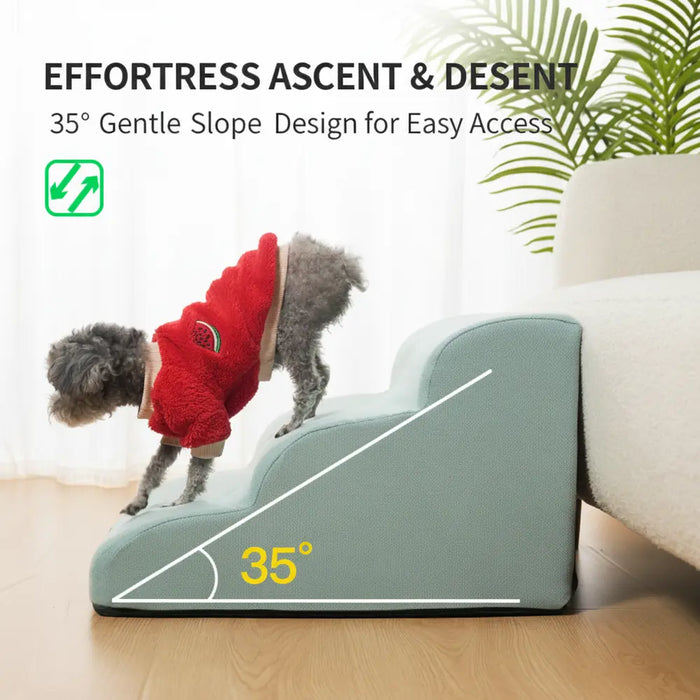
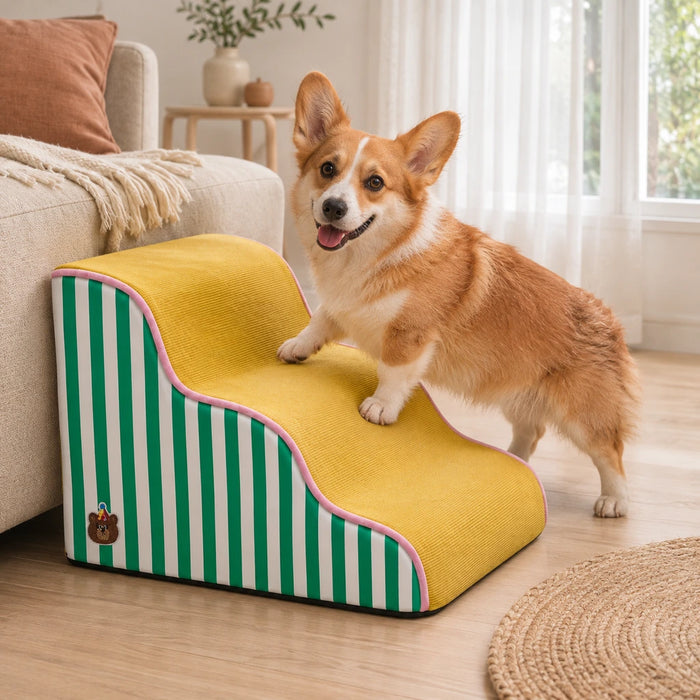
- Ramps or steps that reduce jumping
- Active strengthening as tolerance improves
- Regular reassessment when mobility changes
A dog after cruciate surgery may need a different balance of restriction, controlled walking, progressive strengthening, and joint movement. A dog with neurologic weakness may need gait assistance, positioning, and professional monitoring.
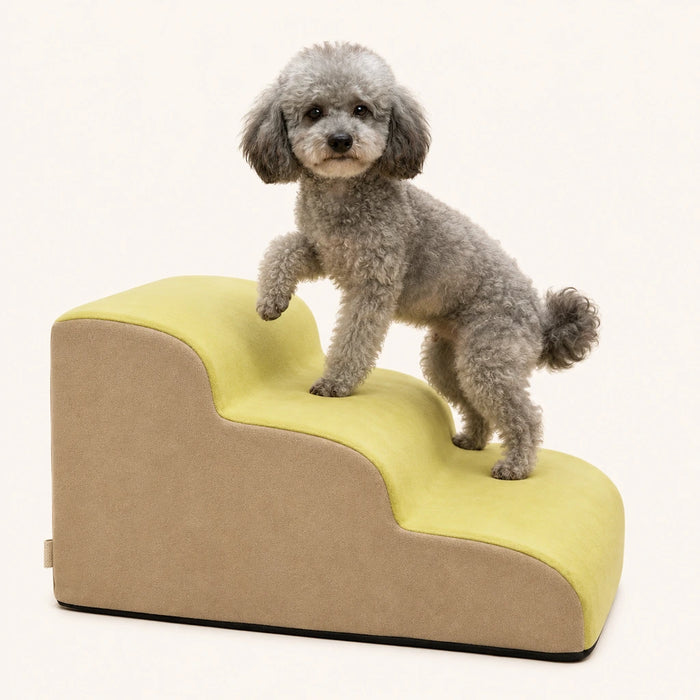
Home support can also reduce the amount of force your dog needs to use during everyday movement. Our senior pet mobility guide compares ramps, stairs, traction, braces, wheelchairs, and other support options, along with signs that need veterinary care first.
A brace may be relevant for some diagnosed knee, leg, or hock problems, but it is not a replacement for rehabilitation assessment. If your veterinarian agrees that a brace fits your dog’s plan, review the fitting and monitoring instructions for the ProCare Canine Knee & Leg Brace or the ProCare Canine Hock Brace. Correct measurement, gradual introduction, short supervised sessions, and regular skin checks matter.

What mistakes make dog PROM less safe?
The most common mistake is treating PROM as a test of how far the joint can go. The goal is controlled, comfortable movement. You do not need to find the maximum angle.
Other common errors include:
- Starting before a diagnosis or postoperative instruction
- Moving the paw while failing to support the limb above the joint
- Pulling on a leg rather than guiding the joint
- Using force when the dog resists
- Moving too quickly
- Performing the routine on a slippery floor
- Increasing frequency because progress seems slow
- Assuming a quiet dog cannot be painful
- Comparing the injured limb with the other limb and forcing symmetry
- Adding massage, stretching, stairs, or long walks all at once
- Continuing after a dog is more lame later in the day
- Using PROM as the only rehabilitation exercise when strengthening is needed
A dog may have less movement on the affected side for a valid medical reason. Trying to make both limbs look identical can create more strain. Your veterinary team may intentionally limit the range while tissues heal.
What progress should you expect?
Progress may appear as easier handling, a more relaxed limb, smoother repositioning, improved willingness to stand, or more comfortable participation in active rehabilitation. It may be subtle and gradual.
PROM is not expected to create a dramatic transformation after one session. A dog with arthritis may still have good days and difficult days. A postoperative dog may gain movement while remaining restricted from normal activity. A neurologic patient may need a longer rehabilitation period and close reassessment.
The evidence supports measured changes in range of motion in some settings, but it does not establish that PROM alone consistently reduces pain, prevents muscle loss, accelerates recovery, or restores normal function in every dog. The research also varies in diagnosis, protocol, outcome measure, and study quality.
Use practical function as part of your assessment. Can your dog rise more easily? Is the stride smoother? Is your dog more willing to walk to the water bowl? Does the dog settle comfortably after the session? These observations can be more meaningful to daily life than trying to judge a joint angle by eye.
Frequently Asked Questions
Can I perform PROM on my dog without a veterinarian?
Ask your veterinarian to assess the problem and demonstrate the movement first, especially if your dog has pain, limping, recent surgery, weakness, or a known orthopedic or neurologic condition. PROM is gentle when correctly selected and performed, but the right movement and range depend on the diagnosis.
Is PROM good for dogs with arthritis?
PROM may be included in arthritis care to support comfortable joint movement, but it does not reverse arthritis. A complete plan may also address pain control, body weight, walking, strengthening, flooring, and other environmental factors.
A small controlled trial found increased measured joint range in 10 Labrador Retrievers after a specific passive stretching protocol. That finding does not guarantee the same response in every senior dog and did not establish improvements in pain or long-term disease progression.
Can PROM help after ACL surgery?
PROM may be part of rehabilitation after cranial cruciate ligament surgery, but the timing and range must follow the surgeon’s or rehabilitation professional’s instructions. The postoperative research generally evaluates packages that combine PROM with other activities, so the effect of PROM alone remains uncertain.
Do not begin a home routine after surgery based on a generic article. Confirm what is permitted for your dog’s procedure and current healing stage.
How do I know if PROM hurts my dog?
Stop if your dog resists, guards the limb, pulls away, vocalizes, pants unexpectedly, turns the head sharply toward your hands, licks the lips repeatedly, becomes tense, or appears distressed. Also watch for increased lameness, swelling, restlessness, or reluctance later in the day.
These signs do not identify the cause by themselves. They mean the session should end and your veterinary team should be contacted for guidance.
Can PROM replace walking or strengthening exercises?
No. PROM moves the joint but does not provide the same muscle work as active exercise. Your dog may need controlled walking, strengthening, balance work, or gait training once those activities are safe.
Use PROM as one part of a plan rather than treating it as the entire rehabilitation program.
Should I use heat or massage before PROM?
Ask your veterinarian or rehabilitation professional. Gentle massage may be suitable for some dogs, while heat, pressure, or handling can be inappropriate with swelling, acute injury, infection, reduced sensation, or recent surgery. Do not add another technique simply because it is commonly recommended online.
A safe starting checklist
Before your next session, make sure:
Passive range of motion can be a useful, low-cost way to participate in your dog’s rehabilitation. It may help maintain comfortable joint movement during periods of stiffness, restricted activity, or recovery. Its value comes from careful handling and a plan that fits the individual dog.
Start with a veterinary assessment, learn the movement directly, and keep every repetition gentle. If your dog’s limp, pain, swelling, weakness, or behavior changes, pause the exercise and seek professional advice. You can then build a wider home mobility plan that may include safe activity, environmental changes, massage, strengthening, or supportive equipment.