

Choose the photo first. Then choose the portrait style. Only after those decisions should you plan how the finished art will reach its recipient or appear at home. A beautiful style cannot supply an ear shape, eye color, or coat marking that the reference photo does not clearly show.
A digital pet portrait is artwork delivered as an image file rather than a physical object. That distinction matters: a file can be viewed on a screen or taken to a printer, but a photograph of artwork in a frame does not mean the frame comes with your order. This guide separates the options stated on Viva Essence Pet’s portrait listings from decisions you still need to make or questions worth asking before you buy.
What kind of custom pet portrait are you choosing?
Choose the portrait’s purpose before its look. A keepsake for your own phone, a print for the living room, and a gift for someone grieving a pet can all begin with the same photograph, yet each calls for a different decision about style, presentation, and timing.
For a personal keepsake, ask what you most want to preserve. It might be a dog’s alert ears, a cat’s unusually serious expression, or the crooked patch of fur you notice every day. Pick a reference photo that shows that feature plainly. An image can carry a powerful memory even if its setting is ordinary.
For a home display, think about where the portrait will live. A small tabletop print has different demands from a picture intended for a large wall. You can choose a visual mood now, but leave the final print and frame purchase until you know the delivered file’s dimensions and the printer’s requirements.
For a gift, decide who should choose the photo and style. If you know the pet well and have an image the recipient loves, a direct order may suit you. If the recipient should choose those details, the store describes a separate Digital Pet Portrait Gift route: the order email receives a private claim link after checkout, and the recipient can submit photos, choose a look, and leave a note. That is a different process from selecting the photos before adding a direct portrait order to the cart. Neither route includes a physical print or frame.
Memorial-style gifts deserve a little more care, not a grander claim. A portrait may be welcome to one person and too immediate for another. If the loss is recent, consider asking whether they would appreciate a portrait before making it a surprise. There is no universally right style or reveal.
How do you choose a photo that shows your pet clearly?
Choose the image in which the face, eyes, ears, and distinctive markings are easiest to see. Sentiment matters, but a clear view gives the portrait request more useful visual information than a distant, dark, or heavily filtered favorite.
The direct-order listing asks for one to four clear JPG, PNG, or WEBP photos of the same pet. It recommends bright, sharp images from one or more angles, with the face and markings visible. You do not need to arrange a professional photo session; you do need to inspect what you intend to upload.
Start with the image at its original size, not the tiny preview in a message thread. Zoom in on the eyes and muzzle. Are their edges reasonably clear, or does movement turn them into a blur? Can you tell where a dark ear ends against a dark sofa? If a white cat’s face disappears into a bright window, try another image with gentler, more even light.

A useful reference photo also leaves room to understand the pet’s outline. An extreme close-up might show wonderful eyes but cut off the ears that make the animal recognizable to you. A full-room photo can have the opposite problem: the pet is present, yet its face occupies too little of the image. Look for a middle ground with enough of the head and body to communicate the pose you want.
Background clutter is usually a reason to compare photos, not an automatic rejection. A favorite shot with a recognizable expression may still be your strongest choice even if a chair appears behind it. What matters is whether the pet can be distinguished from its surroundings. Be cautious with filters that change eye color or smooth away coat texture; they may hide the very details you want represented.
If no single image does every job, choose one as the main pose and expression and use other permitted photos to show features obscured in it. For example, a front-facing photo may show the eyes well while a side view shows a distinctive patch. Make sure every reference depicts the same pet, and use a short note to explain which image should guide the pose. More photos are not a guarantee of a closer likeness; their value is in making your request less ambiguous.
If the only photo is blurry: do not try to solve the problem by enlarging the file. First check whether you have the original image rather than a compressed screenshot. Then look for another photo that shows the missing features. If the blurry image is irreplaceable, ask the seller what can reasonably be done with it before ordering, and treat the result as uncertain.
Which portrait style fits the photo, room, and recipient?
Choose style by the feeling you want and the details you need to keep visible. The direct-order listing names six looks and lets you select a style for each finished portrait in a package. Their names describe different artistic directions, not a ranking of accuracy or quality.
| Listed look | Mood to consider | Detail and photo decision | Possible display or gift context |
|---|---|---|---|
| Cartoon Keepsake | Lighthearted and expressive | Consider it when a lively pose or unmistakable expression carries the memory. | A casual room or a playful gift. |
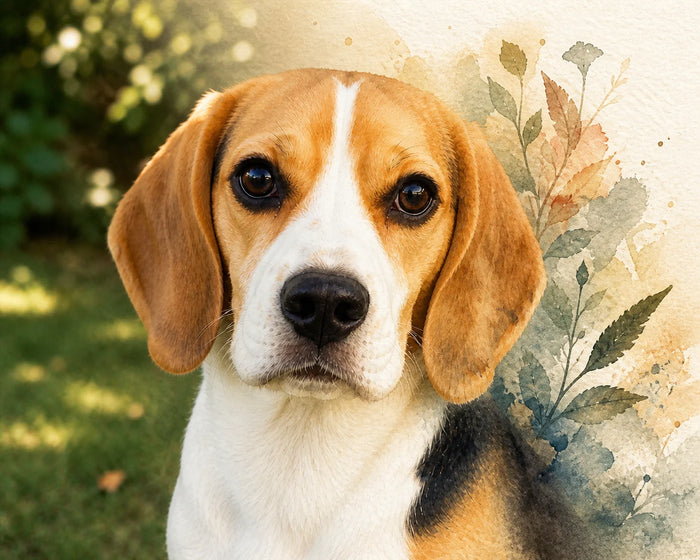
| Watercolor Storybook | Soft and gentle | Compare the example with your pet’s markings; decide whether a painted feel suits the features you care about. | A quieter space or a warm personal keepsake. |
| Realistic Studio | Focused on the face and coat | Use a particularly clear reference if facial details are central to your choice. The style name does not guarantee likeness. | A restrained home display. |
| Travel Adventure | Place is part of the story | Decide whether an imagined setting adds meaning or draws attention away from the pet. | A gift tied to a shared trip or favorite landscape. |
| Royal Renaissance | Formal and theatrical | Make sure the recipient enjoys a playful, staged interpretation. | A statement piece for someone who likes dramatic art. |
| Cozy Seasonal | Warm, occasion-linked | Consider whether the seasonal setting will still feel right throughout the year. | A holiday gift or a deliberately seasonal display. |
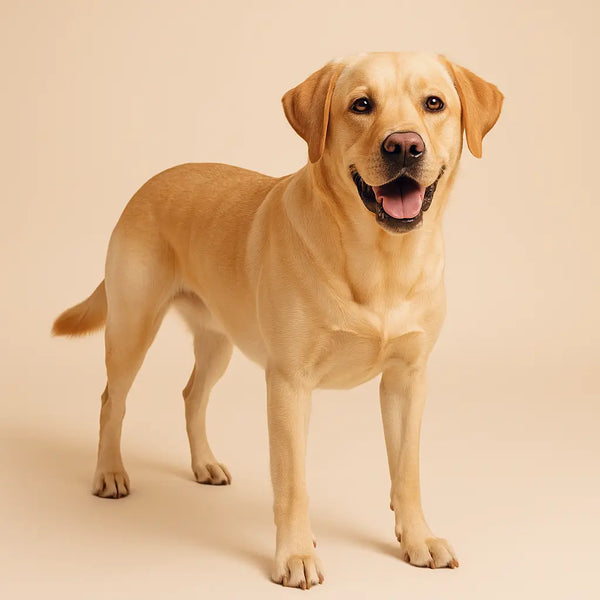
This is a choice guide, not a prediction of how a particular pet will look in the finished file. Before selecting a look, compare the listing’s examples with the source photo you actually have. A style that looks wonderful with a brightly lit retriever may create a different impression with a nearly black cat in a dim image.

Room context can narrow the field without making decor the whole point. If you want the portrait to sit among family photographs, a simpler, face-led treatment may feel more natural to you. If it is a gift for someone whose home is full of color and humor, an expressive or theatrical style may be more welcome. For a memorial-style gift, follow what the person loved about the pet rather than assuming the softest or most formal option must be appropriate.
The direct listing also offers square, portrait, and landscape canvas-shape selections. Here, portrait means a taller-than-wide layout; landscape means wider-than-tall. Think about the likely display space and the pose in your main photo. A tall, seated dog may sit comfortably in a portrait layout, while a stretched-out cat or a scene with a setting may need more horizontal room. The selector gives you a shape choice; it does not by itself establish a finished print size.
Can you put several pets in one portrait?
Do not assume this direct-order package combines different pets. Its upload instructions specify photos of the same pet, and its one-, two-, three-, and five-portrait packages refer to the number of finished portraits for that pet, not the number of animals in one composition.
If your goal is a shared picture of two dogs, a dog and a cat, or a whole group, ask whether that specific composition is offered before paying for a package. Do not upload photos of different animals into a field that asks for views of one pet and hope the intent will be clear.
You can still make a sound composition decision while you seek confirmation. In general art guidance, negative space means the relatively open area around a subject. The Getty Museum’s lesson on size, placement, and negative space explains how those choices affect where attention goes in an artwork. Applied as general planning advice, several pets in a small frame leave less room for each face than one pet on its own. That observation does not mean a particular seller can or will make a multi-pet portrait.
For a shared composition, consider relative scale and pose. A tiny cat placed beside a very large dog may need deliberate spacing if both faces are meant to matter. Reference photos shot from sharply different angles or heights may also be harder to describe as one coherent scene. Tell the seller whether you want the animals side by side, interacting, or simply present together, and ask what source images they would need.
For a useful visual analogy, the National Gallery of Art’s discussion of George Jules Taylor describes how a plain background makes the human sitter the focal point. It illustrates a composition choice, not evidence that a plain background guarantees a better pet portrait.
What should you check before placing a portrait order?
Have your photo, style, intended use, and delivery email ready, then check the terms that matter to you on the live listing. This is the point to turn an appealing idea into a specific request.
The direct-order process states that you choose a package, submit the pet photos and select a look for each portrait before adding the package to the cart. After checkout, the seller says it creates and reviews the portraits and emails full-resolution PNG files. A PNG is a digital image file; “full-resolution” is the listing’s description, not a stated pixel width, height, or guaranteed print size.
Use this order-readiness checklist:
- Reference files: Is your main photo clear? Are any supporting photos of the same pet? Are they in the listed JPG, PNG, or WEBP formats?
- Portrait count: How many finished versions of this pet do you want? Do not use the package count as a substitute for confirming a different pet or a group portrait.
- Style and shape: Have you selected a listed look for each portrait and considered square, portrait, or landscape?
- Identity details: Is the pet’s name spelled correctly? Have you entered the pet type and any helpful, accurate note about markings or expression?
- Delivery: Can you access the checkout email, and is a digital PNG the format you want to receive?
- Physical display: If this is for a wall or tabletop, have you planned for printing and framing separately?
- Questions to verify: If a customer proof, revision, occasion date, particular print size, or use beyond personal saving, sharing, and printing matters to you, have you asked the seller for the applicable terms?
The last group is not fine print to skim past. A seller’s final review describes its own process; it does not establish that you will receive a proof for approval or a set number of changes. Likewise, an emailed file does not establish a completion date. If either affects your decision, ask a precise question before checkout: “Will I see a proof before delivery?” or “What options are available if a marking is missing?”
You can compare your prepared choices against the Custom Digital Pet Portrait direct-order listing. Check that the current selections and terms match your plan before adding it to your cart.
What does the ordering process confirm, and what should you ask?
The listing confirms a route from submitted photos and style choices to emailed PNG files; it does not answer every question about the finished artwork. Keeping those two categories separate makes it easier to buy with realistic expectations.
For the direct order, the stated sequence is straightforward: select the number of finished portraits, enter the requested pet details, upload permitted photos of the same pet, choose the look for each portrait, then add the personalized package to the cart. The seller says it reviews the work before email delivery. The separate gift listing places the photo and style choices after checkout through a claim link sent to the order email. Do not plan a surprise around the direct-order workflow and then assume the gift route uses the same steps.
If likeness is your central concern, describe what “looks like my pet” means to you in observable terms. “Keep the white mark above the left eye” gives more direction than “make it perfect.” Identify the preferred pose and any features that should not be changed by a costume or setting. That helps communicate your preference, but it is not a promise of a particular result.
Questions worth asking depend on your intended use:
- Approval and changes: Is there a customer proof? If a detail needs correcting, what can be changed, at what stage, and at what cost?
- Time: What is the current estimated completion and email-delivery interval? If you have an occasion date, can the seller confirm whether it is realistic?
- Display: What pixel dimensions should you expect, or when can you learn them, if you need a particular print size?
- Permitted uses: If you want to reproduce the art on merchandise, use it for a business, or distribute it beyond ordinary personal sharing, what permission applies?
Ask for the answer to the specific question that changes your decision. A general assurance about care or review is not a replacement for revision terms; a support reply estimate is not a portrait-production deadline. Keep the seller’s written response with your order details.
Digital file or framed gift: what is actually included?
A digital portrait gives you a file to save, share, view, or arrange to print; it does not arrive as a framed object under the checked portrait listings. If opening a ready-to-hang present is essential, plan the print and frame as separate purchases and confirm their timing independently.
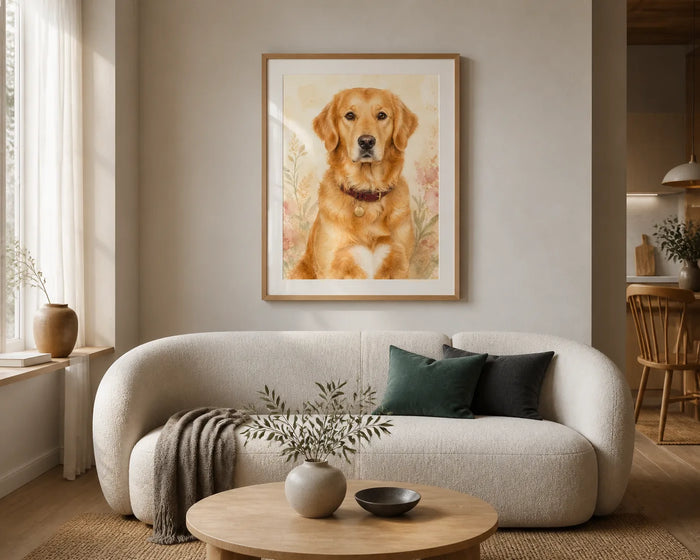
Digital delivery offers flexibility. You can keep the original file, send a copy to the recipient, or decide on a physical display later. It also transfers some decisions to you: where to store the file, what dimensions to print, which paper to use, and which frame suits the finished crop. A room photo showing portrait art in a frame is a display example, not proof of frame inclusion.

For screen viewing, check that the file opens and that its crop works on the device you have in mind. A square image may display differently from a landscape image on a narrow phone screen; you can make a separate viewing copy while keeping the delivered original untouched.
For printing, the deciding measurement is pixel dimensions: the image’s width and height in pixels. PPI, or pixels per inch, describes how densely those pixels are used at a chosen print size. As explained in Adobe’s guide to image size and resampling, print dimensions depend on available pixels divided by the chosen PPI. Merely changing a PPI setting does not reveal detail that was absent from the image.
Adobe’s general guidance on print resolution and viewing distance uses 300 PPI as a reference for high-quality prints viewed up close and explains why a larger print seen from farther away may use a lower density. That is general print advice, not a promise that this portrait file will meet 300 PPI at your chosen frame size. The listing does not state exact finished pixel dimensions. Once the file arrives, ask your print provider to assess it at the size you want, including any crop the frame requires.
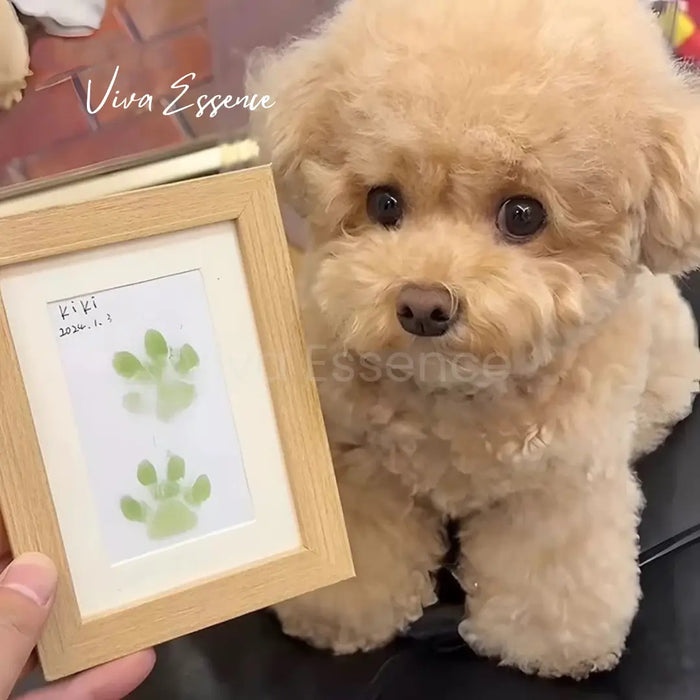
A photograph and a paw impression also preserve different memories. If you are deciding between portrait art and a tangible keepsake, the Mess-Free Paw Print Keepsake Frame is a separate physical option. It is not a frame for the digital portrait, and the two products should not be treated as interchangeable.
How do you plan a pet portrait gift without a delivery surprise?
Decide who selects the photos, who receives the email, and what you will give on the occasion itself. A gift plan is more reliable when the recipient’s role is clear and the finished portrait is not assumed to arrive by an unconfirmed date.
If you are making the choices, discreetly find out which photo the recipient treasures. The technically sharpest image is not always the one they would want to see on display. Ask about a favorite expression, or compare a few photos they have already shared. If the pet has died, avoid taking a portrait from a private memorial post without considering whether the person wanted that image reused.
If you want the recipient to choose, the separate gift listing describes a claim link sent to the email used for the order after checkout. Work out who will receive that message and how the intended recipient will get the link. Its listing describes one finished digital portrait of one pet, with the recipient able to provide up to four reference photos and a note. Do not mistake the link’s arrival for the finished portrait’s arrival.

Double-check the pet’s name before submitting it or including it in a handwritten card. A nickname may be more meaningful than a formal name; an unusual spelling deserves a second look. Keep notes focused on the animal and the desired art. The direct listing says uploaded photos are kept private and used for the portrait order, but you should still avoid uploading documents, visible addresses, or unrelated people’s personal details when a pet-only photo will do.
For a birthday or other fixed occasion, ask about current timing instead of calculating a deadline from the word “digital.” File delivery removes physical shipping from the portrait order; it does not mean creation is immediate. Leave room for your own printing or framing if that is part of the gift. If timing cannot be confirmed, a simple card explaining that the recipient will help choose their pet’s portrait is more honest than presenting a date as certain.
What should you check when the finished file arrives?
Open the delivered original, inspect it against your order details, and keep a backup before editing or printing. This check is about catching a mismatched file or an overlooked detail early, not about judging art from a tiny email preview.
First, make sure you can access and open every expected PNG. Save the original files in a place you can find again. If you create a cropped version for a phone or social post, give that copy a different filename so it does not replace the delivered image.
Then look at the portrait at a useful viewing size. Check the crop: are the ears, tail, or setting cut in a way you did not intend? Confirm the pet count, selected style, and any name or written text that appears in the art. Compare identifying details with your submitted photos and notes. A stylized portrait need not reproduce every strand of fur, but a concern about a specific marking is easier to explain when you can point to the reference image and the submitted instruction.
Finally, inspect the file’s pixel width and height before committing to a print size. “Full-resolution PNG” does not supply those numbers on its own. Keep the original as your backup even after a print shop prepares a version for its equipment.
If a file is missing, cannot be opened, or differs from the details you submitted, contact the seller with a concise description of the issue. Viva Essence Pet’s contact page provides a form and support email and asks order-support customers to include the order number, checkout email, product name, and what they need help with. Attach or identify the relevant reference photo and note when useful, but do not assume that contacting support establishes a particular revision or refund entitlement. Ask what resolution is available for your case.
Frequently Asked Questions
Can I use a blurry photo for a custom dog portrait?
You can ask the seller to assess it, but choose a clearer original or a different reference if one exists. Blur can obscure eye shape, coat markings, and the edges of the face. Enlarging a small, blurry image cannot recover missing detail. If the blurred photo captures an irreplaceable pose, explain why you prefer it and provide clearer views of the same dog where possible.
Should I choose the portrait style before deciding where it will go?
It is better to think about both together. Style communicates mood, while shape, crop, and color affect how the art may sit in a room. If you have no display location in mind, choose the look that best expresses the pet or suits the recipient; you can decide whether to print later. Do not assume a digital file includes the frame shown in a display example.
Does a five-portrait package let me include five pets?
No such conclusion follows from the direct-order listing. Its package number describes finished digital portraits of the same pet, and its upload field asks for reference photos of that pet. Ask the seller about different pets or a group composition before ordering. Separate orders or displays may be a better fit, but confirm the available route rather than treating package quantity as pet quantity.
Will I receive a printed portrait or a frame?
The checked direct and gift portrait listings describe emailed PNG files, not a physical print or frame. If you want to present a framed portrait, arrange printing and framing separately after you know the finished file’s dimensions and can check them with your chosen printer.
Will I get a proof, revisions, or my portrait by a particular date?
Do not assume any of these from the stated final-review and email-delivery process. Ask the seller directly about customer approval, the scope and cost of changes, and the current completion estimate before ordering if those answers affect your purchase or gift plan.
How much personal information should I put in a portrait request?
Provide the pet photo, accurate pet details, and the instructions needed to explain the art. Avoid including a visible home address, private documents, or unrelated personal information in an upload. Check the checkout email carefully because that is central to digital delivery and, for the separate gift route, receipt of the claim link.