

Should I Choose the Small, Medium, or Large Pet House?
Choose S, M, or L by your pet's actual entry, turning room, sleeping posture, and the space around the house. Exact dimensions, weight limits, and load ratings aren't listed.

Fit Checklist
All checked. You are ready to pick a size. View Product
The Full Answer
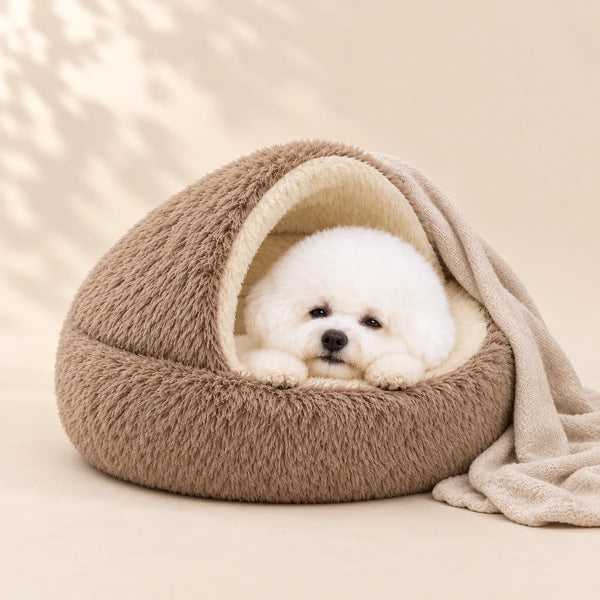
The Cozy Pop-Up is currently offered in S, M, and L. Choosing among them is less about finding a universal breed label and more about checking the pet’s entrance, turning room, sleeping posture, the space around the house, and the routine you can maintain after use.
Measure the usable area first
Choose the room where the house will actually sit and measure the clear floor. Leave space in front of the arched entrance, a path for the pet to leave, and enough room for a person to clean around the house.
Do not use the whole room as the measurement. Furniture, doors, other beds, water bowls, and the normal walking path all reduce the usable area. The largest option is not a good fit if it makes the rest of the room awkward.
The available details do not provide a complete interior dimension chart or load rating. Do not invent measurements from a photograph or assume that one breed’s experience applies to another dog or cat.
Check the entrance before the sleeping surface
Your pet should be able to approach the opening, pause, and enter without squeezing the shoulders or lowering the head uncomfortably. Leave a clear exit so the pet never has to push past furniture or another animal to get out.
Place the house on a stable, dry indoor surface with the entrance visible. If the pet hesitates, do not lift them inside to test a larger size. A reluctant response is a preference signal, not a measurement error.
For a cat or small dog that changes position often, entry and exit may matter more than a snug-looking photo. A house that feels cozy to the owner can be too restrictive for the pet.
When the small option may work
S can make sense when the pet is comfortable entering a compact covered space, curls up rather than stretches out, and the room around the house remains clear. Confirm those points from the pet’s real behavior.
Do not choose S merely because the pet is called “small.” Shoulder width, posture, coat, movement, and confidence at the entrance can all change the decision. If the pet cannot turn or leave naturally, the option is too tight even if the label sounds right.
Keep an open bed or familiar box nearby during the first introduction. If the pet consistently chooses the alternative, that information matters more than completing a purchase decision.
When medium may be the balanced choice
M can offer more room for a pet that likes a covered retreat but changes position, sits upright, or needs a little more clearance. It still has to fit the room’s walking path and the owner’s cleaning routine.
Use a simple mental test: picture the pet entering, turning, settling, waking, and leaving without touching the sides or becoming blocked. If any step is uncertain, measure the pet and the space again before choosing.
A medium option is not a guaranteed fit for every average-sized cat or small dog. No universal weight, breed, or load limit is listed.
When large may be the better room choice
L may make sense when the pet needs more turning room and the home can support the wider footprint. It is still a covered soft house, not a larger guarantee of comfort, stability, or adoption.
Check the area around the house carefully. A large form should not block a doorway, crowd another pet’s resource, or leave the dog or cat with no easy path out. Storage also needs to be considered when the house is folded away.
If the larger option is the only size that seems comfortable but it cannot live safely in the intended room, compare an open bed or a different resting format instead.
Match size to posture and choice
Some pets curl into a tight ball; others stretch, roll, sit, or change direction several times before sleeping. Observe the posture you want the house to support, then choose enough room for the pet to settle without pressure.
Introduce any size with the entrance open. A cat or dog should be able to inspect it, enter voluntarily, and leave. Never treat the house as a crate or use a larger size to justify forcing a pet into a format they dislike.
Keep another resting option available. A successful size decision is not just the option that technically fits; it is the option the pet can choose and the household can keep accessible.
Check care and storage before ordering
Current care wording supports shaking out loose fur, keeping the house dry, spot cleaning, or following the supplied instructions. It isn't described as having removable covers, machine washing, waterproofing, or odor control.
The selected size must have a clean, dry storage place if you plan to fold it away. A larger house may take more room when stored, while a smaller one may be easier to move but too tight for the pet.
Choose S, M, or L only after the fit and care answers line up. If none of the options gives a clear entrance, comfortable turn, safe exit, and workable storage plan, a different bed shape is the honest choice.
Final S/M/L decision
Choose S when the measured pet and room support a compact covered retreat. Choose M when the pet needs a little more space and the room can carry it. Choose L when more turning room is needed and the larger footprint still leaves a clear path and dry storage.
Use the current Product details for the exact options and availability, but do not add a weight limit or interior measurement that is not listed. A careful fit decision respects the pet’s behavior as much as the size selector.
Size reminder: S, M, and L are current choices, not a universal dimension, weight, load, comfort, or behavior guarantee.

For the next step, review the current S, M, and L options. plan the placement and dry-storage routine compare other indoor rest formats
Common Questions
Which pets is this house intended for?
The current positioning is for cats and small pets that already enjoy covered beds, boxes, corners, or quiet enclosed spots. It is not a universal-fit promise.
How should I introduce it?
Place it in a familiar dry spot, keep the entrance visible, and let your pet inspect or enter voluntarily. Never force a reluctant pet inside.
How do I keep it fresh?
Shake out loose fur, keep the house dry, spot clean, or follow the care instructions supplied with the product. A removable cover or machine-washable construction is not established.
Can I fold it away?
The product is positioned as foldable. Fold it only when clean and dry, then store it where it will not be crushed or exposed to moisture.
More Fit Guidance
Review related fit and buying questions for this product.


The Cozy Pop-Up Pet House & Cat Cave
- Foldable Indoor Pet House
- Covered Cat Cave Rest
- Plush, Cotton-Filled Fabric
- S, M & L Sizes
