





Cat Window Perch Alternatives: Which Rest Spot Fits?
Choose the rest format that matches the cat’s habit, the room, the window, and the care routine—not the most tempting photograph.
Compare the Alternatives
Secure & Stylish Cat Window Perch Hammock
A compact window-view and rest format when the smooth window, secure screen, size, access route, and repeat checks fit.
- Best For
- Homes where a cat already seeks the window and a raised rest should leave the floor mostly open.
- Trade-off
- Depends on a suitable window attachment setup and does not replace a secure screen or provide a universal capacity answer.
Cat Tree
A broader activity and territory format that uses floor space instead of relying on the window.
- Best For
- Cats and homes where climbing, scratching, and a floor-standing route matter more than a single window rest.
- Trade-off
- Needs a stable floor position and may take more room than a mounted rest surface.
Sill Bed
Keeps the window location without asking a suction mount to carry the bed.
- Best For
- A window with a usable stable sill or ledge and a cat that already prefers that low support.
- Trade-off
- Does not fit a window without an appropriate sill and may offer less route flexibility.
Floor Bed
A simple, low format that avoids glass and wall attachment.
- Best For
- Cats that prefer low access or homes that need a rest spot away from window mounting.
- Trade-off
- Uses floor area and does not create the same elevated view.
Wall Shelf
A wall-supported route rather than a window-only resting platform.
- Best For
- Homes that accept fixed wall attachment and want planned vertical territory.
- Trade-off
- Requires wall planning, appropriate attachment, and a safe approach and exit route.
Another Perch Format
Keeps the viewing job while changing the support method or footprint.
- Best For
- Homes where the window view matters but a freestanding, sill-supported, or different mount fits better.
- Trade-off
- Each format has its own space, compatibility, installation, and care requirements.
The Full Answer
Short answer: Choose a suction-mounted window perch when your cat already seeks the window, you want a raised rest spot without another floor-standing piece, and the window, screen, access route, and repeat checks all fit your home. Choose a cat tree, sill bed, floor bed, wall shelf, or another perch format when it better matches what your cat does or what the room can support.
A cat window perch solves one particular job: giving an indoor cat a raised place to rest and look outside. It is not a universal answer to climbing, scratching, hiding, sleeping, or safe window access. Compare those jobs first, then decide whether a window hammock is the right format or whether a simpler rest spot will serve you better.
Start with the moment you want to improve
Begin with the repeated moment, not with the word "perch." Is your cat already sitting on the sill, watching birds, following changing light, or settling beside the window? Is your main constraint a crowded floor, a missing sill, a need for scratching space, or an awkward jump? Those answers point to different furniture.
A window-mounted hammock makes sense when the view and the floor plan matter at the same time. A cat tree makes more sense when the cat needs a climb-and-scratch route. A floor bed may be the better choice when low, easy access matters more than height. A sill bed depends on having a usable sill, while a wall shelf asks you to plan a fixed wall route.
Keep the window safety question separate from the furniture question. The ASPCA advises snug, sturdy window screens because cats can fall accidentally. A perch does not replace a secure screen or other fall protection. If the window cannot be made secure, choose a rest spot away from the opening.
What this window perch does, and what it does not
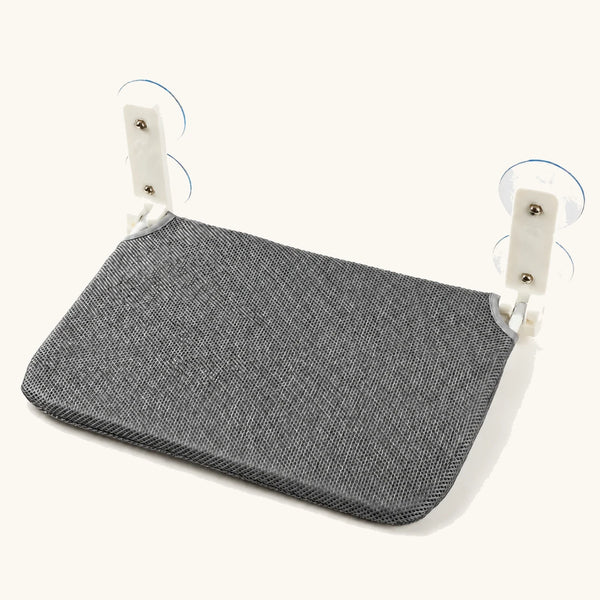
The Secure & Stylish Cat Window Perch Hammock is a rectangular raised rest surface with visible suction supports and a twist-lock grip setup. For this perch, use a clean, smooth window, follow the setup instructions, press-test before use, and make regular stability checks part of the routine. Those details make it a candidate for a cat that already uses the window, not proof that every window or every cat is a match.
The practical benefit is a view-and-rest location above the floor. That can help in a smaller room where another floor-standing bed would crowd the walkway. It can also keep a cat near household activity while giving it a separate place to pause. The benefit disappears if your cat prefers a low hideaway, needs a full climbing route, or has no calm way to reach and leave the window.
Do not fill in missing specifications with assumptions. No numeric weight limit, glass-thickness chart, universal window-compatibility list, or fall rating is stated for this perch. Check the weight suitability for your cat and the exact installation instructions before use. If you cannot verify that the chosen setup is suitable, pause and choose a format that does not depend on an uncertain window mount.
Let your cat investigate at its own pace. International Cat Care's guidance on safe resources and choice supports giving cats the ability to approach or leave on their own terms. Keep a stable nearby route during the first uses, and do not lift a reluctant cat onto a raised perch.
Choose a cat tree when the cat needs a route, not just a lookout
A cat tree is the stronger alternative when the main job is climbing, scratching, or moving between levels. It gives the room a floor-standing piece rather than a single resting platform at the glass. That uses more floor area, but the extra footprint may be worthwhile when the cat needs activity as well as a place to watch the room.
Choose the tree format when you can reserve a stable floor position and want the furniture to do more than frame a view. It may also be easier to use when the window itself is unsuitable for suction attachment or when you would rather not make the window part of the cat's furniture system. The tradeoff is that the tree must fit the walkway, door swing, and the rest of the room.
A cat tree is not automatically the right answer. If your cat already settles at the window and the floor is tight, a large climbing structure may solve a different problem while creating a new one. Compare the actual route your cat uses with the space you can give it. Choose the tree when climbing and scratching lead the decision; choose the window perch when a compact raised rest is the clearer job.
Choose a sill bed or floor bed when low access matters
A sill bed works when a wide, stable sill or ledge already provides the support. It keeps the cat near the window without asking the glass to carry the furniture. That can be a clean fit for a cat that likes the sill and for a home with an appropriate ledge. It is a poor fit when the window has no usable sill, the ledge is narrow or damaged, or the cat needs a route that the sill cannot provide.
A floor bed is the simplest alternative when the priority is a low resting surface. It needs no window mount and can be placed where your cat already sleeps, including a quieter corner away from the opening. The tradeoff is clear: a floor bed does not create the same elevated view, and it uses floor area that a mounted perch leaves open.
Both formats can be more sensible than a raised perch for a cat that is hesitant about jumping or that prefers to rest close to the floor. International Cat Care notes that cats with mobility difficulties may need lower places or steps and ramps to reach elevated areas. If access is the deciding factor, a lower bed or a carefully planned route deserves priority over height.

Choose a wall shelf or another perch format when the mount is the main question
A wall shelf suits a home where fixed wall attachment is acceptable and vertical territory matters more than a window-only rest point. It can be part of a planned route, but the wall, the attachment method, and the space around the shelf all need careful attention. If you rent, cannot confirm the wall structure, or want a temporary arrangement, another format may create less work.
Another perch format can keep the window view while changing how the furniture is supported. A freestanding frame, a sill-supported cushion, or a different window design may be preferable when you do not want to rely on suction cups. These options have their own footprint and installation rules, so compare the actual support surface instead of assuming that one type is safer or stronger than another.
The right alternative is the one that removes the problem you started with. A wall shelf is not a shortcut around route planning. A freestanding perch is not a shortcut around floor space. A sill bed is not a shortcut around a missing sill. Name the support, the cat's approach, and the way down before choosing any format.
Compare setup, access, and safety before choosing
Once you have narrowed the formats, compare the daily work as carefully as the view. For the Secure & Stylish Cat Window Perch Hammock, use a clean, dry, smooth window, follow the setup instructions, check weight suitability, and press-test before your cat steps or jumps on it. Regular stability checks remain part of the routine.
- Use a window surface that is clean, dry, smooth, intact, and suitable for the attachment method. Do not assume that every pane or finish is compatible.
- Keep a secure screen or other fall protection in place. The hammock is a resting surface, not a barrier at an open window.
- Plan an approach and exit that do not send your cat into clutter, a door path, or an unsecured opening. Add a stable step when a direct jump is too large.
- Press-test the mount before use and recheck it regularly, including after cleaning or an adjustment. Stop if the setup no longer feels suitable.
- Match the care routine to the furniture. Care for this perch is described as wiping the fabric as needed. If machine washing is essential, choose a bed whose own care instructions explicitly provide it.
If you are leaning toward the window format, the cat window perch installation and care guide covers the preparation and recheck routine. It answers a different question from this page: how to handle the perch after you have decided that its format fits.
Match size and surface after the format is settled
Only compare variants after you have decided that a suction-mounted window perch belongs in the room. This perch comes in two listed footprints. Standard is 11.8 x 17.7 inches / 30 x 45 cm. Large is 11.8 x 20.5 inches / 30 x 52 cm. Both have the same listed width, while Large provides more length.
Use those measurements to compare the available smooth window area with the resting posture your cat actually uses. Do not turn the longer platform into an invented weight rule or assume that Large is suitable for a particular breed. No numeric capacity is stated for this perch, so any weight question needs a verified answer before a raised installation is used.
The listed surface options are Mesh - Gray, Mesh - Beige, Plush - Gray, and Fabric - Gray. Choose among them by the surface feel and room appearance you want, then keep the same window, screen, access, press-test, and recheck boundaries. The surface choice does not remove the need to confirm the installation.
Use a simple decision rule for your home
You do not need to find one universal best cat bed. You need a format that matches the cat's repeated behavior and the room's real constraint. Work through the choice in this order:
- If your cat already seeks the window and you need a raised rest without another floor-standing piece, inspect the suction-mounted perch's window, screen, size, and access fit.
- If climbing, scratching, and a multi-level route matter more than a clear floor, compare a cat tree.
- If low access matters or the cat already prefers the sill or floor, compare a sill bed or floor bed.
- If you want fixed vertical territory or a different support method, compare a wall shelf or another perch format and follow that format's own installation rules.
Keep the current setup when you cannot yet name the job, the support surface, or the route on and off. Waiting is better than forcing a window solution into a room that does not support it.
Let the format earn its place
The Secure & Stylish Cat Window Perch Hammock is worth considering when the view is already part of your cat's routine, floor space is limited, and you can maintain a secure, clean, checked setup. A cat tree, sill bed, floor bed, wall shelf, or another perch is better when it solves the actual access, climbing, support, or care problem with less friction.
Once the format, window, size, surface, and route make sense, you can view the Secure & Stylish Cat Window Perch Hammock and compare the listed options. If one of the basic checks is unresolved, keep comparing. The better choice is the one your cat can approach, use, and leave without asking the room or the window to do a job it cannot safely support.
Common Questions
Is a cat window perch a replacement for a secure window screen?
No. Keep a snug, sturdy screen or other fall protection in place. A raised perch is a resting surface and does not protect a cat from an unsecured window.
When is a cat tree a better alternative to a window perch?
Choose a cat tree when climbing, scratching, and a floor-standing route matter more than keeping the floor clear for a single raised window rest.
When is a floor bed or sill bed a better alternative?
A floor bed fits a low resting routine, while a sill bed fits a window with a usable stable sill or ledge. Both may be better when low access matters more than an elevated mount.
What should I verify before choosing a suction-mounted perch?
Confirm a clean, dry, smooth and suitable window surface, secure fall protection, weight suitability, a calm route on and off, the listed size, and the press-test and recheck routine.
Compare More Options
See related decision pages for this product.
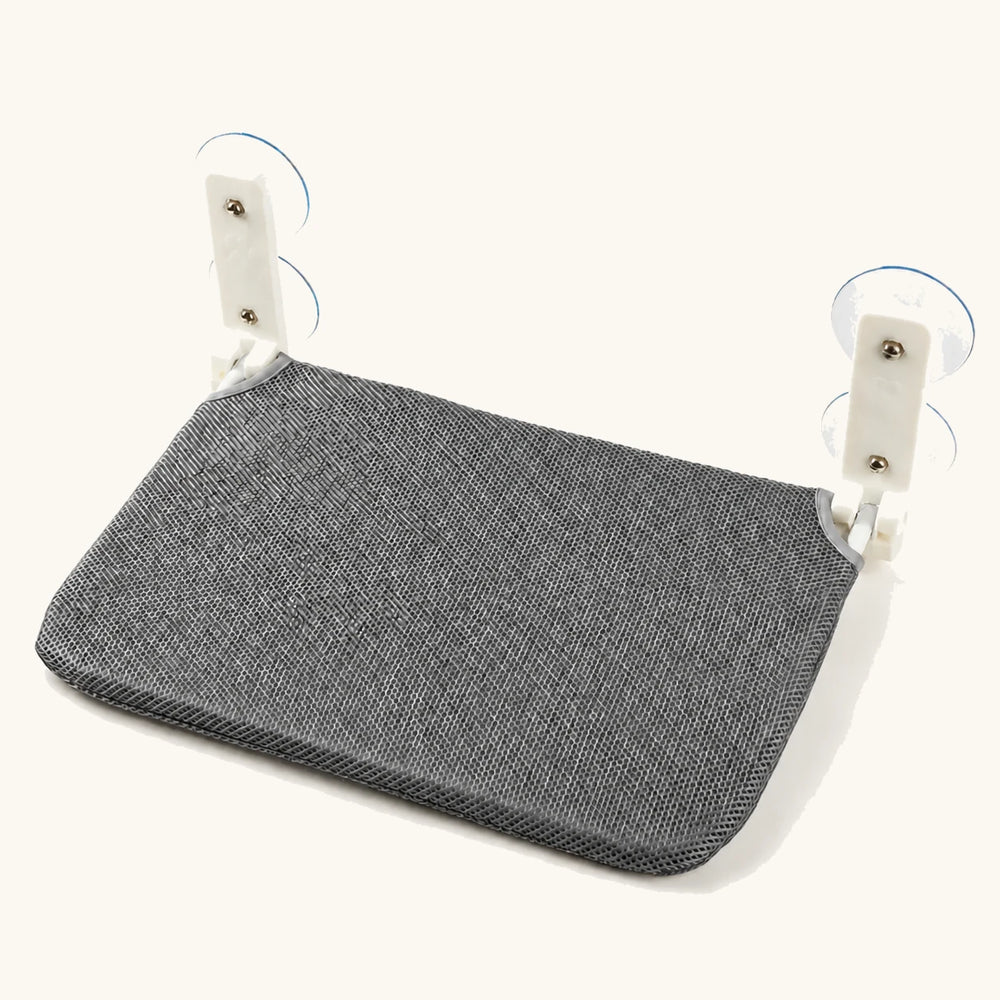





Secure & Stylish Cat Window Perch Hammock
- Cat Window Perch Hammock
- Indoor Bird-Watching Spot
- Twist-Lock Grip Setup
- Raised Sunny Rest Spot
