

Dog Leg Brace Slipping? 6 Checks Before You Retighten
If a dog leg brace slips, remove it, re-measure A, B and C against the chart, reset the fabric and change one strap at a time. Six checks in order.
Step-by-step guide
-
Stop and Remove the Brace
End the walk and take the brace off calmly. Do not tighten it while your dog is moving.
-
Look at the Skin and Fur
Check under the panel and strap edges for rubbing, strap marks, dampness or swelling. Leave the brace off and ask your vet if you see any.
-
Measure Again
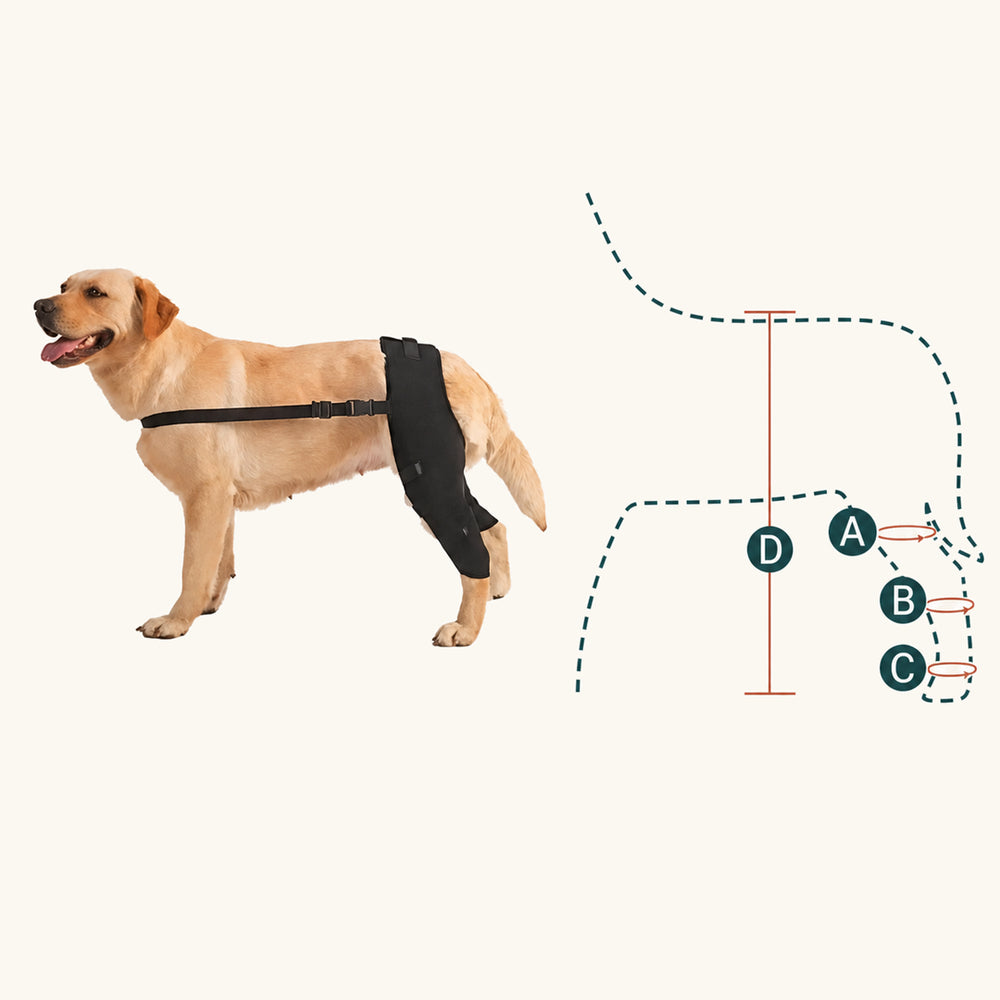
Take A, B and C a second time with your dog standing calmly and compare them with one row of the size chart.
-
Check Where It Sits
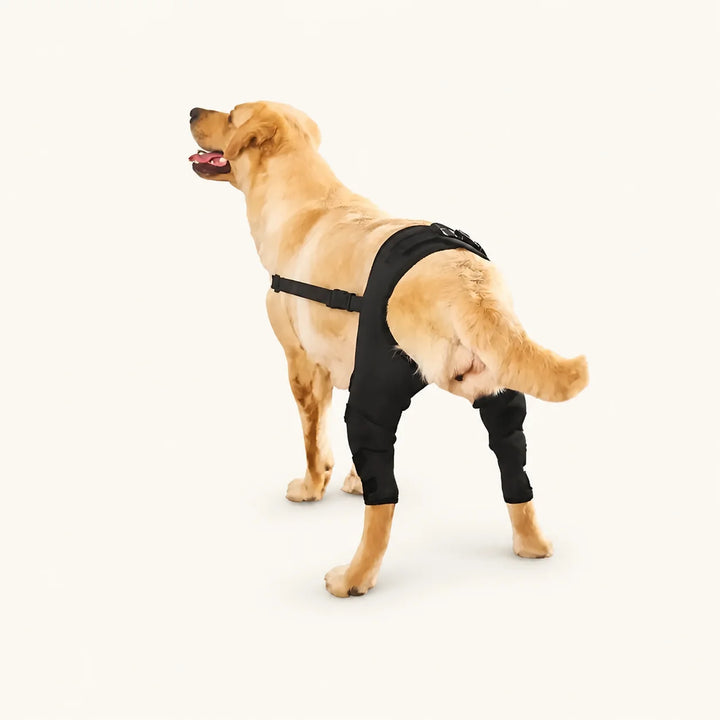
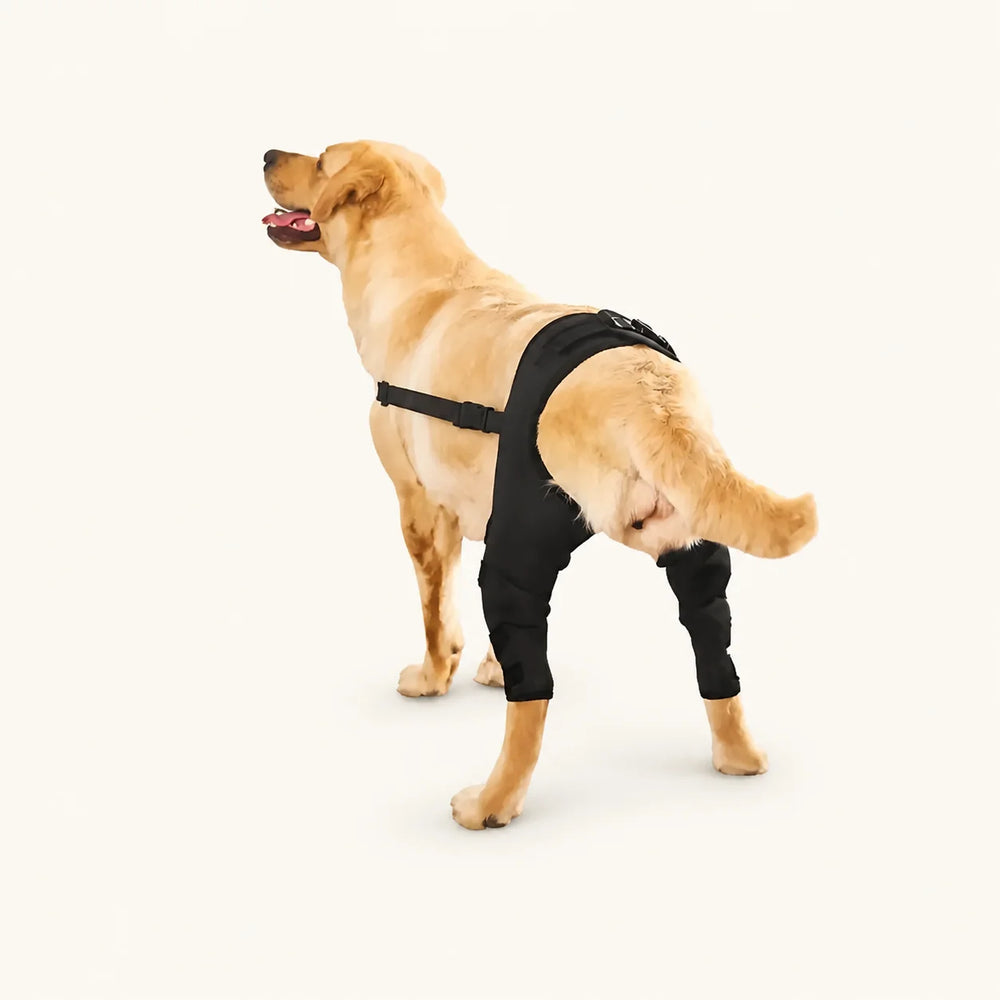
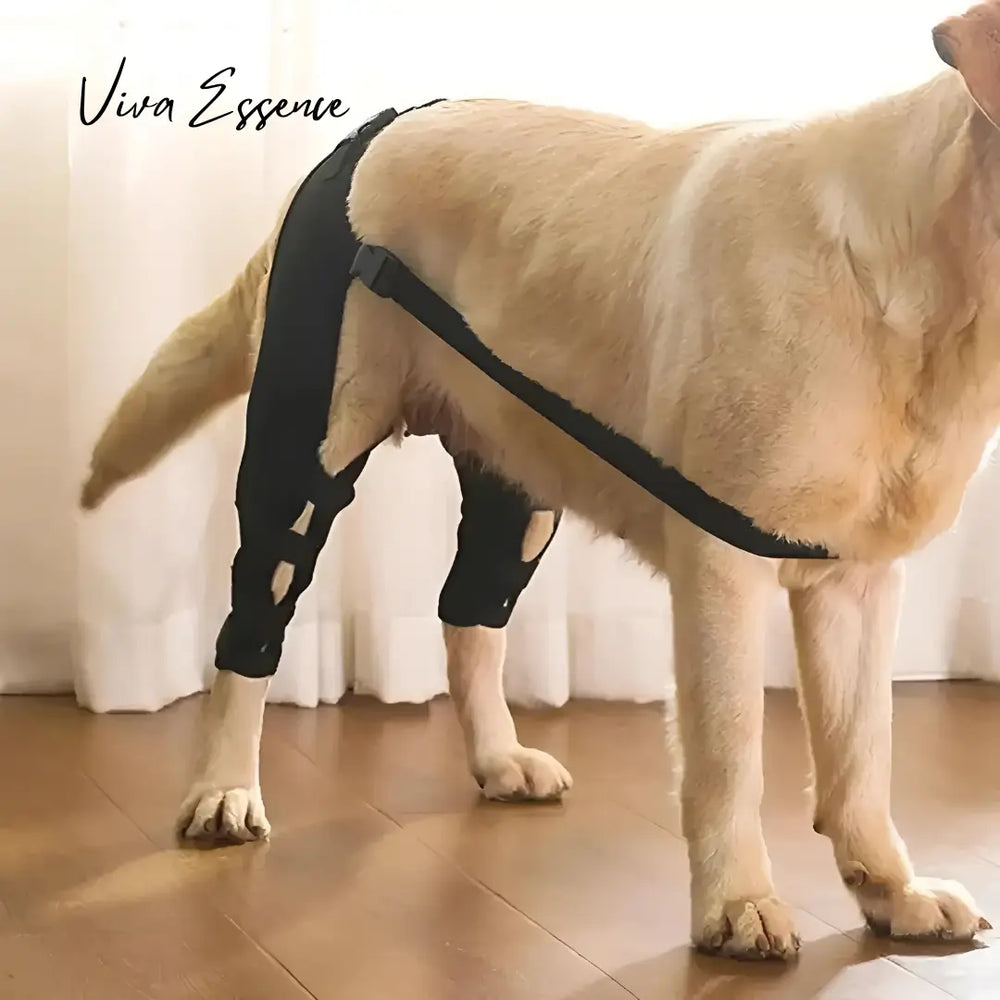
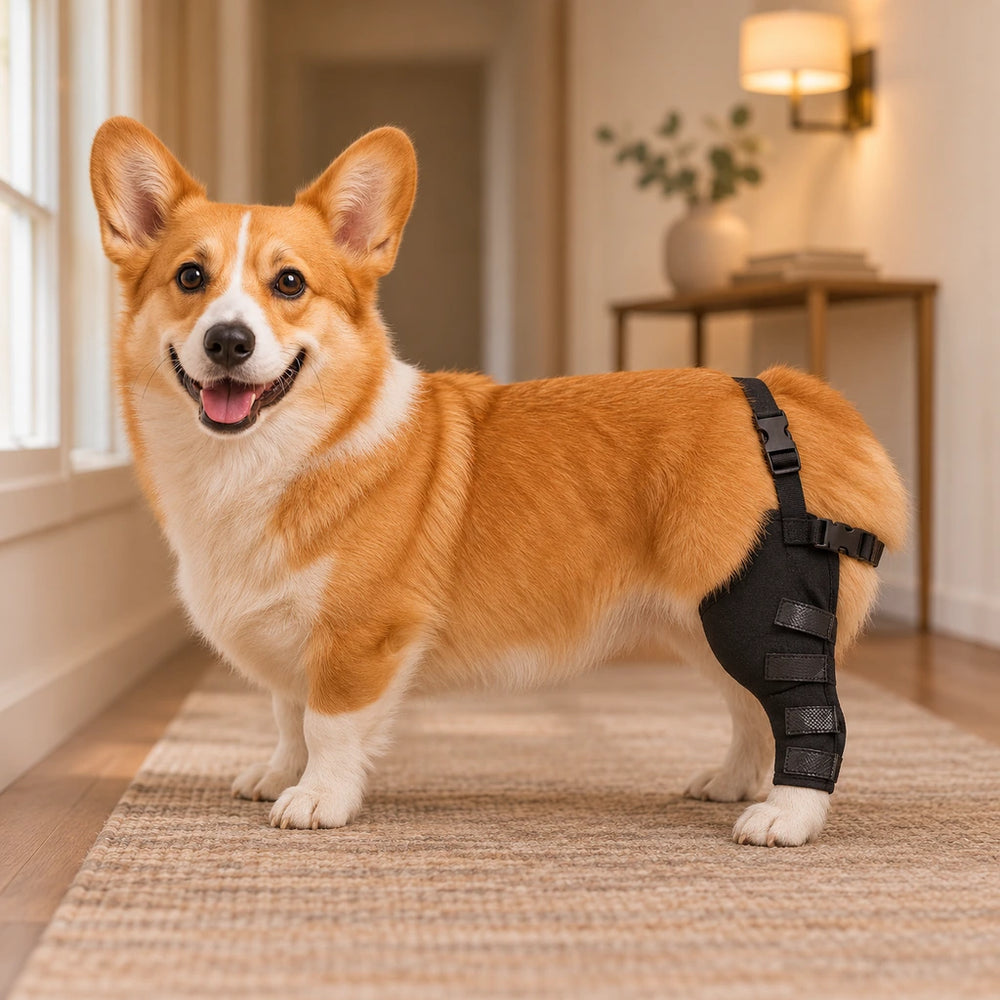
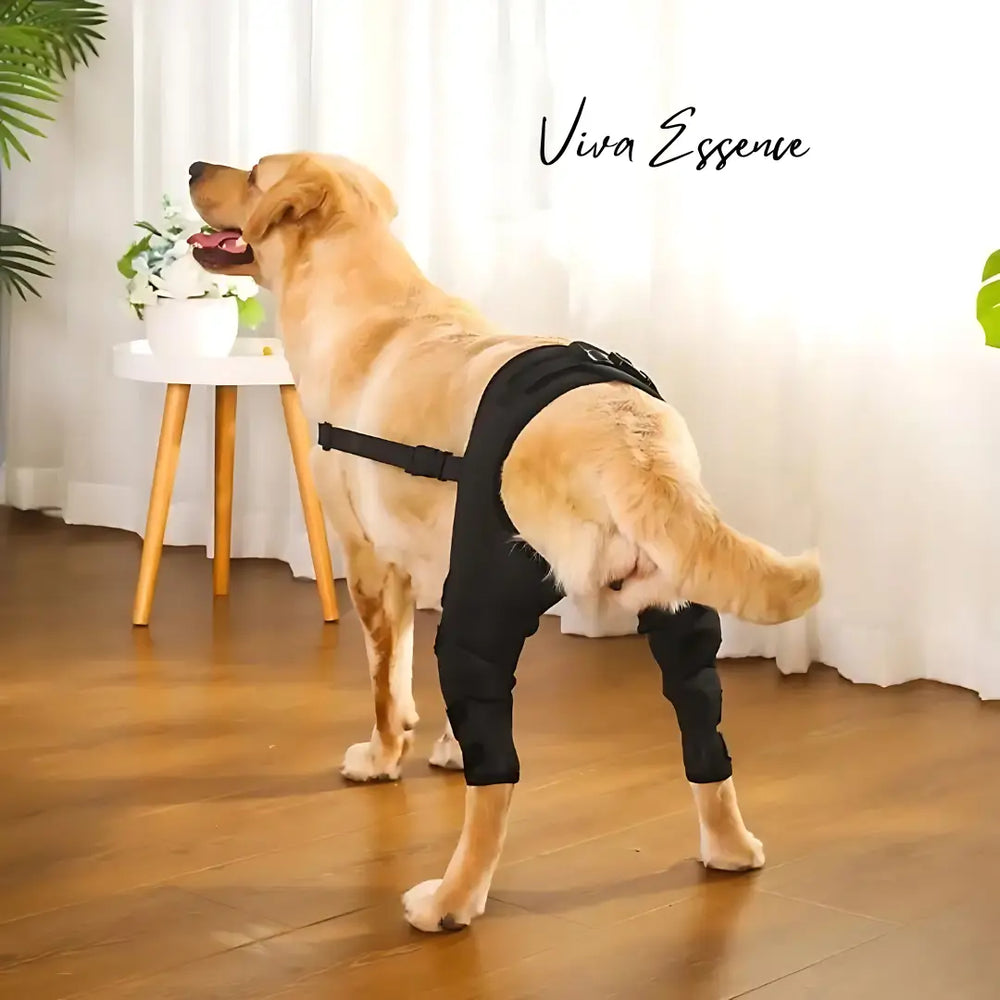
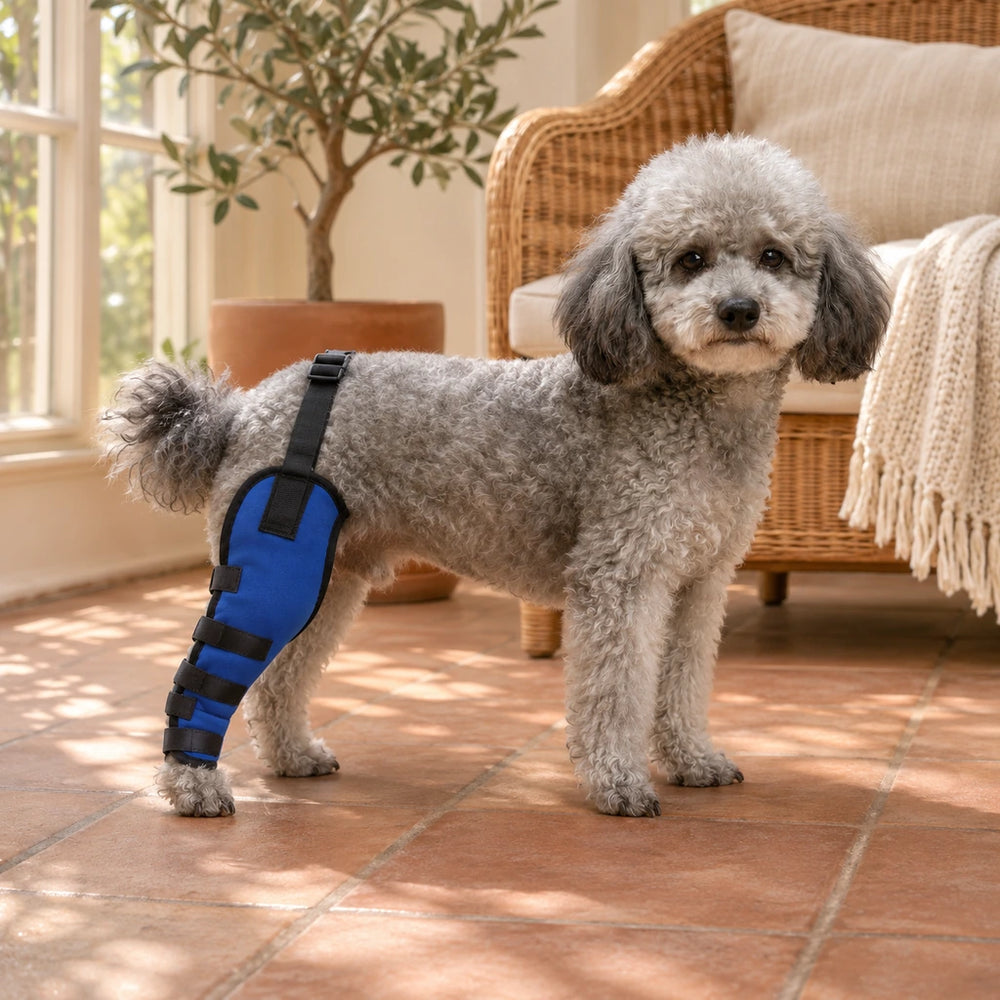
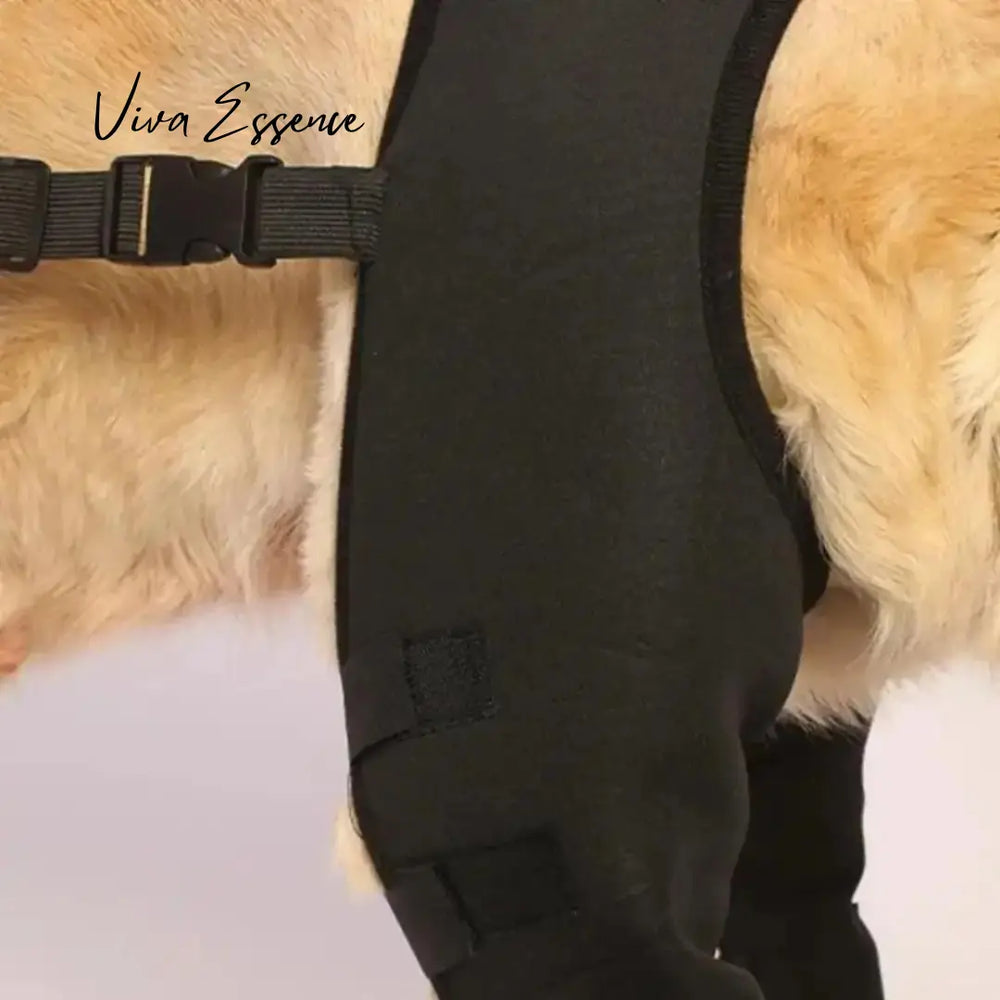
The opening and straps should line up with the correct part of the leg, as in the product images, with no twisted strap.
-
Reset the Fabric and Adjust One Strap
Smooth the fabric flat against the coat, refasten and change one strap at a time. Snug should not pinch or dig in.
-
Test with a Few Slow Steps
Walk a few steps indoors, watch for pawing, high-stepping or sitting down, then remove the brace and recheck the edges.
The Full Answer
If your ProCare Canine Knee & Leg Brace slips, take it off and check four things in turn: the size against the chart, where the brace sits on the leg, how the fabric lies against the coat, and strap tension. Do not pull the straps tighter while your dog is walking. VCA Animal Hospitals notes that a brace that is too tight can cause pressure sores and one that is too loose can cause chafing.
What usually makes a brace slip
- Size: measurements that sit across two rows of the chart, or a row chosen by weight alone.
- Placement: the opening or straps lined up with the wrong part of the leg.
- Coat contact: fabric bunched against the coat instead of lying flat.
- Strap tension: straps too loose to hold, or pulled so tight that your dog fixates on the brace.
Six checks, in this order
- Stop and remove the brace. End the walk and take it off calmly, on a stable surface.
- Look at the skin and fur. Check under the panel and strap edges for rubbing, strap marks, dampness or swelling. If you see any of these, leave the brace off and ask your vet before the next try.
- Measure again. Take A, B and C a second time with your dog standing calmly and compare them with the same row of the chart below. The size chart and measuring steps explains where each point sits.
- Check where it sits. The opening and straps should line up with the correct part of the leg, as in the product images. Make sure no strap is twisted.
- Reset the fabric and adjust one strap. Smooth the fabric flat against the coat, refasten, and change one strap at a time. Snug means it holds in calm movement without pinching, digging in or changing how your dog stands.
- Test with a few slow steps indoors. Watch for pawing, high-stepping or sitting down, then take the brace off and check the edges again.
| Size | A | B | C |
|---|---|---|---|
| XS | 6.7–7.9 in (17–20 cm) | 4.3–5.1 in (11–13 cm) | 2.8–3.9 in (7–10 cm) |
| S | 8.7–9.8 in (22–25 cm) | 5.1–6.3 in (13–16 cm) | 3.9–5.5 in (10–14 cm) |
| M | 11.4–12.6 in (29–32 cm) | 6.7–7.9 in (17–20 cm) | 5.1–6.3 in (13–16 cm) |
| L | 14.2–15.4 in (36–39 cm) | 8.7–9.8 in (22–25 cm) | 6.3–7.5 in (16–19 cm) |
A measurement that falls between two rows means the size needs more thought, and extra strap tension will not settle it. Compare every point and choose the best overall fit around the area you want to support.

While you sort out the fit
Keep sessions short and supervised, and remove the brace after each one. Ask your vet how much activity suits your dog while you are still troubleshooting, because more activity makes it harder to tell what is causing the movement. If you are still on the first fitting, the first-session guide covers the introduction from the start.
When slipping keeps happening
Ask our team about sizing if the brace still shifts after you have re-measured and reset it. Ask your vet to look at the fit if the leg looks swollen or sore, your dog starts limping or stops using the leg, or your dog has gained or lost muscle or weight since you measured. Muscle changes can alter how a brace sits.
Details and sizes for the ProCare Canine Knee & Leg Brace are on the product page. More fitting tips are in Proper Fit and Care for Dog Leg Braces and in Measure Twice: Dog Harness, Coat, Brace, and Bed Fit Guide, and you can see the other braces in the Dog Leg Braces collection.
Common Questions
Why does my dog's leg brace keep slipping?
Slipping usually points to the size, the placement, how the fabric lies against the coat, or strap tension. Check each one in turn, starting with a second set of measurements.
Should I tighten the straps?
Not while your dog is walking. The straps should hold the brace in calm movement without pinching or digging in. Adjust one strap at a time after you reset the fabric.
What if my dog is between two sizes?
Compare every listed measurement point and choose the best overall fit around the area you want to support. Strap tension should not make up the difference.
When should I ask for help with a slipping brace?
Ask our team about sizing if it still shifts after you re-measure and reset it. Ask your vet if the leg looks swollen or sore, your dog starts limping, or the skin is marked.
More guides
Continue with related guides for this product.
ProCare Canine Knee & Leg Brace
- Dog Knee & Leg Brace
- Adjustable Strap Placement
- Soft Breathable Fabric
- For Short Daily Wear
