


How Do I Introduce and Use a Dog Raincoat on a Wet Walk?
How to Use and Clean Dino-Spike Dog Raincoat Review fit, setup, care, no-fit signs, and practical alternatives before buying Dino-Spike Dog Raincoat. Review.
Step-by-step guide
-
Measure Before the Weather Arrives
Check chest girth and back length, then review the displayed 3X–8XL starting ranges.
-
Let the Dog Inspect the Coat
Place Dino-Spike in a familiar room and allow sniffing without pulling the coat toward the dog.
-
Practice a Few Indoor Steps
Put it on calmly and watch walking, sitting, turning, the hood area, belly, and shoulder movement.
-
Check the Leash or Harness
Use the same walking arrangement you will use outside and make sure the coat stays in place.
-
Take a Short Familiar Walk
Begin in ordinary weather or light rain, keep the route short, and watch the dog rather than the novelty.
-
Wipe, Towel, and Air Dry
Dry exposed areas, let the coat air dry fully, and store it only when the garment is ready.
The Full Answer
The easiest time to teach a dog about a raincoat is before the next serious downpour. A calm indoor introduction lets you see whether Dino-Spike fits the body, works with the leash or harness, and feels acceptable to the dog before wet ground and poor visibility add extra distractions.
Measure before you put it on
Measure chest girth around the widest part of the chest and back length from the base of the neck to the base of the tail. Use the displayed 3X–8XL recommended-weight ranges as a starting point, not as the final answer.
Write the measurements down and compare them with the size information before ordering. Dogs with the same weight can have different chests, backs, shoulders, and body shapes.
Have the leash or harness plan in mind too. A coat that fits the dog but disrupts the walking setup still needs adjustment.
Let the dog inspect Dino-Spike
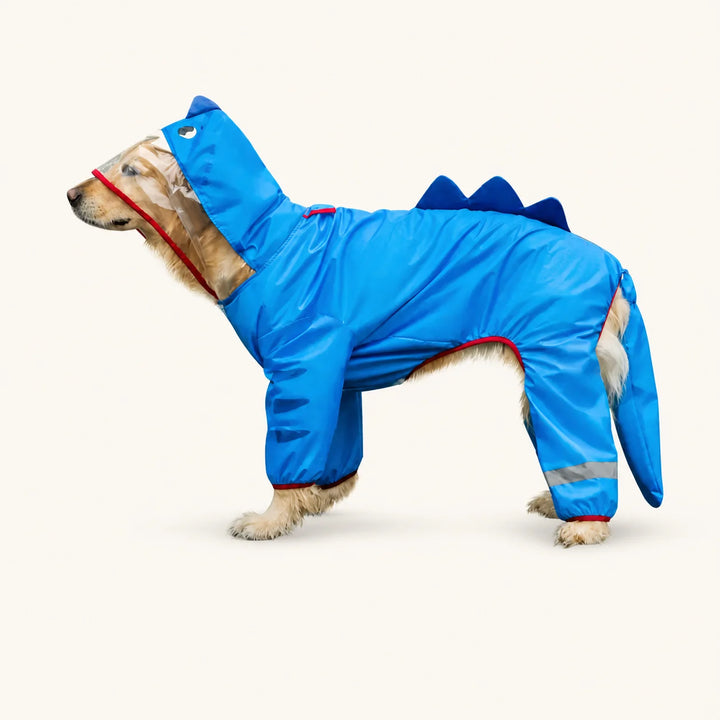
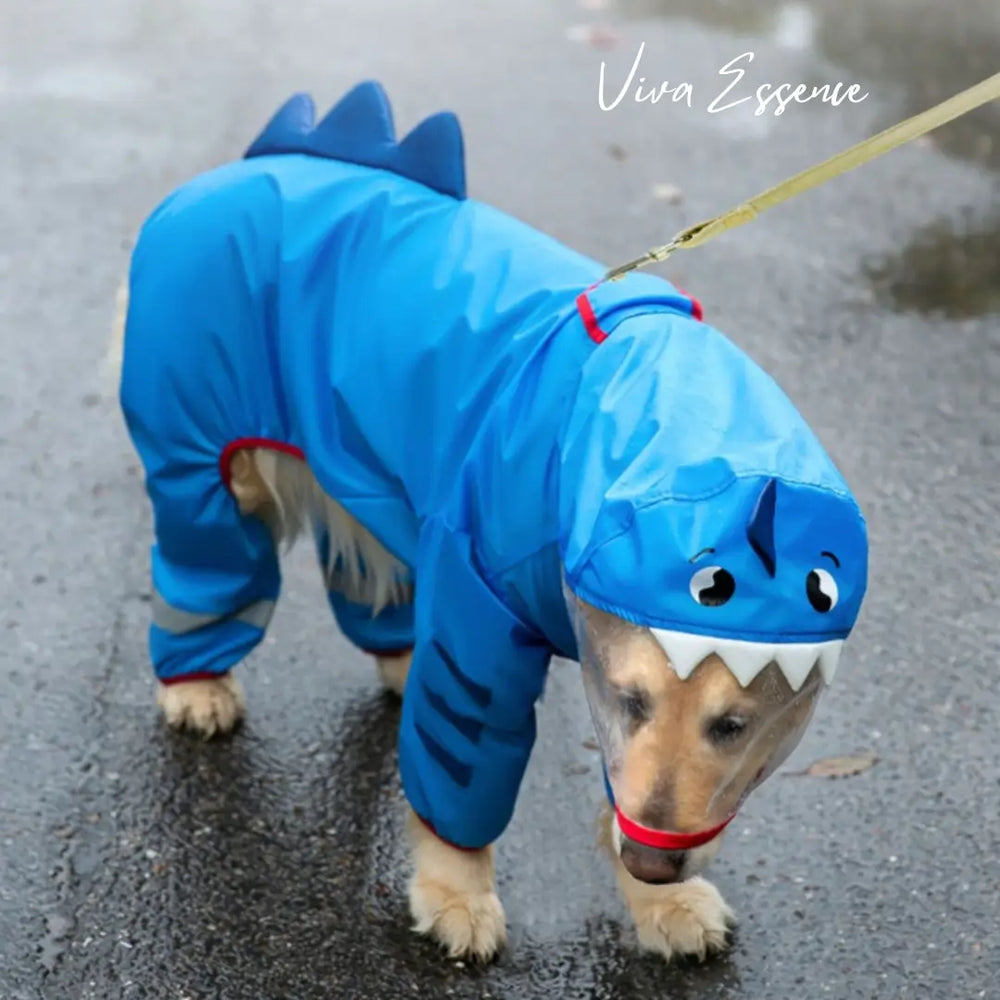
Place the blue coat on the floor in a familiar room. Let your dog sniff, look, and move away. The hood, spikes, leg sections, and fabric are all new sensations for some dogs.
Keep the first interaction brief and calm. A small treat, toy, or praise can reward relaxed investigation if that fits your normal routine, but do not lure a frightened dog into the coat.
Repeat the inspection later if the dog remains unsure. A slower start is easier than trying to repair a frightening first walk.
Run the indoor movement test
Put the coat on gently and watch the dog walk, sit, turn, sniff, and approach you. Check the chest, shoulders, belly, hood, and legs for pulling, bunching, or loose fabric that shifts.
Confirm that the dog can toilet normally. If the hood changes the dog’s posture or the leg sections alter the gait, remove the coat and reassess the fit or the garment choice.
Keep the indoor test short. Remove the coat while the dog is still calm rather than waiting for scratching or escape attempts.

Check the walking arrangement
Attach the leash to the same harness or collar arrangement you use outdoors. Confirm that the coat remains in place and does not pull the harness over the shoulders.
Do not assume that a leash opening or hood works for every harness. The current guidance specifically tells owners to check access, so make that check part of the routine.
If the dog walks normally indoors, take a few steps near the door before going outside. Keep the route familiar and avoid adding a new coat, busy event, and long walk all at once.
Take a short first wet walk
Start with a short, ordinary outing in light rain or wet weather. Watch the dog’s gait, shoulders, hood, belly, legs, and willingness to continue.
Turn back if the dog freezes, scratches, bites at the fabric, becomes distressed, or the coat shifts out of place. The first walk is a fit check, not a test of determination.
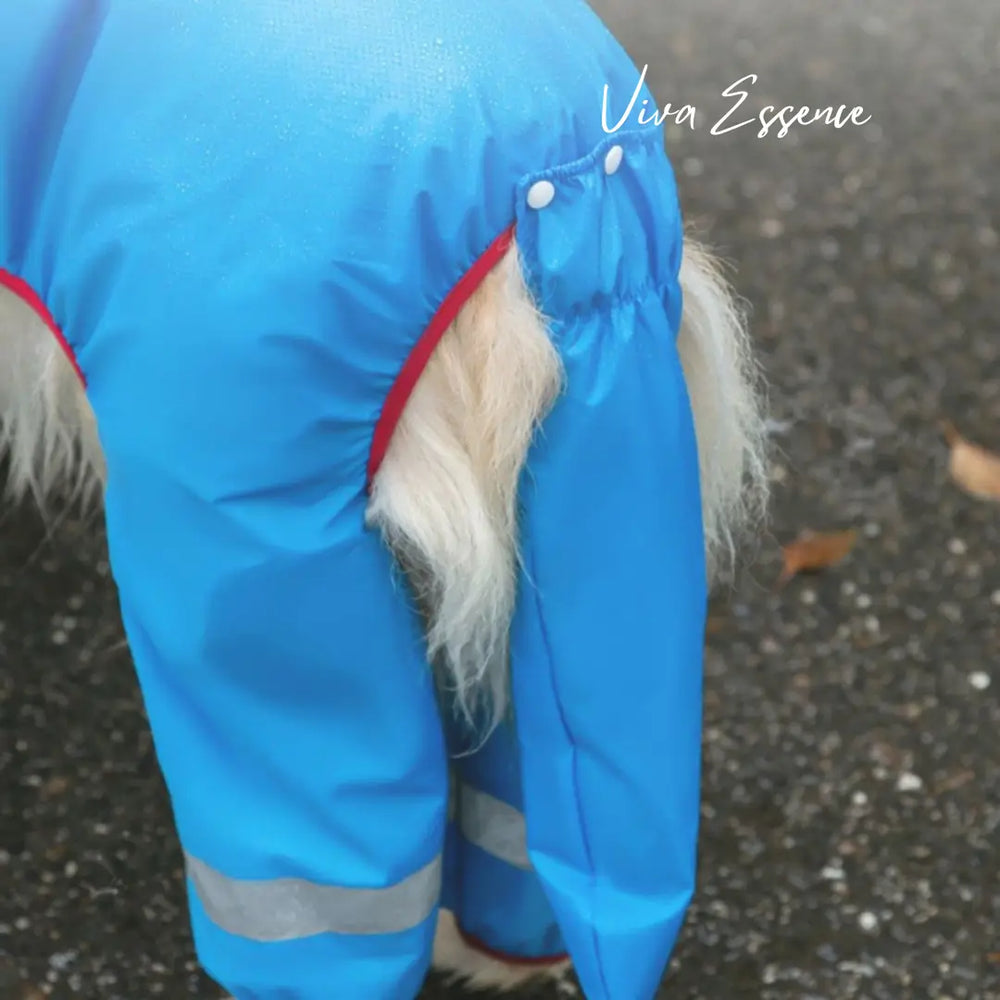
Reflective details can add a low-light cue, but keep normal leash control and route awareness. A raincoat is not traffic protection, warmth certification, or a substitute for supervision.
Finish with the drying routine
When you return, wipe the coat and towel dry the paws, lower legs, belly edges, tail, and other uncovered areas. Check the dog’s coat and skin for dampness or irritation.
Let Dino-Spike air dry fully before storage. Follow the supplied care guidance and do not add a machine-wash or chemical-cleaning method that has not been provided.
Store the coat where it will be easy to reach before the next walk. A simple repeatable routine is more valuable than a complicated one that gets skipped.
Know when to stop
Stop using the coat if it restricts movement, causes distress, catches, or cannot be made compatible with the dog’s walking setup. Use shelter, a shorter outing, a towel, or another coat if those fit better.
First-walk reminder: Introduce the garment slowly, watch ordinary movement, keep the first outing short, and remove it when your dog is uncomfortable.
For the next step, see the current raincoat details, check chest and back measurements, or browse other outdoor walking essentials.
Common Questions
Which sizes are available?
The current choices run from 3X through 8XL with displayed recommended-weight ranges. Use those ranges as a starting point, then check chest and back fit.
How should I introduce the coat?
Let your dog inspect it indoors, try it on briefly, watch normal movement, and keep the first outdoor route short.
Do reflective details replace walking safety?
No. They add one low-light cue. Keep normal leash control, choose a visible route, and stay attentive.
How do I care for it after rain?
Wipe the coat, towel uncovered paws and areas, let the garment air dry fully, and follow the supplied care guidance.
More guides
Continue with related guides for this product.
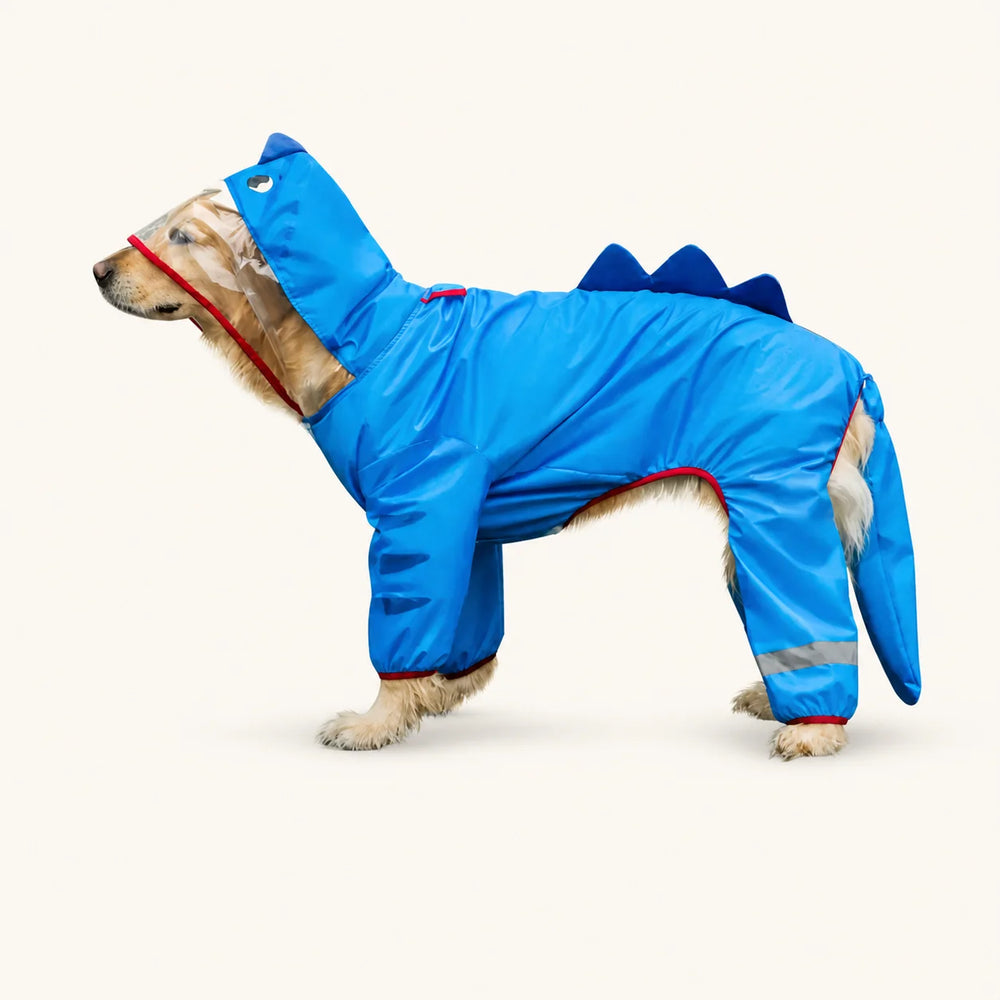






Dino-Spike Reflective Dog Raincoat
- Dino-Spike Dog Raincoat
- Rain Coverage for Walks
- Reflective Low-Light Details
- Easy Wipe-Down Care
