





Can an Orthopedic Dog Bed Work in an Apartment?
Assess an orthopedic-style dog bed for apartment life by checking footprint, walking clearance, placement, cleaning, and your dog’s actual routine.

Questions Before You Choose
The apartment is too small for a large bed.
Measure the outside footprint and the walking clearance together. A smaller or flatter option may be better if the route becomes crowded.
My dog already has a favorite corner.
Use that corner as the starting point when it leaves a safe, clear approach. Familiar placement can help investigation, but it does not guarantee use.
The non-slip base should keep the bed fixed.
It is a listed feature, not a universal guarantee. Check the real floor after the dog steps in and turns.
The Full Answer
An apartment dog does not need a special promise from a bed. The useful question is whether the bed fits the room, the walking route, the cleaning routine, and the way your dog actually settles. ComfortCradle can be worth considering when a defined, padded rest spot earns its footprint in your home.
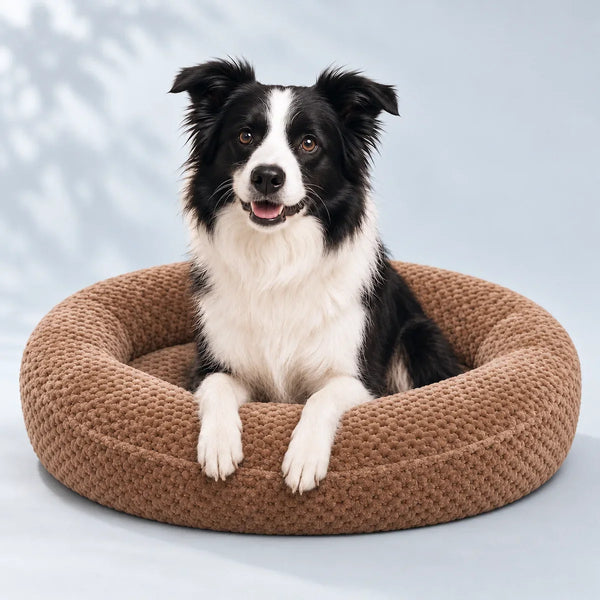
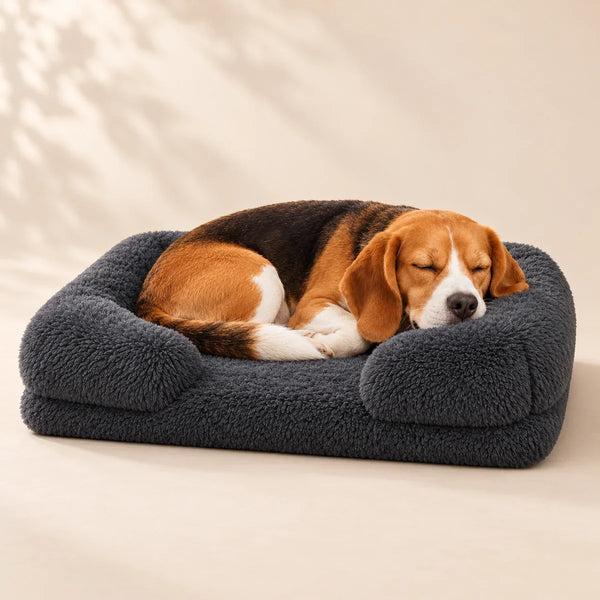
ComfortCradle is a washable orthopedic-style dog bed with an egg-crate foam layer, a soft removable cover, raised bolsters on three sides, a lower front opening, and a protective base for indoor placement. These are current product features. They do not guarantee quiet use, a perfect fit, or a medical outcome.
Start with the apartment route
Place a tape measure on the floor and mark the area where the bed would live. Include the walking space in front of it, the turn around the side, and the distance to doors, feeding areas, radiators, and furniture. The bed is part of the room’s circulation, not just a rectangle on a product page.
Watch when your dog rests. If the dog already chooses a wall-side corner, the end of a sofa, or a quiet bedroom edge, those places can tell you more than a generic “best bed” list. A familiar location may make a new bed easier to investigate, although it cannot guarantee that the dog will use it.
Check the floor at paw level. A clean, dry, level surface makes it easier to see whether the bed moves when the dog steps in or turns. The protective base is a listed feature, not a promise that the bed cannot move on every apartment floor.
Choose a footprint that leaves the room usable
ComfortCradle currently lists five size footprints: S at 45 × 40 × 12 cm, M at 60 × 48 × 15 cm, L at 80 × 55 × 15 cm, XL at 110 × 70 × 20 cm, and XXL at 130 × 90 × 22 cm. Use the exact size you are considering when measuring the room. Do not use the label small, medium, or large as a substitute for a floor check.
Leave enough clearance for your dog to approach and turn. A bed pushed tightly between a sofa and a wall can look tidy while making entry awkward. A bed placed in the middle of a narrow walkway can become a trip point for people and a source of repeated avoidance for the dog.
If you live in a studio or one-room apartment, decide whether the bed will stay in place all day. Moving it for meals, work, guests, or cleaning may be necessary, but frequent changes can make the rest spot feel unfamiliar. A slightly less decorative location that can remain consistent may be easier to maintain.
Think about sound and shared space
A bed can change how the room sounds when a dog steps in, turns, or leaves. Put the bed away from a door that swings into it and away from objects that rattle when the base is touched. Keep tags, cords, and loose items out of the approach.
Shared rooms need a clear human route as well as a pet route. Make sure a person can pass without stepping over the front opening. If the apartment has a narrow kitchen or hallway, a lower-profile mat may be a better use of the available space.
For homes with more than one pet, observe whether another animal blocks the opening or claims the bed. Do not assume that a larger bed solves a sharing problem. Two separate resting areas may be calmer than one crowded surface.
Match the apartment bed to the dog’s habits
Dogs that curl, lean, or rest the chin on an edge may appreciate the defined shape of raised bolsters. Dogs that stretch across an open floor or change rooms often may prefer a flat mat. Both preferences can be reasonable.
The lower front opening gives the ComfortCradle bed a visible entry side. Keep that side pointed toward the clearest part of the room. Do not hide it behind a coffee table, a storage bin, or a pile of blankets.
Use the dog’s settled position to choose size. A dog that sleeps on its side needs usable length and room to change position. A dog that curls tightly may use less interior area but still need an easy approach. The size and room-fit guide walks through those checks without turning them into a guarantee.

Introduce the bed without taking away the old spot
Set the bed in the chosen apartment location with the familiar mat or blanket nearby. Let your dog sniff, walk around, step in, or leave. A calm first look is enough; the goal is to learn what the dog chooses, not to stage a performance.
Keep the entry clear and avoid hovering over the bed. Do not carry the dog into it, block the exit, or place food so far inside that the dog has to reach beyond a comfortable position. A voluntary approach gives you better information about the fit.
During the first few days, watch the whole loop: approach, entry, turning, settling, rising, and exit. If the dog uses the bed only when the room is empty, consider whether foot traffic, noise, heat, or another pet is affecting the choice.
Build cleaning into apartment life
Apartment spaces show hair, crumbs, and damp paws quickly. Remove loose debris from the surface and follow the cover’s care label when it needs washing. Let the cover dry fully before returning it to the foam and recheck the bed’s position afterward.
Do not treat the cover as a liquid-proof accident barrier. Keep the floor under the bed dry and inspect the surrounding area after spills or wet walks. If your dog has an accident, follow the care directions and decide whether the bed can be cleaned safely before reuse.
Keep the bed’s footprint visible when vacuuming. Moving it can be part of cleaning, but return it to the same orientation if that is the route your dog has learned. If the apartment layout changes, measure the clearance again.
Keep the orthopedic label in perspective
“Orthopedic” is part of the product name and positioning. It is not a diagnosis, treatment, or proof of pain relief. A new reluctance to lie down, sudden sleep disruption, limping, weakness, or a changed movement pattern deserves veterinary attention rather than a hurried bed swap.
The Banfield home guidance for older pets is useful for thinking about footing and access in the home, while the AKC bed-care guidance keeps cleaning tied to the material and care directions. Neither source tests ComfortCradle or guarantees a result for your dog.
If a veterinary team has given movement, rest, or recovery instructions, follow those instructions first. A bed can support a home routine, but it should not be used to work around professional advice.
Decide whether the apartment can keep the promise of consistency
ComfortCradle is a practical apartment option when the selected size leaves a clear route, the dog’s natural resting position fits the usable area, the bed can stay reasonably steady, and the cover-care routine fits your schedule. If any of those checks fail, a flat mat or another location may be the better answer.
When the room passes the check, review the current ComfortCradle options and confirm the exact color and size. For the first week, keep the bed in one place and keep the introduction voluntary. The aim is a repeatable rest spot, not a new object that everyone has to manage.
Apartment living rewards simple routines. Measure the space, protect the walking route, observe the dog, clean according to the label, and stay willing to choose a smaller or flatter surface when the room asks for it.
Do one evening check after the household is quiet. Look at the entry from the dog’s height, notice whether the bed is in a draft or a busy path, and make sure the dog can leave without squeezing behind furniture. Small placement details often decide whether a bed becomes part of the room.
Do another check after vacuuming or rearranging. A dog that was comfortable with one angle may hesitate when the bed faces a different direction. Returning it to the familiar position can be more useful than adding treats or moving it repeatedly.
If the bed takes up too much space, do not justify it because the product features sound attractive. The right apartment bed has to coexist with ordinary life: opening doors, carrying groceries, cleaning floors, and giving the dog a clear way to move.
If the apartment passes those practical checks, the choice becomes easier to explain to everyone at home. They know where the bed belongs, which side stays open, and what to watch when the dog approaches. That clarity is part of fit too.
Keep the decision tied to ordinary apartment moments: the morning walk, the evening quiet, a delivery at the door, and the weekly clean. If the bed works through those changes without closing the route, it has a fair chance of becoming a useful rest spot.
Common Questions
How much room does a dog bed need in an apartment?
Measure the bed’s outside footprint plus the approach, turning space, doors, and the human walkway. The dog needs a usable route, not just a place where the rectangle fits.
Should I move the bed around a small apartment?
Move it when necessary, but keep one familiar location during the introduction. Recheck the route whenever the room or floor surface changes.
Can an apartment dog use ComfortCradle?
It may fit when the selected size, entry, floor, walking clearance, and the individual dog’s preference line up. The product cannot guarantee acceptance.
Is It Right for Your Pet?
Compare related questions for this product and use case.







ComfortCradle Orthopedic Dog Bed
- Bolster Dog Bed
- Soft Supportive Foam
- Bolsters for Curling & Leaning
- Washable Cover
